


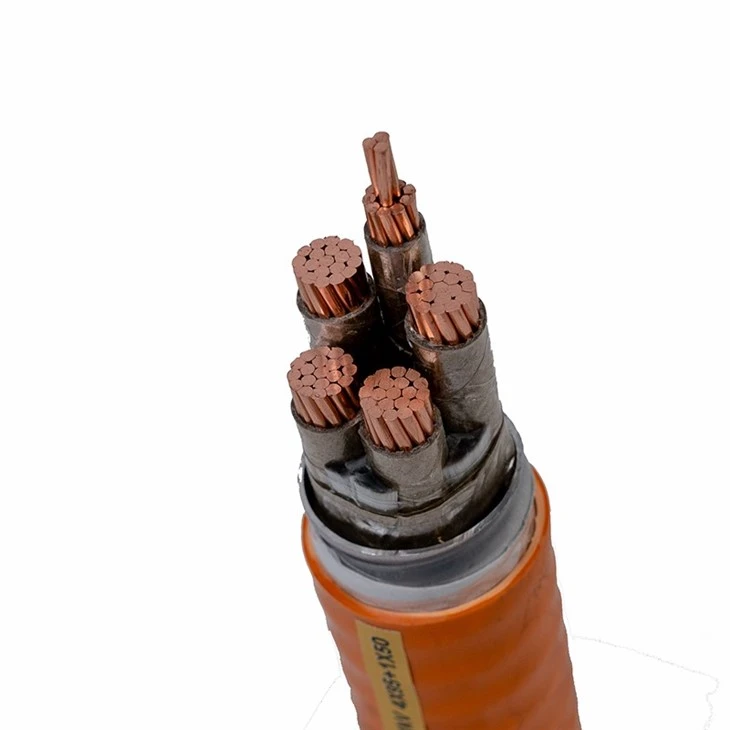

Product Introduction
4 Core Low Voltage Power Cable, using high-purity oxygen-free copper or aluminum as conductor materials and polyvinyl chloride (PVC) or cross-linked polyethylene (XLPE) as insulation materials, is designed for stable and reliable power transmission with multiple advantages. It excels in various applications such as industrial plants, commercial buildings, high-rise residences, tunnels, bridges, and even agricultural fields. Its low voltage significantly reduces the risk of electric shock, enhancing overall safety. The outer sheath materials like PVC or PE offer excellent weather resistance and corrosion resistance, adapting to harsh conditions and extending cable lifespan. The multi-stranded conductor design provides flexibility and tensile strength, facilitating complex installations. Its lightweight design also eases transportation and storage, reducing installation costs.
Product Advantages
Durability
4 Core Low Voltage Power Cable uses high-purity oxygen-free copper or aluminum conductors, enhancing electrical conductivity and mechanical performance. Oxygen-free copper provides excellent conductivity and oxidation resistance, maintaining low resistance over long-term use. The outer sheath materials like PVC or PE offer exceptional weather resistance and corrosion resistance, extending the cable's lifespan by over 30% compared to standard cables.
Water Resistance
The outer sheath materials such as PVC or PE not only insulate electrically but also resist water effectively. These materials prevent moisture penetration, avoiding short circuits and corrosion due to humidity. This design significantly improves safety and reliability in damp conditions, making it ideal for outdoor and underground installations.
High-Temperature Tolerance
The insulation layer of 4 Core Low Voltage Power Cable uses Cross-Linked Polyethylene (XLPE), stable under high temperatures. XLPE withstands thermal deformation up to 120°C, ensuring normal operation at 90°C. In short circuits, XLPE can endure temperatures up to 250°C, enhancing system reliability and safety.
Tensile Strength
Multi-stranded conductor design provides flexibility and tensile strength. This structure facilitates complex installations and prevents damage from external forces. Under similar force, its tensile strength is 20% higher than single-core cables.
Easy Installation and Maintenance
The design of 4 Core Low Voltage Power Cable is simple and reasonable, making installation quicker and easier. Its lightweight design aids transportation and storage, reducing installation costs. Due to high-quality materials and advanced manufacturing, this cable requires minimal maintenance, lowering upkeep costs.
Product Transportation Notes
Select Appropriate Transportation Mode
Consider cable characteristics and distance. Sea freight is suitable for long distances and large quantities, but prevent movement and friction in containers. Air freight is ideal for urgent or small shipments, though costly. Truck transport works well for short distances and large quantities, ensuring dry, clean trailers to avoid contact with sharp objects.
Ensure Secure and Standard Packaging
Packaging significantly impacts safety during transit. Use sturdy cardboard boxes, wooden crates, or metal cases to prevent loosening and collisions. For flexible cables, coil them on paper or plastic reels and secure with stretch film. Include desiccants to prevent moisture damage.
Clear and Accurate Labeling
Labels on packaging should clearly state product name, specifications, model, quantity, production date, batch, shipping date, origin, recipient, and destination. Use waterproof and UV-resistant materials to ensure labels do not peel or fade.
Accurate Shipping Documents
Ensure accuracy in shipping documents like bills of lading and air waybills. These should detail cable names, quantities, transport mode, origin, and destination for traceability and prompt issue resolution.
Special Protection Measures
For long-haul transport, especially by sea, use specialized containers and fixtures to prevent cable movement and friction. In truck transport, use dunnage and straps to secure cables and prevent shifting or overturning.
Environmental Control
Avoid exposing cables to extreme temperatures. For temperature-sensitive products, implement appropriate insulation or cooling measures to prevent performance degradation or damage due to temperature changes.
Regular Inspection and Maintenance
During extended transport, regularly check cable condition to ensure integrity. Address any damage or anomalies promptly to prevent further loss.

About Us


Why Choose Us
Advanced Facilities
Liaoning Pengcheng Cable Co., Ltd. utilizes state-of-the-art production lines and modern factories to ensure high-quality cable manufacturing.
Certified Excellence
Our products meet stringent global standards, including ISO9001/IATF16949, ISO14001, ISO45001, and ISO10012.
Dedicated R&D Team
Our experienced R&D team continuously develops high-tech special cable products to stay ahead of market demands and technological advancements.
Comprehensive Product Range
We offer a wide variety of high-quality wire and cable products, including fireproof cables, corrugated copper sheathed cables, anti-pressure aluminum alloy core interlocking armored power cables, and halogen-free low-smoke flame retardant cables.
FAQs
Q: What are the key considerations for selecting a transportation mode?
A: When choosing a transportation mode, consider the cable's characteristics and distance. Sea freight is ideal for long distances and large quantities but requires securing cables to prevent movement. Air freight is suitable for urgent or small shipments despite higher costs. Truck transport works well for short distances and large quantities, ensuring dry, clean trailers and avoiding contact with sharp objects.
Q: How should the packaging be designed for safe transport?
A: Packaging must be robust to protect the cables. Use sturdy materials like cardboard boxes, wooden crates, or metal cases. For flexible cables, coil them on paper or plastic reels and secure with stretch film. Include desiccants inside the packaging to prevent moisture damage.
Q: What information should be included on the cable labels?
A: Labels should clearly state the product name, specifications, model, quantity, production date, batch number, shipping date, origin, recipient, and destination. Use waterproof and UV-resistant materials to ensure labels remain intact during transit.
Q: Why is it important to have accurate shipping documents?
A: Accurate shipping documents like bills of lading and air waybills are crucial for tracking and tracing shipments. They detail the cable names, quantities, transport mode, origin, and destination, facilitating prompt issue resolution and ensuring smooth customs clearance.
Q: What special protection measures are necessary for long-distance transport?
A: For long-haul transport, especially by sea, use specialized containers and fixtures to prevent cable movement and friction. In truck transport, use dunnage and straps to secure cables and prevent shifting or overturning.
Q: How can temperature extremes affect cable performance during transport?
A: Exposure to extreme temperatures can degrade cable performance or cause damage. For temperature-sensitive products, implement appropriate insulation or cooling measures to maintain optimal conditions during transit.
Q: What regular maintenance checks should be performed during extended transport?
A: During extended transport, regularly inspect cables to ensure they remain intact and undamaged. Address any issues promptly to prevent further loss or damage.
Q: How can you prevent cables from moving within a container during sea freight?
A: Use specialized fixtures and secure cables properly within containers to prevent movement. Ensure cables are tightly packed and do not shift during transit.
Q: What role does humidity play in cable transport, and how can it be managed?
A: Humidity can lead to moisture damage in cables. Include desiccants in packaging and ensure containers are sealed properly to manage humidity levels effectively.
Q: What steps should be taken to handle unexpected delays in transportation?
A: In case of unexpected delays, ensure cables are stored in a controlled environment away from extreme temperatures and humidity. Regularly inspect the cables and take necessary protective measures to prevent damage.
Hot Tags: 4 core low voltage power cable, China 4 core low voltage power cable manufacturers, suppliers, factory, armoured copper power cable


