Why Choose Us?
Professional Team
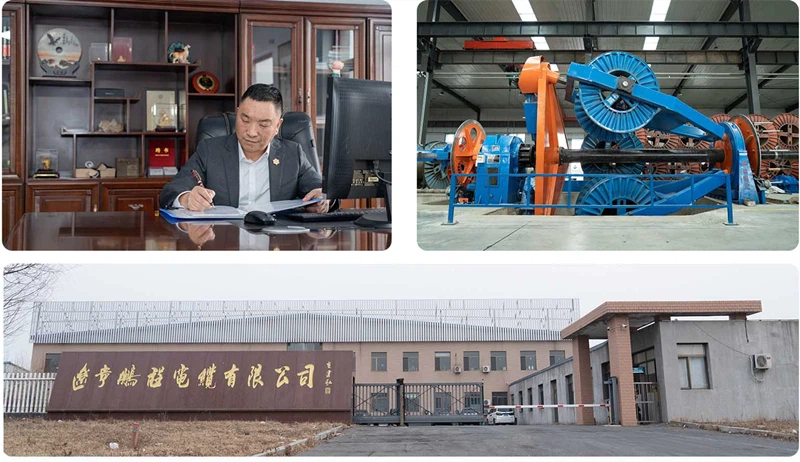
Liaoning Pengcheng Cable Co., Ltd. was founded in 1990. The company's R & D team is composed of experienced cable experts in the industry, and has independently developed a variety of high-tech special cable products.
Advanced Equipment
Pengcheng Cable has a number of international advanced production lines, modern factories, industrial parks of integrated wire and cable manufacturing enterprises.
Quality Control
The company's products have passed ISO9001/IATF16949 quality management system certification, ISO14001 environmental management system certification, ISO45001 Occupational health and safety management system certification, ISO10012 measurement management system certification and other 8 major management system certifications.
One-stop Solution
The company is mainly committed to research & development and production of flexible mineral insulated fireproof cables, mica belt mineral insulated corrugated copper sheathed cables, and new high conductivity 8000 series of anti-pressure and creep-resistant aluminum alloy core interlocking armored power cables, as well as halogen-free low-smoke flame retardant cables and ordinary wire and cable and other full range of full-specification high-quality cable products system research and development, design, manufacturing, marketing and service.
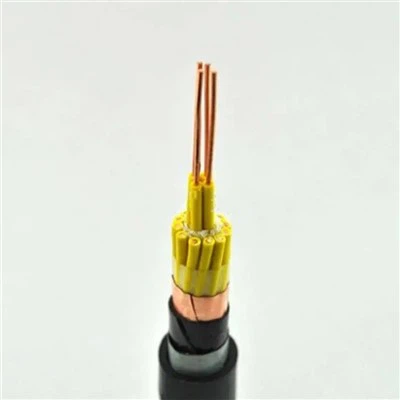
Control panel wires are multi-conductor cables used in automation and instrumentation applications. control panel wires can measure and regulate transmissions of automated processes. control panel wires are often UL rated and/or CSA rated.

PVC lighting control cable, PVC insulated PVC sheathed control cable. k: Control cable, the first v: Insulation material polyvinyl chloride, the second v: Sheath material polyvinyl chloride, p: Shielded cable, there is a layer of metal shielding layer in the cable.

Lighting Control Cable 2.5 Sy Cable
KVV control cable specifications model technical parameters
● Rated power frequency voltage Uo/U is 450/750V.
● The allowable long-term operating temperature of the cable conductor is 70℃.

The core of the control cable is copper core, the nominal cross-section is 2.5mm2 and below,2 ~ 61 cores; 4 ~ 6mm2,2 ~ 14 cores; 10mm2,2 ~ 10 cores. Control cable operating temperature: Rubber insulation is 65°C, PVC insulation is 70°C and 105°C two grades.

KYJY control cable is a low voltage flame retardant copper core crosslinked insulated steel tape armoured PVC sheathed control cable. KYJY control cable is produced according to GB/T9330.3-2008 standard.
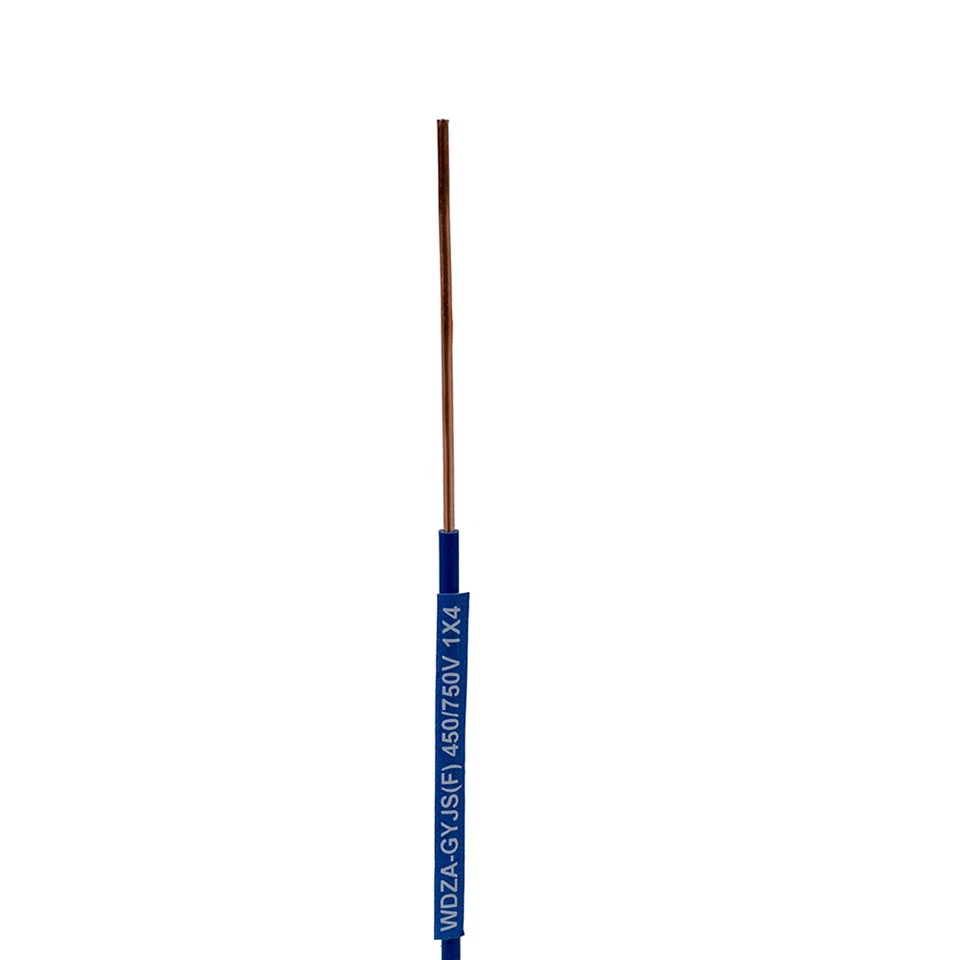
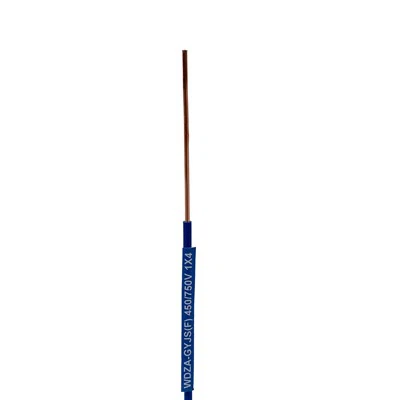
Fire control cable, XLPE type crosslinked polyethylene, core wire twisted synthetic cable, core wire color conform to GB/T 5023.1 suitable for rated voltage 450/750V laying temperature not lower than 0 degrees.

4 core control cable, byj control cable is suitable for rated voltage 450/750V polyvinyl chloride sheath, XLPE type crosslinked polyethylene, core wire twisted synthetic cable, core wire color in line with GB/T 5023.1 and JB/T 8734.1 preferred chromatographic selection.

The control cable is a PVC insulated and PVC sheathed control cable suitable for industrial and mining enterprises, energy and transportation departments, for AC rated voltage below 450/750 volts to control, protect lines and other occasions.

4 core shielded control cable, suitable for rated voltage 450/750V operating temperature is not higher than 70 degrees, installation temperature is not lower than 0 degrees.
The difference between control and instrumentation cable is mainly in use. Either can be solid or stranded. Back in the "good old days" control panel wires (for motors) needed to have larger wire than instrumentation cables in order to handle the larger currents required for the motor starters. They were typically terminated under screw terminals, and solid wire makes this termination easier.
The instrumentation cables were smaller diameter and frequently made of stranded wire which is more flexible. Today, with greater use of electronic starter controls, it is mainly switchgear (breaker) control wiring that needs the larger diameter wire.
The other difference between the 2 types is that the instrumentation cable is typically a shielded (screened), twisted pair. This construction serves to minimize "crosstalk" (inductive coupling) that causes erroneous readings for the instrumentation. The control panel wires, whose cicuits operated at 125 VDC, 110 VAC or 220 VAC levels were generally immune to this, and so did not require the shielding.
Today, when the control signals are run at 24 VDC, the shielded twisted pair construction is advised for them as well.
You still need to be careful about level separation, but as long as you are dealing with low DC voltages (28 V maximum), resistive loads, and using shielded twisted pair cables, you can combine the control and instrumentation cores into a single cable where needed. (It is still better practice to keep them separate.) You also should keep inductive loads (like solenoids and relays) separate from the instrumentation, since they can create high inductive spike voltages when they are de-energized.
You still need to choose a wire size sufficient to handle the maximum current and insulated for the maximum voltage.
Can You Use a Control Panel Wire for Power
Control panel wires directly transmit electrical energy from the power distribution point of the power system to the power connection lines of various electrical equipment, while electrical power cables are mainly used for the transmission of strong electrical energy in the generation, distribution, transmission, transformation, and power supply lines, and the current passing through is large. The electrical power cable is used in the main line of the power system to transmit and distribute large-function electrical energy.
Control panel wires are manufactured complying with the stringent quality assurance and quality control processes. Aimed to offer service for the predefined time frame, the control panel wires will perform flawlessly for the entire lifetime.
The advantages of control panel wires include:
● Lightweight
● Flexibility to suit any structure
● Mechanical efficiency
● Useful for multiple sectors
● Anti-interference functioning
● Prolonged service life
● Wear-resistant characteristic
● Non-corrosive material
While there are different types of control panel wires, most of them feature a similar construction. They consist of seven individual bundles of wire. In the center of a control panel wire is a single wire bundle, which is surrounded by six other wire bundles.
Most types of control panel wires are made of steel. With that said, some of them are made of carbon steel, whereas others are made of stainless steel. Carbon steel control panel wires are stronger, but they lack the corrosion-resistant properties of stainless steel. Regardless of the material, control panel wires are already strong because they are constructed of multiple bundles of wire.
How Do I Choose Control Panel Wire Size
First, measure the highest permissible voltage drop.
Second, calculate the load current.
Third, you must know that the most appropriate cable will be one that has a current rating closest to the load current calculated. Several charts with cable sizes and corresponding current ratings are easily available online. Use such a chart to select a suitable cable.
Fourth, use the chart to also locate voltage drop in meters or 100ft, according to your system of preference.
Fifth, use the following cable size and current rating formula for calculating voltage drop along the actual length of the wiring circuit.
● If you want to calculate the drop in voltage per meter, (Actual length of circuit x volt drop for 1m) /100
● If you want to find the drop in voltage in 100ft (Actual length of circuit x volt drop for 100ft) /100
After calculating the above, you have to multiply the value you get with the load factor:
Load factor = Load Current to be taken by Cable/ Rated Current of Cable (which should be given in the chart you are referring to).
Now, you have arrived at the voltage drop value of the cable when the load current passes through it.
If this value is less than the maximum permissible voltage drop, then the size of the cable selected should be okay.
If the value is higher than the value of the maximum permissible voltage drop, then the voltage drop for the next greater-sized cable according to the referred chart has to be calculated. This process has to be continued until the value of the voltage drop becomes less than the maximum permissible voltage drop value.
How Many Cores Does a Control Panel Wire Have
The number of cores of the power cable is relatively small, including single core, two cores, 3 cores, 4 cores and 5 cores. According to the requirements of the power grid, the maximum is generally 5 cores. control panel wires are used to transmit control signals, which contain a large number of cores, ranging from 2 cores to 61 cores or more. control panel wires also use various core wire structures and shielding measures to obtain satisfactory electromagnetic compatibility effects.
What Are Control Panel Wires Made Of
A control panel wire is made from mechanical cable (wire rope), which is typically constructed with galvanized steel, stainless steel or other alloys. Control panel wires are an assembly or system of cables and components, such as a ball and shank fitting, where there is an input or action that causes an output or outcome.
Tips for Installing the Control Panel Wires
● The conductive core of cables
For the conductive core, you need to know what material the conductive core is made of, how much the core cross-section is, and how the number of small fibers inside the core. You will be able to consider appropriate construction options to ensure that the transmission efficiency of the cable is not reduced.
The core material and core cross-section will affect the transmission distance. The number of small fibers will increase the softness of the core (increasing the bend radius of the cable) and increase the ability to absorb the vibration caused by the surrounding machinery.
● Shield tape of cables
Shield tape helps control power cables to transmit signals better. They are made of thin aluminum foil or tin-plated copper mesh. The material made of aluminum foil is quite solid, so it is necessary to pay attention to the allowable bend radius to avoid breaking the anti-interference layer of the control panel wire.
● Voltage of cables
Operating voltage is also a factor you should consider when installing power cables. Normally, cables with a voltage of 300V/500V or 0.6/1kV will be routed to a separate cable tray system from systems with low voltage <100V.
Before installing the control panel wire, you must learn carefully about the technical requirements of the project to have a certain understanding of the operating environment, and the compounds that the power cable must be exposed to every day.
Based on the installation environment, control panel wires are often classified into many types with features such as anti-interference cables, oil, and chemical-resistant cables, fire-resistant cables, etc.
In the process of installing control panel wires , there are two important factors we need to pay attention to the installation position between the power cables and the ambient temperature of the power cables.
Both of the above factors directly affect the amperage. That affects the electrical transmission process for equipment in the production process.
● Installation position between power cables
For the installation location between cables, the cause of the difference in amperage is due to the heat generated inside the power cable. At that time, electricity will be lost due to the process of converting electrical energy into heat energy.
If the cables are located next to each other, during power transmission, the temperature between the cables will resonate, causing the total temperature to increase, and reducing the amperage in the cable.
● Ambient temperature of power cable.
Installation ambient temperature has a great influence on the amperage of the cable. A temperature of 30°C is considered ideal for current when the coefficient of change is not too much, but as the temperature rises to 60°C, the amperage will drop significantly. Therefore, in the process of installing control panel wires, we must carefully consider the installation environment as well as the arrangement of cables so that the cables work with the best efficiency.
Our Factory
Liaoning Pengcheng Cable Co., Ltd. was founded in 1990, located in the northeast center of Shenyang & Tieling business district, is the comprehensive strength of the forefront of wire and cable manufacturing enterprises. Pengcheng Cable has a number of international advanced production lines, modern factories, industrial parks of integrated wire and cable manufacturing enterprises. The company is now located in Xintaizi Industrial Park, Liaoning Province, covering an area of nearly 150 acres, the factory area more than 50 acres. The company is mainly committed to research & development and production of flexible mineral insulated fireproof cables, mica belt mineral insulated corrugated copper sheathed cables, and new high conductivity 8000 series of anti-pressure and creep-resistant aluminum alloy core interlocking armored power cables, as well as halogen-free low-smoke flame retardant cables and ordinary wire and cable and other full range of full-specification high-quality cable products system research and development, design, manufacturing, marketing and service. Pengcheng products are widely used in smart grid, energy power, green building, smart factory and hospital and other fields. Currently has a number of valid patents.

Our Certificate
The company's products have passed ISO9001/IATF16949 quality management system certification, ISO14001 environmental management system certification, ISO45001 Occupational health and safety management system certification, ISO10012 measurement management system certification and other 8 major management system certifications. As well as the national industrial product production license, national mandatory product certification (3C certification), PCCC certification and China Quality CQC certification, flame retardant label certification, fire retardant label certification and other certifications.

FAQ
Hot Tags: control panel wire, China control panel wire manufacturers, suppliers, factory, 4 Core Cy Cable, xlpe fire resistant Control wire, Underground Electrical Wire for House, 3 Core Household Wire, Control Wire