


Control Wire
Shenyang Pengcheng Haoyu Technology Co., Ltd
Liaoning Pengcheng Cable Co., Ltd. was founded in 1990, located in the northeast center of Shenyang & Tieling business district, is the comprehensive strength of the forefront of wire and cable manufacturing enterprises.
Why Choose Us
Quality assurance
We have 100% quality guarantee to customers. We will be responsible for any quality problem.
Good service
High-quality after-sales service, tracking usage, and positive feedback. Rapid response within 24 hours.
Fast delivery
We have full stock, and can deliver within short time. Many styles for your choices.
Reasonable price
Good Quality + Factory Price + Quick Response + Reliable Service, is what we are trying best to offer you.
Oem/odm
When you put forward your needs, our engineers will provide you with faster and more perfect customized solutions.
Efficient and convenient
The company has established marketing networks around the world to provide high-quality services to customers in an efficient and convenient manner.

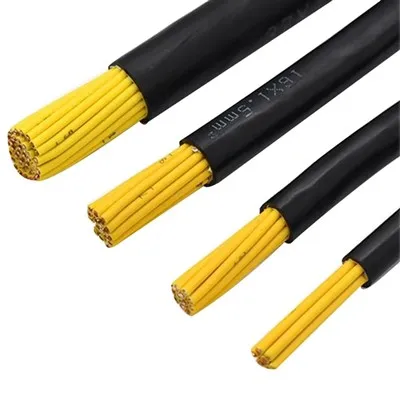

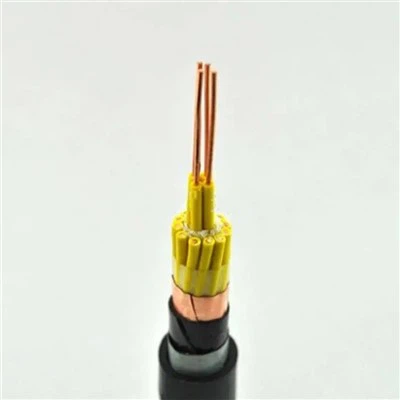
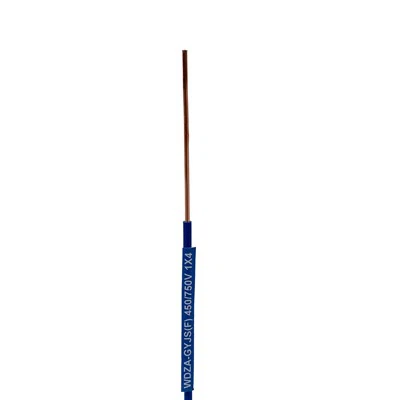


The control wire is like other wires, made of copper conductor, insulation material, and outer sheath. The conductor is usually single or multi-strand copper. Insulation and outer sheath material are usually PVC. Control electric wire is suitable for industrial, mining enterprises, and the energy transport sector.
Control Wire characteristic
- DC Resistance: 20℃, 0.4mm wire, ≤148Ω/km, 0.5mm wire, ≤95Ω/km.
- Insulation electric strength: 1min 1kv between conductors without breakdown Conductor and shield 1min 3kv without breakdown.
- Insulation resistance: Each core wire is grounded with the other cores, the control wire is greater than 10000MΩ.km, and the HYAT wire is greater than 3000MΩ.km.
- Working capacitance: Average value 52±2nF/km.
- Far-end crosstalk defense: The average power of the specified combination is greater than 69dB/km at 50kHZ.
Many people may feel confused about the power cable and control copper wire, this is the third topic of this article.
How to Choose and Use a Control Wire
The wire connected from the control center to each system to transmit signals or control operation functions is collectively referred to as control wires. In the early times, the control wire function is simple, it includes an indicator light display, instrument description, operation of relay and switchgear, alarm interlock system, etc. But recently, the control electric wire has had a high requirement since the extensive use of weak electricity and computer networks. When choosing wire, we usually need to consider the below factors.
Application: Power cable, overhead cable, control wire, etc.
Laying conditions: General plastic insulated cable, steel armored cable, steel wire armored cable, corrosion-resistant cable, etc.
Safety requirements: We can choose non-flame retardant cables, flame retardant cables, halogen-free flame retardant cables, fire retardant cables, etc.
When we talk about how to use control wires, we also should consider the below points.
For PVC insulating sheath electric wire, it is suitable for fixed installation in places with high requirements for mechanical protection and moisture resistance and can be placed openly or hidden.
For single core PVC electric wire, it is suitable for house wiring cable, and also suitable for indoor use.
The installation environment temperature is not lower than -15℃. Suitable for light and medium mobile equipment, instrumentation, household equipment, power lighting, and other places where softness is required.
Control wire has the advantage of moisture, corrosion, and damage protection. It can be laid in a tunnel or cable trench. A power cable is used to transmit and distribute high-power electrical energy in the main line of the power system. The control copper wire directly transmits electric energy from the power distribution point of the power system to the power connection line of various electrical equipment and appliances. The rated voltage of the electric power wire is 0.6/1KV, but the control wire is 450/750V. When producing the same specification power cable and control wire, the insulation and sheath of the power cable will be thicker than the control electric wire.
Below are the main differences between them.
Control electric wire belongs to the electrical equipment wire. But the power wire belongs to the second of class 5 electrical power.
The standard of the control wire is 9330, but the other is GB12706.
The section area of the control wire is not exceeded 10mm2, but the section area of the power wire is big since it is used for power transmission.

Cables are an essential part of any industrial application. Ensuring the cables are properly protected in various industrial environments is also critical, and the first line of defense is the cable jacket. The cable jacket is the outermost layer of a cable that protects the insulation and conductor from external damage. Choosing the appropriate cable jacket material for the environment, especially where chemical cleaning solutions, cutting fluids, and other caustic liquids are present, will increase cable lifespan and increase overall uptime.
Comparing Cable Jacket Materials
Two common types of cable jacket materials used in industrial applications are PVC and PUR. Both of these materials are flexible and durable thermoplastics, materials which melt at extremely high temperatures and become solid again when cooled. Even though they are both plastics, their differing physical properties imbues them with unique abilities. These abilities make PVC cables and PUR cables suited for use in different types of environments.
Polyvinyl chloride, or PVC, is a widely used, general-purpose cable jacket material due to its versatility and low cost. PVC cables can resist heat, oils, moisture, and abrasions, but are especially resistant to common cleaning chemicals. Polyurethane, known as PUR, is also good for oil, moisture, and abrasion resistance, but does not have the same heat resistance qualities as PVC. However, PUR cables are stronger and more flexible.
PVC Cables and When to Use Them
PVC cable jackets are inherently flame- and heat-resistant, owing to their chemical makeup. They can also resist oils, acids, abrasions, sunlight, salt water, ozone, oxidation, and moisture, and a PVC cable with an IP69K rating means it is sealed against the ingress of water even during washdown. This makes them an excellent choice for most chemical washdown applications in the food industry and beverage industry. Because PVC is a blend of materials and can vary from manufacturer to manufacturer, its properties can be adjusted and tailored for specific applications and conditions.
When choosing a cable jacket material, it is also important to consider the concentration of chemicals, temperature of the process, and the duration and frequency of exposure since these factors can impact the suitability of PVC for these applications. For example, though PVC has some resistance to oils, other materials such as PUR offer improved oil resistance, making PVC less suited for automotive and machine tool industries.
In addition to cleaning chemical resistance, PVC cables are typically more rigid than other types of cables. This makes them suitable for use in applications where they will be exposed to high temperature, high pressure washdown. The rigidity of the PVC sheathing protects the cable from damage and extends the life of the cable. However, the rigidity of PVC cables can be a disadvantage in freezer applications, where low temperatures can cause the material to crack if the cables are being flexed.
PUR Cables and When to Use Them
Like PVC, PUR is a thermoplastic material used for cable jackets. However, the chemical composition of polyurethane is noticeably different than that of polyvinyl chloride. Despite not having the natural fire resistance of PVC, PUR does not contain halogens like PVC does and will not emit toxic fumes if exposed to fire. It also creates little smoke. This makes PUR the preferred material in the European Union because EU regulations required "low/no smoke, low/no halogen" properties to be identified on the cable jacket. In case of an incident, fewer halogens will be released into the air.
PUR cables have a high tensile strength and are resistant to UV light, water, tears, and abrasions. They are also resistant to weld slag, cutting fluids, oils, solvents, and other harsh chemicals, making them a good choice for many automotive manufacturing, stamping, and machining applications.
One standout feature of PUR cables is their flexibility and small bend radius. This makes them ideal for applications where connections move or bend frequently, such as robotic applications. Many PUR cables can maintain flexibility even in low temperatures. Besides robotics, PUR cables’ flexibility lends itself to use in paint facilities, medical applications, and other applications with constant movement.
What Is Fire Resistant Cable and Its Characteristics?
Fire resistant cable refers to a cable that can remain operational for a certain period of time when burned. Can maintain circuit integrity in case of fire. It has copper as a conductor, a seamless copper tube as cover and magnesium oxide inorganic mineral as insulation.
Unlike fireproof cables, there is no criterion of combustion or prolonged non-combustion of the cable itself. Instead, the flame retardant cable quickly aborts its work in case of fire. Its main function is that it is difficult to burn and can be self-extinguishing..
Insulation Resistance of Fire Resistant Cable
The insulation resistance of fire-rated cables is highly dependent on the amount of moisture in the magnesium oxide. under standard conditions, when the moisture content does not exceed the 0,4%. The insulation resistance of pressed magnesium oxide is higher than that of other insulating materials (for example, PVC, PE, XLPE, etc.). It can reach from 10Ψ/m to 1016Ψ/m at 20°C.
Besides, the insulation resistance of a cable is related to the number of cores and the size of the cross section. The greater the number of cores and the cross section, the lower the insulation resistance. At the same time, the insulation resistance also depends on the number of impurities in the magnesium oxide. It is also related to temperature, the higher the temperature, the lower the insulation resistance of the cable.
Electrical Resistance of Fire Resistant Cable
Compared to other insulating materials used in the cable industry, the electrical resistance of cables finished with magnesium oxide insulation is not as high. The electrical resistance of fire resistant cables depends on the density of magnesium oxide. Besides, the thickness of the insulation and the condition of the cable itself affect the electrical resistance.
For example, if a cable suffers a bend, the density of the insulating material in the curve decreases. In severe cases, it can even crack. This leads to a reduction in the electrical resistance of the cable.. Tests have shown that at a temperature of 20°C. at a frequency of 50 Hz, The electrical resistance of an unbent standard-density wire approaches 6,0 MV/m. The resistance of the wire is approx. 3 MV/m when the radius of curvature is 6 times the diameter of the cable.
Heat Resistance of Cables
The heat resistance of fire-resistant cables depends on the permissible working temperature of the core and sheath during operation. Under normal conditions, neither the electrical conductor nor the cover rusts. Due to the low oxygen content in the cable insulation, oxidation is not serious. Nevertheless, the cover of the electrical fire resistant cables can oxidize violently due to exposure to air. The higher the temperature, the more serious the oxidation. When the temperature of the copper sheath of the cable exceeds 250°C, drastic oxidation begins to occur, forming the oxide layer CuO.
How to Wire a 4 Core Power Cable?
There are various types of 4 core cables to choose from. One common type is Steel Wire Armored (SWA) cable, also known as 4 core SWA cable. In this version, the cable has an additional layer of protection built-in. The inner sheath is covered by another layer - usually made of galvanized stranded steel wire. To complete the 4 core armored cable, an additional insulation outer layer is added to protect the SWA coating.
Another unique feature of the 4-core power cable is the insulation material used during cable manufacturing. You may see heavy-duty cables like 35mm 4 core armored cable on the sides of roads and bridges. They have insulation material made from a substance called XLPE. "XL" stands for cross-linked - indicating the technology used to manufacture the 4 core SWA cable. Then, "PE" represents polyethylene - the material used to produce the insulation. Such cables are called 4 core XLPE cables.
Usually, you connect a 4 core power line for applications like 2-way circuits. For example, you can connect this type of circuit to control applications that run to the same location - a fan controlled from two points or a set of lights. Whether you use a 4 core flexible cable or a single-core rigid cable, the wiring must adhere to the color code used. According to the revised UK cable standard, there have been changes in the colors of the 4 core power line. The old colors for the four cores in the 4 core power line were red, yellow, blue, and black. These have now been replaced with brown, black, gray, and blue. In the new regulations, blue is the neutral. Brown is the live (live) wire. When wiring applications with a four-core line, it is important to remember this 4 core power line color specification.
Our Factory
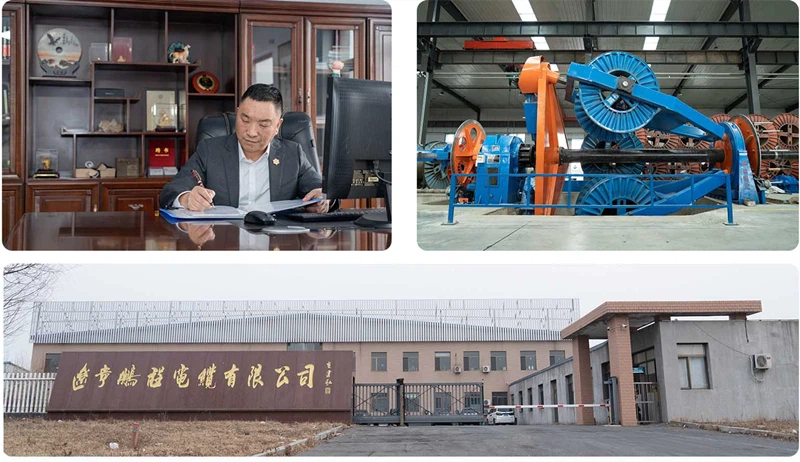
The company is now located in Xintaizi Industrial Park, Liaoning Province, covering an area of nearly 150 acres, the factory area more than 50 acres. The company is mainly committed to research & development and production of flexible mineral insulated fireproof cables, mica belt mineral insulated corrugated copper sheathed cables, and new high conductivity 8000 series of anti-pressure and creep-resistant aluminum alloy core interlocking armored power cables, as well as halogen-free low-smoke flame retardant cables and ordinary wire and cable and other full range of full-specification high-quality cable products system research and development, design, manufacturing, marketing and service. Pengcheng products are widely used in smart grid, energy power, green building, smart factory and hospital and other fields. Currently has a number of valid patents.

FAQ
We're professional control wire manufacturers and suppliers in China, specialized in providing high quality customized service. We warmly welcome you to buy cheap control wire for sale here and get pricelist from our factory. For price consultation, contact us.
standard residential electrical wiring, Control Wire, Low Voltage YJV Cable