






Why Choose Us?
Professional Team
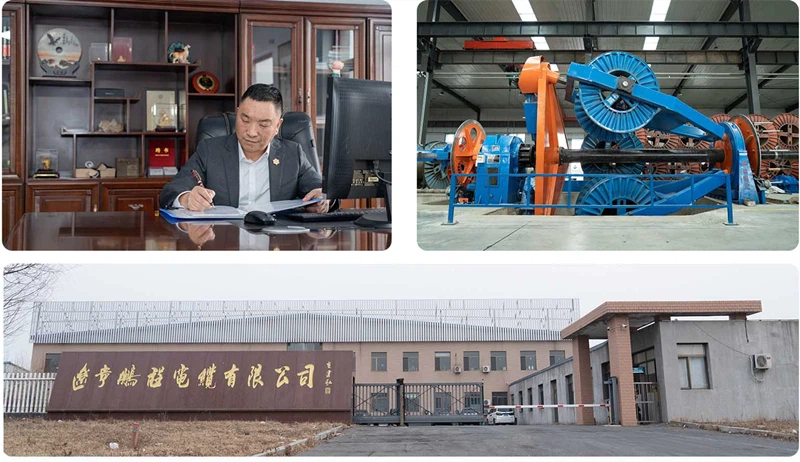
Liaoning Pengcheng Cable Co., Ltd. was founded in 1990. The company's R & D team is composed of experienced cable experts in the industry, and has independently developed a variety of high-tech special cable products.
Advanced Equipment
Pengcheng Cable has a number of international advanced production lines, modern factories, industrial parks of integrated wire and cable manufacturing enterprises.
Quality Control
The company's products have passed ISO9001/IATF16949 quality management system certification, ISO14001 environmental management system certification, ISO45001 Occupational health and safety management system certification, ISO10012 measurement management system certification and other 8 major management system certifications.
One-stop Solution
The company is mainly committed to research & development and production of flexible mineral insulated fireproof cables, mica belt mineral insulated corrugated copper sheathed cables, and new high conductivity 8000 series of anti-pressure and creep-resistant aluminum alloy core interlocking armored power cables, as well as halogen-free low-smoke flame retardant cables and ordinary wire and cable and other full range of full-specification high-quality cable products system research and development, design, manufacturing, marketing and service.
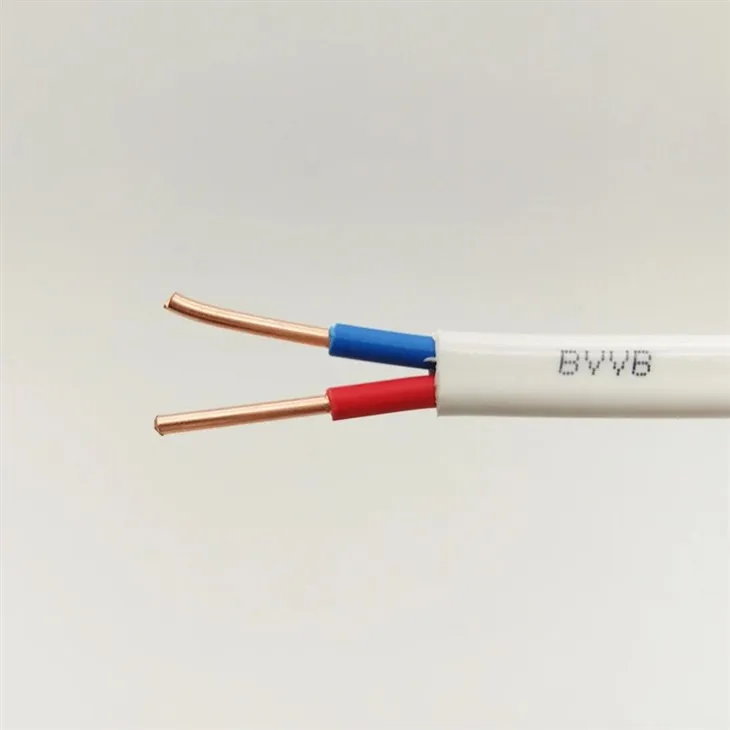
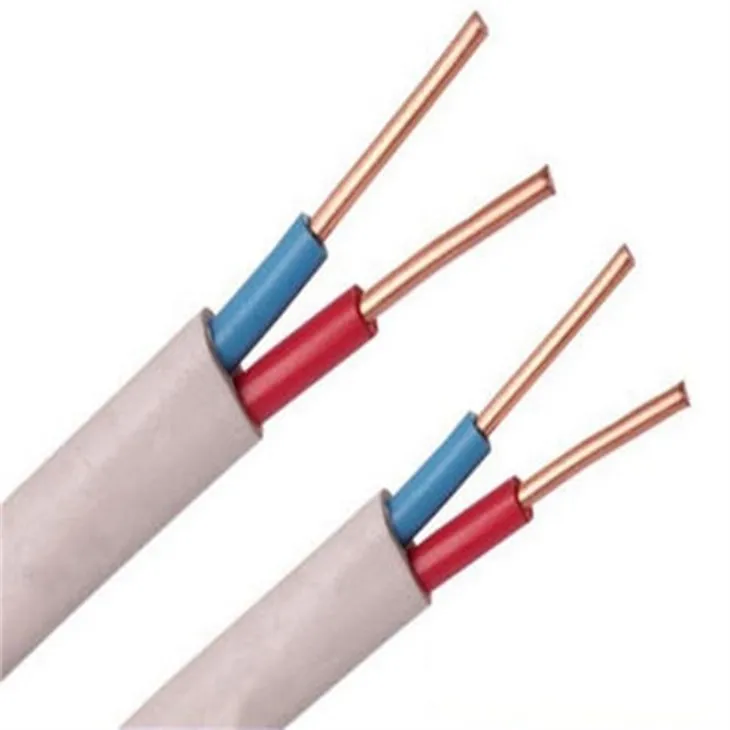
Household insulated wire is typically bundled metal wire covered with a non-conductive material, such as plastic, or rubber which protects the wire and prevents electrical conductivity to other wires or surrounding materials. You'll find household insulated wires everywhere in daily life, from extension cords to home appliances.
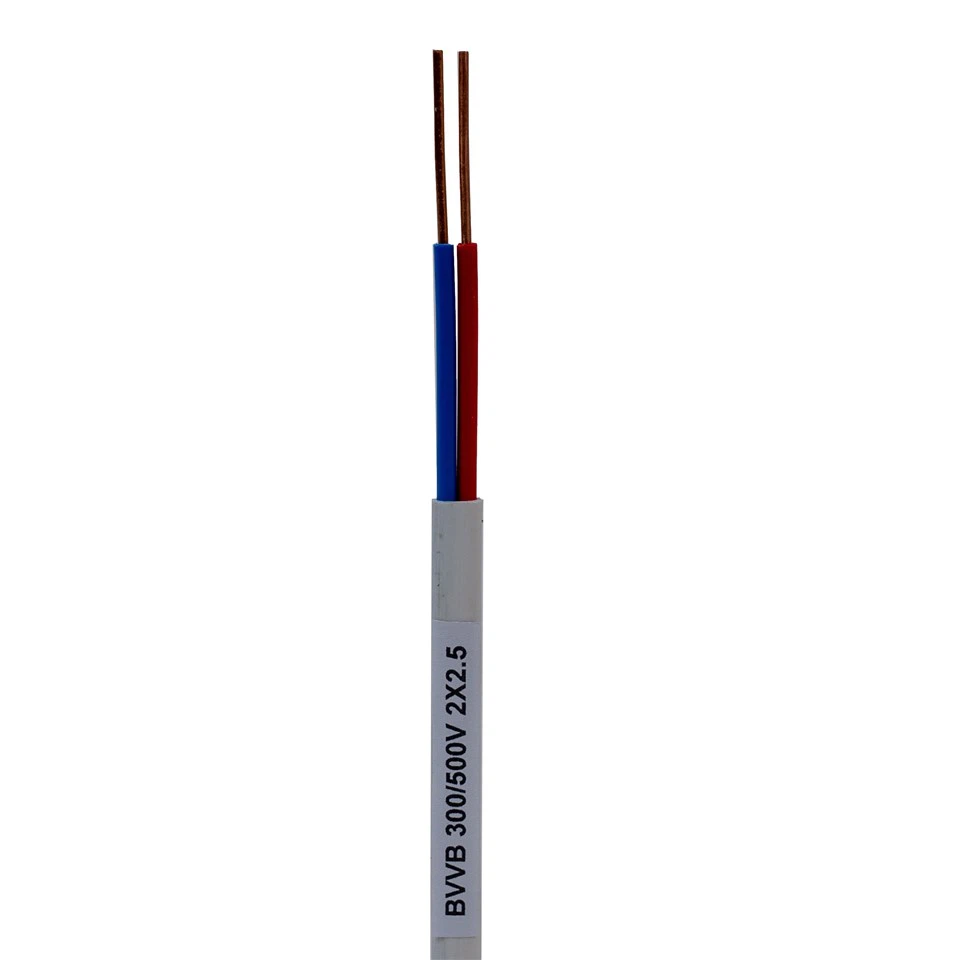
Bvvb type wire, b: cloth wire class, the copper core conductor in the cloth wire is omitted; v: PVC insulation; v: polyvinyl chloride sheath; b: Flat type.

Electrical Wire For House Lights
WDZN-RYJS wire and cable is a fire-resistant polyolefin insulated connection flexible wire. RYJS stands for cross-linked polyethylene absolute twisted-type connection cord.

Black And Blue Electrical Wires
YZ series cable refers to a medium-sized rubber sheath flexible cable, by a plurality of strands of fine copper wire as conductor, the national standard CCC certified wire, the wire is safe and stable, high reliability, so it is used for home decoration.

ZC-RVV wire is ground directly buried wire, in line with China's fire retardant c standard, RVV cable full name copper core PVC insulated PVC sheathed flexible wire, also known as light PVC sheathed flexible wire, commonly known as soft sheathed wire.

BV wire, single core wire; Referred to as plastic copper wire, full name copper core PVC insulated cloth wire. National standard CCC certified wire, the wire is safe and stable, high reliability, so it is used for home decoration.
Conductor material: oxygen free copper
Insulation material: PVC
Color: Black, yellow, blue, red, brown, white, etc
Operating temperature: 60 degrees, 70 degrees, 95 degrees
Rated voltage: 450/750V
The ambient temperature shall not be lower than 15 degrees below zero when laying the cable (line).
Cable allowable bending radius:
The outer diameter (D) of the cable is less than 25mm and not less than 4D;
The outer diameter (D) of the cable is 25mm and above should not be less than 6D.
The finished cable (wire) and cable core shall be subjected to power frequency spark withstand voltage test.
The mark of the cable (line) shall be executed according to the GB6995 standard, and the mark shall be clear and erasable.
National standard bv wire and cable for AC rated voltage 450/750V and below or DC voltage 1000V and below electrical equipment, instrumentation, decoration, telecommunications equipment, power lighting and lines, can be open or dark.
Product standard: GB5023.3-1997 JB8734-98 in line with IEC CCC standards, the national standard bv cable production certificate must be printed with 3C certification mark.
The heat doesn't affect the copper conductors in the wiring. They can handle far higher temperatures than those found in attics. The problem is the plastic insulation and jacketing that surround the wires. These are usually rated to withstand up to 194°F, but temperatures that approach this limit are not recommended.
Wires so hot you can't touch them aren't good. Because larger wires offer less resistance to electrical current, they permit more current flow while staying cooler.
Another, perhaps more practical, solution is to add more circuits. That divides the electrical current among more wires instead of just a few overtaxed circuits. Additional circuits and circuit breakers also provide an increased safety margin. If you prefer this solution, you'll have to run some new lengths of wire, and it's always a good idea to use larger wires than those in place now.

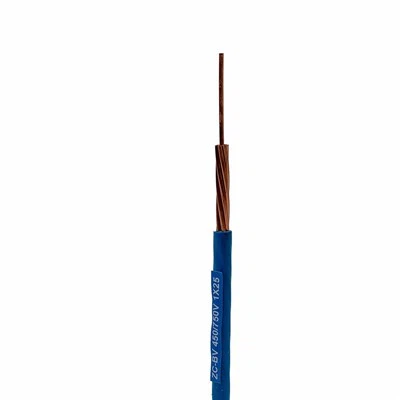
Household insulated wire is a product that is used often when building electric hi-tensile fence systems. We recommend using the cable for your connections and your grounding system. It works well under gateways. It can and should be used for your lead out wires and jumpers.
Household insulated wire, also called underground cable is generally class iii coated wire inside insulated sleeves or jackets. They are very tough and come in both single wall and double wall configurations.
When going underground we highly recommend that you install the wire inside a conduit of some type. This allows for added protection, plus will aid you down the road should there be a problem in this area. If it is inside a conduit, then it could be easily removed while pulling through another wire. For conduit you can use either PVC tubing or black HDPE pipe. The ends should be closed off so that water does not get in and fill the conduit. You can run it up your gate posts, then bend downward, thus sealing it off. If you decide to direct bury the underground cable, (without conduit) then we recommend that you use the double wall insulated cable.
How Do You Test Insulation Wire
Step 1: Safely strip the cable exposing the conductors.
Step 2: Connect the black test lead to the grounding braid and the red test to both bus wires.
Step 3: Perform the insulation resistance test for one minute. A passing test should be at a minimum of 20 megohms.
Step 4: Record the test values. This cable is now ready to be installed.
After installation, your acceptance test requires five steps:
Step 1: Open the power termination kit cover and disconnect wires from the terminals.
Step 2: Connect the black test lead to the grounding braid and the red test to both bus wires.
Step 3: Perform the insulation resistance test for one minute. A passing test should be at a minimum of 20 megohms.
Step 4: Record the test values.
Step 5: Re-connect wires into terminals and close the cover on the power termination kit. Repeat steps one through five for your final inspection test and before energizing the system.
Why Do You Need to Household Insulated Wires
Safety
Electrical wire insulation is essential to keeping an area safe and helping individuals avoid electric shock. The occupational safety and health administration considers exposed wires, worn insulation, and removed insulation electrical hazards. The risk of shock increases in wet conditions, from bathrooms to rain.
Durability and protection
Wiring is made of metals that can corrode with exposure to water. Insulation protects materials like copper and steel from exposure to the elements to withstand their surroundings and last longer. If wiring wasn't insulated, it wouldn't last as long or as effective. Though no material can perfectly insulate a wire, any insulation is better than none.
Leakage prevention
Electrical leakage occurs if energy transfers to components like a framework or other wires. Insulation protects wires from touching each other and from contacting framework or grounding components. That ensures an electrical system functions properly.
Color-coding
Electrical wires are color-coded to certain standards for consistency. That helps electricians and others handling wires understand wire function and its voltage. Color codes allow for quick identification, making wiring jobs simpler. You might see colors like:
● White insulation denotes 14-gauge wires rated for 15 amps.
● Gray insulation denotes cables rated for 15 amps.
● Black insulation denotes six- and eight-gauge wires rated for 40-60 amps.
● Orange insulation denotes 10-gauge wires rated for 30 amps.
● Yellow insulation denotes 12-gauge wires rated for 20 amps.
Our Factory
Liaoning Pengcheng Cable Co., Ltd. was founded in 1990, located in the northeast center of Shenyang & Tieling business district, is the comprehensive strength of the forefront of wire and cable manufacturing enterprises. Pengcheng Cable has a number of international advanced production lines, modern factories, industrial parks of integrated wire and cable manufacturing enterprises. The company is now located in Xintaizi Industrial Park, Liaoning Province, covering an area of nearly 150 acres, the factory area more than 50 acres. The company is mainly committed to research & development and production of flexible mineral insulated fireproof cables, mica belt mineral insulated corrugated copper sheathed cables, and new high conductivity 8000 series of anti-pressure and creep-resistant aluminum alloy core interlocking armored power cables, as well as halogen-free low-smoke flame retardant cables and ordinary wire and cable and other full range of full-specification high-quality cable products system research and development, design, manufacturing, marketing and service. Pengcheng products are widely used in smart grid, energy power, green building, smart factory and hospital and other fields. Currently has a number of valid patents.

Our Certificate
The company's products have passed ISO9001/IATF16949 quality management system certification, ISO14001 environmental management system certification, ISO45001 Occupational health and safety management system certification, ISO10012 measurement management system certification and other 8 major management system certifications. As well as the national industrial product production license, national mandatory product certification (3C certification), PCCC certification and China Quality CQC certification, flame retardant label certification, fire retardant label certification and other certifications.

FAQ
Hot Tags: copper core polyethylene insulated cable, China copper core polyethylene insulated cable manufacturers, suppliers, factory, Low Voltage YJV Cable, armoured copper power cable, xlpe fire resistant Control wire, 4 Core Cy Cable, direct burial 4 0 aluminum wire, Screened Control Cable





