When it comes to electrical wiring for households, one of the common questions that often arises is whether 3 Core Household Wire can be bent easily. As a supplier of 3 Core Household Wire, I've encountered this query numerous times from electricians, contractors, and even DIY enthusiasts. In this blog, I'll delve into the factors that affect the bendability of 3 Core Household Wire and provide a comprehensive answer to this question.
Understanding 3 Core Household Wire
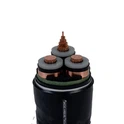
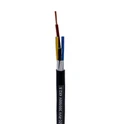
First, let's briefly understand what 3 Core Household Wire is. A 3 Core Household Wire typically consists of three insulated conductors within a single outer sheath. These conductors are usually color - coded for easy identification, with common colors being brown for the live wire, blue for the neutral wire, and green - yellow for the earth wire. This type of wire is widely used in domestic electrical installations for powering various appliances and lighting fixtures.
Factors Affecting Bendability
Conductor Material
The material of the conductors in the 3 Core Household Wire plays a significant role in its bendability. Most commonly, copper is used as the conductor material due to its excellent electrical conductivity. Copper is a relatively soft and malleable metal, which means that 3 Core Household Wire with copper conductors can be bent relatively easily. In contrast, aluminum conductors, although less expensive, are stiffer and more brittle than copper. Wires with aluminum conductors may be more difficult to bend without the risk of damaging the conductor or the insulation.


Conductor Gauge
The gauge of the conductors also affects the bendability of the wire. A lower gauge number indicates a thicker conductor. Thicker conductors are generally stiffer and more difficult to bend compared to thinner ones. For example, a 3 Core Household Wire with 1.5 - mm² conductors will be easier to bend than one with 6 - mm² conductors. Electricians often choose the appropriate gauge based on the electrical load requirements of the circuit, but they also need to consider the ease of installation, which includes the ability to bend the wire.
Insulation Material
The type of insulation used on the 3 Core Household Wire can impact its bendability. Common insulation materials include PVC (Polyvinyl Chloride). PVC is a flexible and durable material that allows for some degree of bending. However, if the insulation is too thick or has a high - durometer (hardness) rating, it can make the wire less flexible. For instance, a 300/500V PVC Insulated Cable with a standard - thickness PVC insulation is designed to be flexible enough for normal household wiring installations.
Outer Sheath
The outer sheath of the 3 Core Household Wire provides additional protection and can also influence its bendability. A thin and flexible outer sheath will allow the wire to bend more easily, while a thick or rigid outer sheath can restrict the bending. Some outer sheaths are designed to be more resistant to abrasion, moisture, or sunlight, but these features may come at the cost of reduced flexibility.
Testing the Bendability
In the laboratory, we often conduct bend tests on our 3 Core Household Wire to ensure that it meets the industry standards for flexibility. These tests involve bending the wire around a mandrel of a specified diameter for a certain number of cycles. If the wire passes these tests, it indicates that it can be bent during installation without causing damage to the conductors or the insulation.
Real - World Applications
In real - world household wiring installations, electricians need to bend the 3 Core Household Wire to fit around corners, through conduits, and into electrical boxes. The ease of bending the wire can significantly impact the installation time and quality. For example, when wiring a new house, electricians may need to run the wire through studs and joists. If the wire is difficult to bend, it may take longer to install, and there is a higher risk of kinking or damaging the wire, which can lead to electrical problems in the future.
Comparison with Other Types of Wires
Compared to Common House Wire, which may have a different number of cores or a different construction, 3 Core Household Wire has its own unique bendability characteristics. Single - core wires are generally easier to bend than multi - core wires because they do not have the additional bulk of multiple conductors and the outer sheath. However, 3 Core Household Wire offers the convenience of having multiple conductors in one cable, which can simplify the wiring process.
Tips for Bending 3 Core Household Wire
If you are working with 3 Core Household Wire, here are some tips to ensure easy and safe bending:
- Use the right tools: A wire bending tool can help you achieve a smooth and consistent bend without damaging the wire.
- Bend slowly: Rapid bending can cause the wire to kink or damage the insulation. Take your time and apply gentle pressure.
- Follow the manufacturer's guidelines: The manufacturer usually provides recommendations on the minimum bending radius for the wire. Make sure to follow these guidelines to avoid damaging the wire.
Conclusion
In conclusion, 3 Core Household Wire can be bent easily under the right conditions. The bendability depends on factors such as the conductor material, gauge, insulation material, and outer sheath. Copper conductors, thinner gauges, flexible insulation, and a suitable outer sheath all contribute to making the wire easier to bend. As a supplier of 3 Core Household Wire, we ensure that our products meet the highest standards of flexibility and quality to make your wiring installations as easy as possible.
If you are in the market for high - quality 3 Core Household Wire or have any questions about our products, we invite you to contact us for a procurement discussion. We are committed to providing you with the best solutions for your electrical wiring needs.
References
- Electrical Wiring Handbook
- National Electrical Code (NEC)
- Manufacturer's product specifications for 3 Core Household Wire