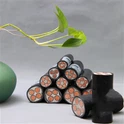
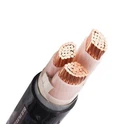
As a supplier of Fire Resistant Control Wire, I've witnessed firsthand the critical role mechanical strength plays in the performance of these wires. In this blog, I'll delve into how the mechanical strength of Fire Resistant Control Wire affects its overall performance, exploring various aspects such as durability, reliability, and safety.
Understanding Fire Resistant Control Wire
Before we discuss the impact of mechanical strength, let's briefly understand what Fire Resistant Control Wire is. Fire Resistant Control Wire is designed to maintain circuit integrity during a fire, ensuring that control systems continue to function for a specified period. This is crucial in applications where safety and continuous operation are paramount, such as in industrial plants, commercial buildings, and transportation systems. You can learn more about Fire Resistant Control Wire on our website.
The Significance of Mechanical Strength
Mechanical strength refers to the ability of a material to withstand external forces without breaking or deforming. In the context of Fire Resistant Control Wire, mechanical strength is essential for several reasons.
Durability
One of the primary benefits of high mechanical strength is durability. Fire Resistant Control Wires are often installed in harsh environments where they may be exposed to physical stress, such as bending, pulling, and vibration. A wire with low mechanical strength is more likely to break or develop cracks under these conditions, leading to premature failure. On the other hand, a wire with high mechanical strength can withstand these stresses without significant damage, ensuring a longer service life.
For example, in industrial settings, wires may be routed through tight spaces or around sharp edges. A wire with poor mechanical strength may get damaged during installation or operation, resulting in costly repairs and downtime. In contrast, a wire with high mechanical strength can resist these challenges, reducing the risk of failure and maintenance costs.
Reliability
Reliability is another crucial aspect of Fire Resistant Control Wire performance. In critical applications, such as emergency control systems, a single wire failure can have serious consequences. High mechanical strength helps to ensure the reliability of the wire by reducing the likelihood of breakage or damage.


When a wire has high mechanical strength, it is less likely to experience intermittent connections or signal loss due to physical damage. This is particularly important in control systems where accurate and continuous communication is essential. For instance, in a fire alarm system, a reliable wire is necessary to ensure that the alarm signals are transmitted correctly and promptly.
Safety
Safety is perhaps the most important consideration when it comes to Fire Resistant Control Wire. In the event of a fire, the wire must maintain its integrity to ensure that control systems continue to function. High mechanical strength plays a vital role in this regard.
During a fire, the wire may be exposed to extreme heat, flames, and physical stress. A wire with low mechanical strength may break or melt under these conditions, compromising the safety of the system. On the other hand, a wire with high mechanical strength can withstand the heat and physical forces, maintaining its electrical conductivity and ensuring the proper operation of the control system.
Factors Affecting Mechanical Strength
Several factors can affect the mechanical strength of Fire Resistant Control Wire. Understanding these factors can help us select the right wire for specific applications.
Material Selection
The choice of materials is one of the most important factors influencing mechanical strength. Different materials have different mechanical properties, and selecting the appropriate material is crucial for achieving the desired strength.
For example, copper is a commonly used conductor material in Fire Resistant Control Wires due to its high electrical conductivity and good mechanical strength. However, the mechanical strength of copper can vary depending on its purity and the manufacturing process. High-purity copper generally has better mechanical properties than lower-purity copper.
In addition to the conductor material, the insulation and sheath materials also play a role in determining the mechanical strength of the wire. Insulation materials such as cross-linked polyethylene (XLPE) and polyvinyl chloride (PVC) have different mechanical properties, and the choice of insulation material can affect the wire's resistance to abrasion, impact, and other physical stresses.
Construction Design
The construction design of the wire also affects its mechanical strength. Factors such as the number of conductors, the arrangement of conductors, and the thickness of the insulation and sheath can all influence the wire's ability to withstand external forces.
For example, a multi-core wire with a larger number of conductors may have lower mechanical strength compared to a single-core wire due to the increased complexity of the construction. However, proper design and manufacturing techniques can help to mitigate these effects and ensure that the wire has adequate mechanical strength.
Manufacturing Process
The manufacturing process can also have a significant impact on the mechanical strength of the wire. Proper manufacturing techniques, such as annealing, stranding, and insulation extrusion, can improve the mechanical properties of the wire.
Annealing is a heat treatment process that can improve the ductility and toughness of the conductor material, reducing the risk of breakage during bending or pulling. Stranding is the process of twisting multiple conductors together to form a single cable, which can improve the wire's flexibility and resistance to mechanical stress. Insulation extrusion is the process of applying a layer of insulation material around the conductor, and proper extrusion techniques can ensure that the insulation has good adhesion and mechanical properties.
Testing and Certification
To ensure the mechanical strength and performance of Fire Resistant Control Wire, it is essential to conduct rigorous testing and obtain relevant certifications. Testing can help to verify the wire's compliance with industry standards and specifications, and certifications can provide assurance to customers that the wire meets the required quality and safety standards.
Common tests for mechanical strength include tensile strength testing, bending testing, and impact testing. Tensile strength testing measures the maximum force that a wire can withstand before breaking, while bending testing evaluates the wire's ability to withstand repeated bending without damage. Impact testing assesses the wire's resistance to sudden impacts.
Certifications such as UL (Underwriters Laboratories) and IEC (International Electrotechnical Commission) provide independent verification of the wire's performance and compliance with international standards. These certifications are widely recognized in the industry and can help to build trust with customers.
Conclusion
In conclusion, the mechanical strength of Fire Resistant Control Wire has a significant impact on its performance. High mechanical strength ensures durability, reliability, and safety, making the wire suitable for use in harsh environments and critical applications. By understanding the factors affecting mechanical strength, selecting the right materials and construction design, and conducting proper testing and certification, we can ensure that our Fire Resistant Control Wires meet the highest standards of quality and performance.
If you are in the market for high-quality Fire Resistant Control Wire, we invite you to contact us for more information and to discuss your specific requirements. Our team of experts is dedicated to providing you with the best solutions for your needs. We also offer a wide range of other control wires, such as 4 Core Cy Cable and Control Panel Wire, to meet your diverse needs.
References
- Underwriters Laboratories (UL) Standards for Fire Resistant Cables
- International Electrotechnical Commission (IEC) Standards for Electrical Cables
- [Handbook of Electrical Engineering: Cable Design and Installation](Author, Publisher, Year)