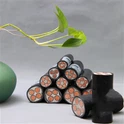
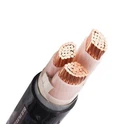
When it comes to electrical installations, understanding the capabilities of different types of cables is crucial. As a trusted supplier of Mains Armoured Cable, I often receive inquiries about the maximum power these cables can carry. In this blog post, I'll delve into the factors that determine the power - carrying capacity of Mains Armoured Cable and provide some insights to help you make informed decisions for your electrical projects.
Understanding Mains Armoured Cable
Mains Armoured Cable is a type of electrical cable designed for power distribution in various applications, including commercial, industrial, and residential settings. The "armoured" aspect refers to the additional layer of protection, usually made of steel wire or tape, which provides mechanical strength and protection against physical damage, moisture, and rodents. This makes it suitable for both underground and above - ground installations.
Factors Affecting the Power - Carrying Capacity
The maximum power that a Mains Armoured Cable can carry is not a fixed value and is influenced by several factors:
1. Cross - sectional Area
The cross - sectional area of the cable conductors is one of the most significant factors. A larger cross - sectional area allows for more electrons to flow through the cable, which means it can carry more current and, consequently, more power. For example, a cable with a larger diameter will have a lower resistance, and according to Ohm's Law (P = I²R, where P is power, I is current, and R is resistance), less power will be dissipated as heat. As a result, it can handle higher power loads. Our Yjv32 3* 50mm Armoured Cable has a relatively large cross - sectional area, which enables it to carry a substantial amount of power compared to cables with smaller cross - sectional areas.
2. Conductor Material
The material of the cable conductors also plays a vital role. Copper and aluminum are the two most commonly used materials. Copper has a lower resistivity than aluminum, which means it can conduct electricity more efficiently. For the same cross - sectional area, a copper - conductor cable can carry more current and power than an aluminum - conductor cable. However, copper is more expensive. When choosing a cable, you need to balance the cost and the power - carrying requirements of your project.
3. Ambient Temperature
The temperature of the environment where the cable is installed affects its power - carrying capacity. As the ambient temperature increases, the resistance of the cable conductors also increases. This leads to more power being dissipated as heat, reducing the cable's ability to carry current without overheating. Cables are usually rated for a specific ambient temperature, typically around 30°C or 40°C. If the installation environment has a higher temperature, derating factors need to be applied to the cable's rated current - carrying capacity.
4. Installation Method
The way the cable is installed can impact its power - carrying capacity. Cables installed in free air can dissipate heat more effectively than those installed in conduits or buried underground. When cables are grouped together, the heat generated by each cable can accumulate, further reducing the overall power - carrying capacity. Therefore, proper installation methods and spacing between cables are essential to ensure optimal performance.
5. Voltage Rating
The voltage rating of the cable is another important consideration. Higher voltage cables can carry more power for the same current. The power formula P = VI (where P is power, V is voltage, and I is current) shows that for a given current, increasing the voltage will result in an increase in power. However, higher voltage cables also require more careful installation and insulation to prevent electrical breakdown.
Calculating the Power - Carrying Capacity
To calculate the maximum power that a Mains Armoured Cable can carry, we first need to determine its current - carrying capacity. Cable manufacturers usually provide current - carrying capacity tables based on different cable sizes, conductor materials, ambient temperatures, and installation methods.
Once we know the current - carrying capacity (I) of the cable, we can use the power formula P = VI. For example, in a single - phase AC system with a voltage of 230V, if a cable has a current - carrying capacity of 50A, the maximum power it can carry is P = 230V×50A = 11500W or 11.5kW. In a three - phase AC system with a line - to - line voltage of 400V, the power formula is P = √3×V×I×cosφ, where cosφ is the power factor. Assuming a power factor of 0.9, if a cable can carry a current of 50A, the maximum power is P = √3×400V×50A×0.9 ≈ 31.2kW.
Examples of Our Products and Their Power - Carrying Capabilities
Let's take a look at some of our popular products and their approximate power - carrying capabilities:
- Yjv32 3* 50mm Armoured Cable: With its large cross - sectional area and high - quality copper conductors, this cable can carry a significant amount of power. In a three - phase system with a voltage of 400V and a power factor of 0.9, it can carry a current of around 150A, which translates to a power of approximately P = √3×400V×150A×0.9 ≈ 93.6kW.
- Yjv22 Power 16mm*5 Armoured Cable: This cable is suitable for medium - power applications. In a single - phase system with a voltage of 230V, it can carry a current of around 60A, resulting in a power of P = 230V×60A = 13800W or 13.8kW.
- 4 Core Low Voltage Power Cable: Designed for low - voltage applications, this cable can handle different power loads depending on its size and installation conditions. For example, a 4 - core cable with a certain cross - sectional area may be able to carry a current of 30A in a single - phase 230V system, corresponding to a power of P = 230V×30A = 6900W or 6.9kW.
Importance of Choosing the Right Cable
Selecting the appropriate Mains Armoured Cable for your project is of utmost importance. Using a cable with insufficient power - carrying capacity can lead to overheating, which not only reduces the cable's lifespan but also poses a significant fire hazard. On the other hand, using a cable with an overly large power - carrying capacity can result in unnecessary costs.


By understanding the factors that affect the power - carrying capacity and carefully considering your project's requirements, you can choose the right cable that provides a safe and efficient power distribution solution.
Conclusion
In conclusion, the maximum power that a Mains Armoured Cable can carry is determined by multiple factors, including cross - sectional area, conductor material, ambient temperature, installation method, and voltage rating. As a supplier, we offer a wide range of Mains Armoured Cables to meet different power - carrying requirements. Whether you are working on a small residential project or a large industrial installation, we can help you find the right cable for your needs.
If you have any questions about our products or need assistance in selecting the appropriate cable for your project, please feel free to contact us. We are here to provide you with professional advice and high - quality products. Let's work together to ensure the success of your electrical projects.
References
- Electrical Installation Regulations, various editions.
- Cable manufacturer's technical data sheets.
- Electrical engineering textbooks on power distribution and cable design.