


As a supplier of underground electrical wire, I've witnessed firsthand the evolution of electrical systems and the ever - changing demands placed on our products. One topic that has gained significant attention in recent years is the impact of high - frequency signals on underground electrical wire. In this blog, I'll explore this phenomenon in detail, drawing on industry knowledge and real - world experience.
Understanding High - Frequency Signals
High - frequency signals typically refer to electrical signals with frequencies above 1 MHz. These signals are commonly found in modern communication systems, such as Wi - Fi, cellular networks, and radio frequency identification (RFID) systems. They are also used in some industrial applications, like high - speed data transmission and electromagnetic induction heating.
The characteristics of high - frequency signals are quite different from those of low - frequency signals. High - frequency signals have shorter wavelengths, which means they can carry more information in a given time. However, they are also more susceptible to attenuation, interference, and reflection.
How High - Frequency Signals Interact with Underground Electrical Wire
Skin Effect
One of the primary ways high - frequency signals interact with underground electrical wire is through the skin effect. The skin effect is a phenomenon where the alternating current (AC) in a conductor tends to flow more towards the outer surface of the conductor as the frequency increases. At high frequencies, the current density is concentrated in a thin layer near the surface of the wire, known as the skin depth.
The skin depth is inversely proportional to the square root of the frequency. For example, in a copper wire, at low frequencies (e.g., 50 Hz or 60 Hz), the current is distributed relatively evenly across the cross - section of the wire. But at high frequencies (e.g., 10 MHz), the current is mostly confined to a very thin layer near the surface. This effectively reduces the cross - sectional area of the wire available for current flow, increasing the resistance of the wire.
As a supplier of underground electrical wire, this is a crucial consideration. For instance, our 2.0 Awg Copper Underground Wire may experience increased resistance when exposed to high - frequency signals, which can lead to power losses and heating issues.
Dielectric Loss
Underground electrical wires are usually insulated with dielectric materials. High - frequency signals can cause dielectric loss in these materials. Dielectric loss occurs when the alternating electric field in the dielectric material causes the molecules in the material to vibrate. This vibration results in the conversion of electrical energy into heat energy.
The dielectric loss factor of a material is frequency - dependent. As the frequency of the signal increases, the dielectric loss also increases. This can lead to a decrease in the efficiency of the underground electrical wire and potentially damage the insulation over time. Our 6/3 with Ground Direct Burial Wire uses high - quality insulation materials, but even these can be affected by high - frequency dielectric loss.
Electromagnetic Interference (EMI)
High - frequency signals can also cause electromagnetic interference (EMI) in underground electrical wires. EMI occurs when the electromagnetic fields generated by high - frequency signals couple with the electrical conductors in the wire. This can introduce unwanted noise and distortion into the electrical signals carried by the wire.
EMI can be particularly problematic in underground electrical systems because the wires are often in close proximity to other electrical and electronic devices. For example, in a residential or commercial underground electrical system, the presence of high - frequency signals from nearby communication towers or Wi - Fi routers can interfere with the normal operation of the electrical wiring. Our Underground Electrical Wire for 100 Amp Service may be affected by EMI, which can lead to malfunctions in electrical equipment connected to the wire.
Impact on the Performance of Underground Electrical Wire
Power Losses
The increased resistance due to the skin effect and dielectric loss can lead to significant power losses in underground electrical wires. Power losses are proportional to the square of the current and the resistance of the wire. As the resistance increases at high frequencies, the power losses also increase. This not only reduces the efficiency of the electrical system but also results in higher energy costs for the end - user.
Signal Degradation
In addition to power losses, high - frequency signals can cause signal degradation in underground electrical wires. The interference and distortion introduced by EMI can make it difficult for the electrical signals to be accurately transmitted. This is especially critical in applications where precise signal transmission is required, such as in control systems and communication networks.
Insulation Damage
The dielectric loss and heating caused by high - frequency signals can also damage the insulation of underground electrical wires. Over time, the increased temperature can cause the insulation material to degrade, leading to reduced insulation resistance and potentially short circuits. This can pose a safety hazard and require costly repairs or replacements.
Mitigation Strategies
Wire Design
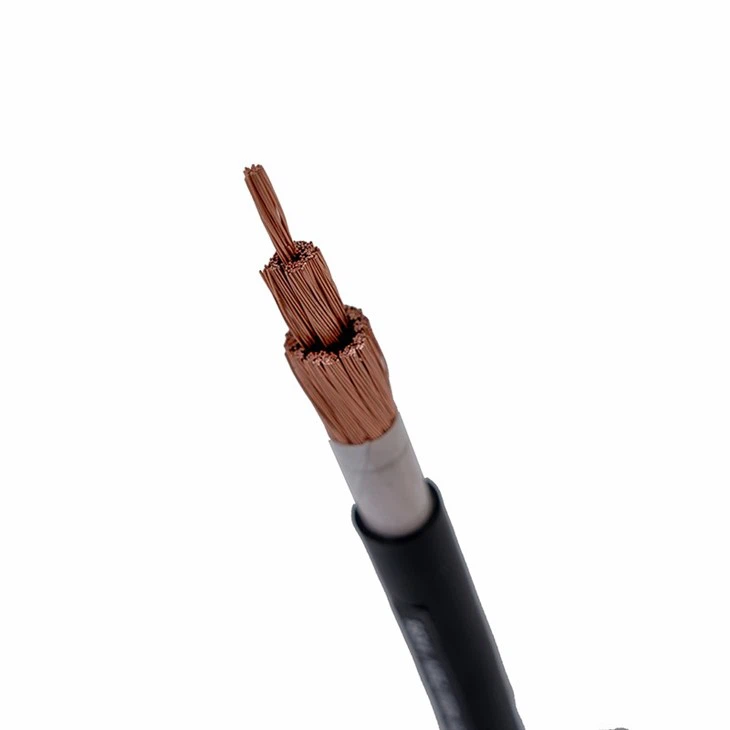
One way to mitigate the impact of high - frequency signals on underground electrical wire is through wire design. Using wires with larger cross - sectional areas can help reduce the resistance increase due to the skin effect. Additionally, using stranded wires instead of solid wires can increase the effective surface area available for current flow at high frequencies.

Insulation Materials
Selecting high - quality insulation materials with low dielectric loss factors is essential. Some advanced insulation materials are specifically designed to minimize the impact of high - frequency signals. These materials can help reduce power losses and prevent insulation damage.
Shielding
Shielding the underground electrical wire can help reduce EMI. A shield, typically made of a conductive material such as copper or aluminum, can surround the wire and divert the electromagnetic fields away from the conductor. This can significantly reduce the interference and distortion caused by high - frequency signals.
Conclusion
As a supplier of underground electrical wire, understanding the impact of high - frequency signals on our products is crucial. The skin effect, dielectric loss, and EMI can all have significant effects on the performance and lifespan of underground electrical wires. By implementing appropriate mitigation strategies, such as wire design optimization, using high - quality insulation materials, and shielding, we can ensure that our products can withstand the challenges posed by high - frequency signals.
If you are in need of high - quality underground electrical wire that can perform well in the presence of high - frequency signals, we are here to help. Our team of experts can provide you with the best solutions tailored to your specific requirements. Contact us to start a procurement discussion and find the perfect underground electrical wire for your project.
References
- Grover, F. W. (1946). Inductance Calculations: Working Formulas and Tables. Dover Publications.
- Paul, C. R. (2006). Introduction to Electromagnetic Compatibility. Wiley - Interscience.
- Hayt, W. H., & Buck, J. A. (2006). Engineering Electromagnetics. McGraw - Hill.


