Hey there! As a household wire supplier, I often get asked about how to measure the resistance of household wire. It's a crucial aspect, especially when it comes to ensuring the safety and efficiency of electrical systems in homes. So, I thought I'd share some insights on this topic.
First off, why do we even need to measure the resistance of household wire? Well, resistance affects the flow of electricity. If the resistance is too high, it can lead to power loss, overheating, and even pose a fire hazard. On the other hand, a wire with the right resistance ensures that electrical appliances work properly and safely.
Let's start with the basics. Resistance is measured in ohms (Ω), and it depends on several factors, including the material of the wire, its length, and its cross - sectional area. For most household wires, copper and aluminum are the common materials. Copper is a great conductor with relatively low resistance, while aluminum has a slightly higher resistance but is more affordable.
Now, how can you measure the resistance of household wire? There are a few methods, and I'll go through them one by one.
Using a Multimeter
A multimeter is a handy tool that can measure various electrical properties, including resistance. Here's how you can use it to measure the resistance of household wire:
- Turn off the power: Before you start, make sure the power to the circuit is turned off. This is crucial for your safety. You don't want to get electrocuted while measuring the resistance.
- Set the multimeter to the resistance mode: Most multimeters have a dial or a button to select the resistance mode. Make sure you choose the appropriate range. If you're not sure, start with a higher range and then adjust it as needed.
- Prepare the wire: Cut the wire at both ends if possible. This will give you a clean connection for the multimeter probes. If you can't cut the wire, you can use alligator clips to attach the probes to the wire.
- Connect the probes: Touch one probe to one end of the wire and the other probe to the other end. Make sure the connections are good. You should see a reading on the multimeter display. This reading is the resistance of the wire.
It's important to note that the resistance of a wire can vary depending on its temperature. So, try to measure the resistance at a stable temperature. Also, if the wire is part of a circuit, there may be other components that can affect the reading. In that case, you may need to isolate the wire from the circuit.
Calculating Resistance Based on Wire Specifications
If you know the specifications of the wire, such as its material, length, and cross - sectional area, you can calculate its resistance using the following formula:
[R=\rho\frac{L}{A}]
where (R) is the resistance, (\rho) is the resistivity of the material, (L) is the length of the wire, and (A) is the cross - sectional area of the wire.
The resistivity (\rho) is a property of the material. For copper, the resistivity is approximately (1.72\times10^{-8}\Omega m), and for aluminum, it's about (2.82\times10^{-8}\Omega m).
Let's say you have a copper wire that is 10 meters long and has a cross - sectional area of (1.5mm^{2}) (which is a common size for household wiring). First, you need to convert the cross - sectional area to square meters: (1.5mm^{2}=1.5\times10^{-6}m^{2}).
Then, you can calculate the resistance using the formula:
[R = 1.72\times10^{-8}\Omega m\times\frac{10m}{1.5\times10^{-6}m^{2}}\approx0.115\Omega]
This calculation gives you an estimate of the resistance of the wire. Keep in mind that this is an ideal value, and the actual resistance may be slightly different due to factors like manufacturing variations and temperature.

Factors Affecting Wire Resistance
As I mentioned earlier, several factors can affect the resistance of household wire. Let's take a closer look at them:
- Material: Different materials have different resistivities. Copper and silver are good conductors with low resistivities, while materials like nichrome have high resistivities and are often used in heating elements.
- Length: The longer the wire, the higher its resistance. This is because electrons have to travel a longer distance through the wire, encountering more obstacles along the way.
- Cross - sectional area: A wire with a larger cross - sectional area has lower resistance. This is because there is more space for the electrons to flow through the wire.
- Temperature: As the temperature of the wire increases, its resistance also increases. This is because the atoms in the wire vibrate more vigorously at higher temperatures, making it more difficult for the electrons to flow.
Importance of Measuring Wire Resistance in Household Wiring
Measuring the resistance of household wire is important for several reasons:
- Safety: High resistance can cause the wire to overheat, which can lead to a fire. By measuring the resistance, you can identify potential problems and take corrective action before it's too late.
- Efficiency: A wire with the right resistance ensures that electrical appliances work efficiently. If the resistance is too high, the appliances may not receive enough power, and they may not work properly.
- Compliance: In many areas, there are electrical codes and standards that specify the maximum allowable resistance for household wiring. By measuring the resistance, you can ensure that your wiring meets these requirements.
Our Range of Household Wires
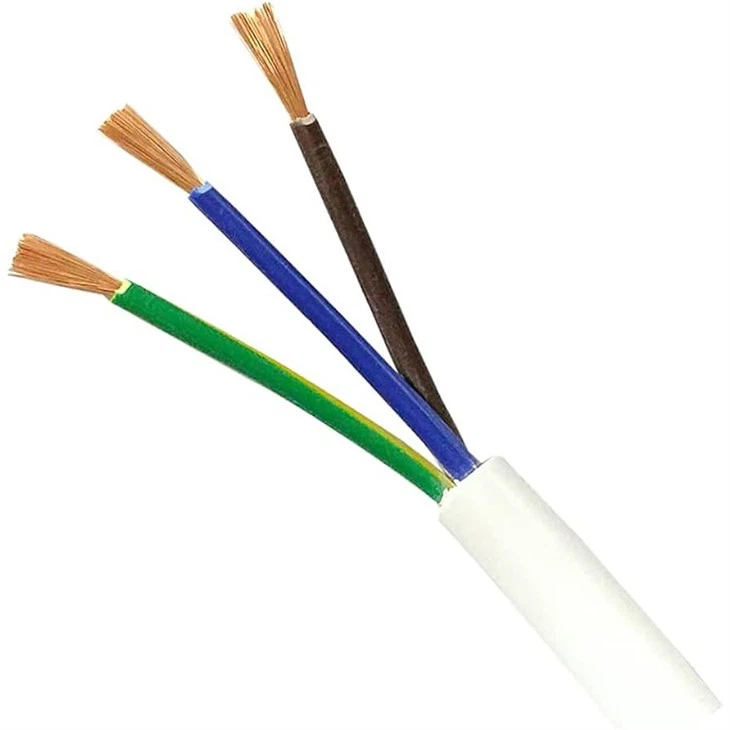
At our company, we offer a wide range of high - quality household wires. We have 300/500V PVC Insulated Cable, which is suitable for a variety of household applications. This cable has excellent insulation properties and is resistant to moisture and chemicals.
We also have Common House Wire, which is a popular choice for general household wiring. It's made of high - quality copper or aluminum and is available in different sizes to meet your needs.
If you're looking for a more advanced option, our Copper Core Polyethylene Insulated Cable is a great choice. It has low resistance and excellent electrical performance, making it ideal for high - power applications.
If you're interested in purchasing our household wires or have any questions about measuring wire resistance, feel free to reach out to us. We're always here to help you make the right choice for your electrical needs. Whether you're a DIY enthusiast or a professional electrician, we can provide you with the best products and advice.
References
- Electrical Wiring Handbook
- Principles of Electrical Engineering
So, that's all about how to measure the resistance of household wire. I hope this blog post has been helpful to you. If you have any more questions, don't hesitate to contact us. We're looking forward to hearing from you and working with you on your next electrical project.