


Hey there! As a supplier of Armoured YJV Cable, I often get asked about the maximum length of this cable that can be used in a circuit. It's a pretty common question, and the answer isn't as straightforward as you might think. In this blog post, I'll dive into the factors that determine the maximum length of Armoured YJV Cable in a circuit and give you a better understanding of how to make the right choice for your electrical projects.
Understanding Armoured YJV Cable
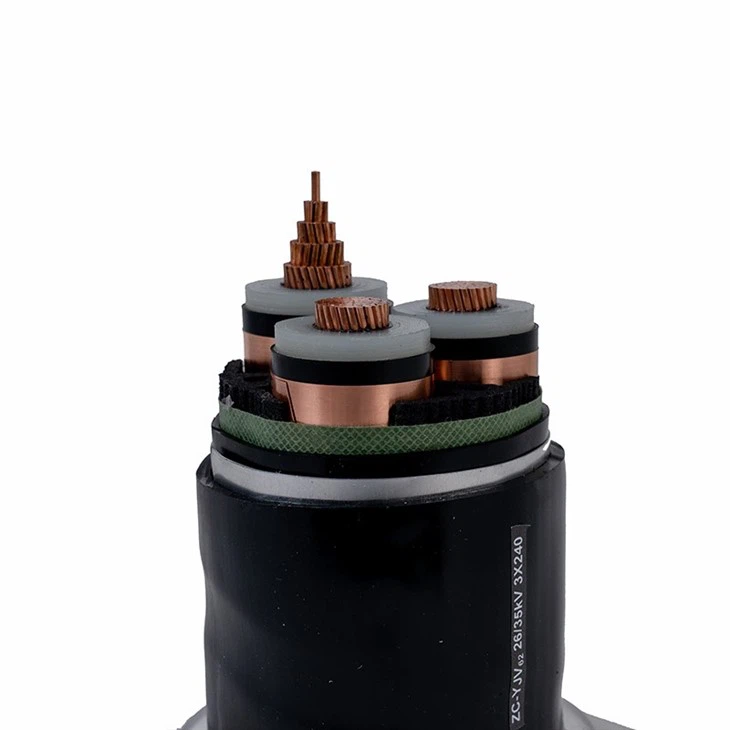
First off, let's quickly go over what Armoured YJV Cable is. Armoured YJV Cable is a type of power cable that consists of a cross-linked polyethylene (XLPE) insulation layer, a copper or aluminum conductor, and a steel wire armor. The XLPE insulation provides excellent electrical properties and high resistance to heat and chemicals, while the steel wire armor offers mechanical protection against external damage, such as impact, abrasion, and rodents.
This type of cable is widely used in various electrical applications, including power distribution, industrial plants, commercial buildings, and residential complexes. It's suitable for both indoor and outdoor use and can be installed underground, in cable trays, or on cable racks.
Factors Affecting the Maximum Length of Armoured YJV Cable
The maximum length of Armoured YJV Cable that can be used in a circuit depends on several factors, including:
1. Voltage Drop
Voltage drop is one of the most critical factors to consider when determining the maximum length of a cable. As electricity flows through a cable, it encounters resistance, which causes a drop in voltage along the length of the cable. If the voltage drop is too high, it can affect the performance of electrical equipment and even cause damage.
The acceptable voltage drop for a circuit depends on the type of load and the application. In general, for lighting circuits, the maximum voltage drop should not exceed 3%, while for power circuits, it should not exceed 5%. To calculate the voltage drop, you need to know the cable's resistance, the current flowing through the cable, and the length of the cable.
2. Current Carrying Capacity
The current carrying capacity of a cable refers to the maximum amount of current that the cable can safely carry without overheating. It's determined by the cable's conductor size, insulation material, ambient temperature, and installation method.
If the current flowing through the cable exceeds its current carrying capacity, the cable will heat up, which can damage the insulation and increase the risk of fire. Therefore, it's essential to select a cable with a current carrying capacity that is sufficient for the load.
3. Cable Size
The size of the cable, also known as the cross-sectional area, plays a crucial role in determining its resistance and current carrying capacity. A larger cable size has lower resistance and can carry more current than a smaller cable size.
When selecting a cable size, you need to consider the load current, the length of the cable, and the allowable voltage drop. In general, for longer cable runs or higher load currents, a larger cable size is required to minimize the voltage drop and ensure safe operation.
4. Ambient Temperature
The ambient temperature is the temperature of the surrounding environment where the cable is installed. It affects the cable's current carrying capacity because the higher the ambient temperature, the lower the cable's ability to dissipate heat.
If the cable is installed in a high-temperature environment, such as near a furnace or in direct sunlight, its current carrying capacity will be reduced. Therefore, you need to derate the cable's current carrying capacity based on the ambient temperature to ensure safe operation.
5. Installation Method
The installation method of the cable also affects its current carrying capacity and voltage drop. For example, cables installed in cable trays or on cable racks have better heat dissipation than cables installed in conduits or buried underground.
In addition, the number of cables installed together in a bundle can also affect their current carrying capacity. When multiple cables are installed in a bundle, the heat generated by each cable can accumulate, reducing the overall current carrying capacity of the cables. Therefore, you need to derate the cable's current carrying capacity based on the installation method and the number of cables in the bundle.
Calculating the Maximum Length of Armoured YJV Cable
To calculate the maximum length of Armoured YJV Cable that can be used in a circuit, you need to follow these steps:
Step 1: Determine the Load Current
The first step is to determine the load current, which is the amount of current that the electrical equipment will draw from the circuit. You can find the load current rating on the equipment's nameplate or by using a clamp meter to measure the current.
Step 2: Select the Cable Size
Based on the load current, select a cable size that has a current carrying capacity that is sufficient for the load. You can refer to the cable manufacturer's catalog or use a cable sizing calculator to determine the appropriate cable size.
Step 3: Calculate the Voltage Drop
Once you have selected the cable size, you need to calculate the voltage drop along the length of the cable. You can use the following formula to calculate the voltage drop:
VD = (2 x L x R x I) / 1000
Where:
VD = Voltage drop (V)
L = Length of the cable (m)
R = Resistance of the cable per meter (Ω/m)
I = Load current (A)
The resistance of the cable per meter can be found in the cable manufacturer's catalog or by using a cable resistance calculator.
Step 4: Check the Allowable Voltage Drop
Compare the calculated voltage drop with the allowable voltage drop for the circuit. If the calculated voltage drop exceeds the allowable voltage drop, you need to either increase the cable size or reduce the length of the cable.
Step 5: Consider Other Factors
In addition to voltage drop and current carrying capacity, you also need to consider other factors, such as ambient temperature, installation method, and cable derating factors. Make sure to derate the cable's current carrying capacity based on these factors to ensure safe operation.
Examples of Maximum Length Calculations
Let's look at some examples of how to calculate the maximum length of Armoured YJV Cable in a circuit.
Example 1: Lighting Circuit
Suppose you have a lighting circuit that has a load current of 10 A and a supply voltage of 230 V. You want to use a 0.6-1kv YJV Cable with a cross-sectional area of 2.5 mm². The allowable voltage drop for the lighting circuit is 3%.
First, find the resistance of the cable per meter. From the cable manufacturer's catalog, the resistance of a 2.5 mm² 0.6-1kv YJV Cable is 7.41 Ω/km or 0.00741 Ω/m.
Next, use the voltage drop formula to calculate the maximum length of the cable:
VD = (2 x L x R x I) / 1000
0.03 x 230 = (2 x L x 0.00741 x 10) / 1000
6.9 = (0.1482 x L) / 1000
L = (6.9 x 1000) / 0.1482
L ≈ 4656 m

However, this calculation does not take into account other factors, such as ambient temperature and installation method. In practice, you need to derate the cable's current carrying capacity and consider these factors to ensure safe operation.
Example 2: Power Circuit
Suppose you have a power circuit that has a load current of 50 A and a supply voltage of 400 V. You want to use a 6 mm Cable Single Core Xlpe with a cross-sectional area of 6 mm². The allowable voltage drop for the power circuit is 5%.
The resistance of a 6 mm² 6 mm Cable Single Core Xlpe is 3.08 Ω/km or 0.00308 Ω/m.
Using the voltage drop formula:
VD = (2 x L x R x I) / 1000
0.05 x 400 = (2 x L x 0.00308 x 50) / 1000
20 = (0.308 x L) / 1000
L = (20 x 1000) / 0.308
L ≈ 6493 m
Again, you need to consider other factors and derate the cable's current carrying capacity for a more accurate result.
Conclusion
Determining the maximum length of Armoured YJV Cable in a circuit is a complex process that requires careful consideration of several factors, including voltage drop, current carrying capacity, cable size, ambient temperature, and installation method. By following the steps outlined in this blog post and using the appropriate calculations, you can select the right cable size and length for your electrical projects.
If you're still unsure about which Armoured YJV Cable is right for your needs or have any questions about cable sizing and installation, don't hesitate to reach out to us. We're a professional Armoured YJV Cable supplier with years of experience in the industry, and we're here to help you make the best choice for your electrical projects. Whether you need a 0.6-1kv YJV Cable, a 6 mm Cable Single Core Xlpe, or a Cu Xlpe Pvc Swa Cable, we've got you covered. Contact us today to start the procurement negotiation process and get the high-quality cables you need at competitive prices.
References
- Electrical Wiring Regulations, various editions
- Cable manufacturer's catalogs
- Electrical engineering textbooks


