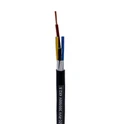
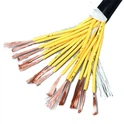
Hey there! As a common house wire supplier, I often get asked about voltage drop in the wires we use every day in our homes. So, let's dive right into it and break down what voltage drop is all about in common house wire.
What Exactly is Voltage Drop?
Voltage drop is basically the reduction in voltage that occurs as electrical current flows through a wire. Electric current is like water flowing through a pipe. Just as water loses pressure when it moves through a long pipe due to friction, electric current loses voltage as it travels through a wire. This loss happens because of the resistance within the wire.
Think of it this way. You've got a power source like a circuit breaker in your electrical panel. It sends out a certain amount of voltage, say 120 volts in a typical US household circuit. But by the time the electricity reaches the end of the wire, like a light bulb in your living room, the voltage might be a bit lower. That difference between the starting voltage and the ending voltage is the voltage drop.
Why Does Voltage Drop Matter?
You might be wondering why voltage drop is a big deal. Well, it can have a few negative effects. If the voltage drop is too high, electrical devices won't work as efficiently. For example, a light bulb might not shine as brightly as it should. Motors in appliances like refrigerators or fans might run slower or overheat, which can shorten their lifespan.
In extreme cases, excessive voltage drop can cause safety issues. It can lead to overheating of the wires, which increases the risk of fire. So, it's super important to keep voltage drop within acceptable limits in our homes.
Factors Affecting Voltage Drop in House Wires
There are several factors that influence voltage drop in common house wires.
Wire Material
The material of the wire plays a huge role. Copper is one of the most commonly used materials for house wires. It's a great conductor, which means it has low resistance. That's why you'll often see Copper Core Polyethylene Insulated Cable in homes. Aluminum is another option, but it has higher resistance than copper. So, for the same length and thickness of wire, there will be more voltage drop in an aluminum wire compared to a copper one.
Wire Size
The size of the wire, usually measured by its cross - sectional area, is also a key factor. A larger wire has less resistance. For instance, a 12 - gauge wire has a larger cross - sectional area than a 14 - gauge wire. So, if you're running a long circuit, using a larger gauge wire will result in less voltage drop. You can find a variety of wire sizes in Household Insulated Wire options available in the market.
Wire Length
The longer the wire, the more resistance it has, and the greater the voltage drop. If you have a long run of wire from your electrical panel to an outlet in a far - away room, you'll likely experience more voltage drop compared to a shorter run.
Current Load
The amount of current flowing through the wire matters too. Higher current loads cause more voltage drop. For example, if you have multiple high - power appliances like a microwave, a toaster, and a hair dryer all plugged into the same circuit, the current flowing through the wire will be high, and so will the voltage drop.
Calculating Voltage Drop
Calculating voltage drop can seem a bit complicated, but there are some formulas and tools available. One of the most common formulas is:
[V_d = 2\times K\times I\times L / CMA]
Where:
- (V_d) is the voltage drop
- (K) is a constant (for copper, (K = 12.9) and for aluminum, (K = 21.2))
- (I) is the current in amperes
- (L) is the length of the wire in feet
- (CMA) is the circular mil area of the wire
There are also online calculators that can make this process a lot easier. You just need to input the wire material, size, length, and the current load, and it'll give you the estimated voltage drop.
Acceptable Voltage Drop in House Wires
In a typical household electrical system, the National Electrical Code (NEC) recommends that the voltage drop on a branch circuit should not exceed 3% from the source to the load. For example, in a 120 - volt circuit, the maximum allowable voltage drop is (0.03\times120 = 3.6) volts. For feeders, the total voltage drop from the service entrance to the farthest outlet should not exceed 5%.
How to Minimize Voltage Drop
As a house wire supplier, I often give my customers tips on how to minimize voltage drop in their homes.
Choose the Right Wire Material
As I mentioned earlier, copper is a great choice because of its low resistance. If you can afford it, go for Copper Core Polyethylene Insulated Cable. It'll help keep the voltage drop to a minimum.
Use the Correct Wire Size
For circuits with high current loads or long runs, use a larger gauge wire. It might cost a bit more upfront, but it'll save you money in the long run by reducing energy waste and preventing damage to your electrical appliances. Household Insulated Wire comes in different sizes, so you can choose the one that's right for your needs.
Keep the Wire Length Short
Try to keep your electrical outlets and fixtures as close as possible to the electrical panel. This reduces the length of the wire and therefore the voltage drop.
Balance the Load
Don't overload your circuits. Spread out high - power appliances across different circuits to keep the current load on each wire within a reasonable limit.


Our Common House Wire Products
We offer a wide range of common house wire products, including 300/500V PVC Insulated Cable. This cable is durable and designed to handle the electrical demands of your home. Our Copper Core Polyethylene Insulated Cable is a top - notch choice for low - resistance wiring. And our Household Insulated Wire comes in various sizes and colors to meet your specific requirements.
Contact Us for Your House Wire Needs
If you're in the market for high - quality common house wire and want to discuss your voltage drop concerns or make a purchase, don't hesitate to reach out. We're here to provide you with the best advice and products to ensure a safe and efficient electrical system in your home.
References
- National Electrical Code Handbook.
- Electrical Wiring Residential textbooks.
Hope this blog has cleared up some of the mysteries around voltage drop in common house wires. Take care and stay safe with your electrical installations!