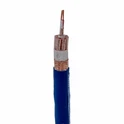
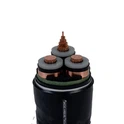
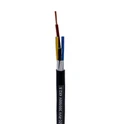
As a supplier of control wires, I often encounter questions from clients about the various technical aspects of our products. One such frequently asked question is, "What is the propagation delay of a control wire?" In this blog post, I'll delve into the concept of propagation delay in the context of control wires, explaining its significance, factors that affect it, and how it pertains to our range of products like Control Panel Wire, 4 Core Cy Cable, and Fire Resistant Control Wire.
Understanding Propagation Delay
Propagation delay refers to the time it takes for a signal to travel from one end of a control wire to the other. In control systems, signals are used to transmit information, such as commands or sensor readings, between different components. The propagation delay can have a significant impact on the performance and responsiveness of these systems.
To put it simply, imagine you're sending a message through a long hallway. The time it takes for the message to reach the other end is analogous to the propagation delay in a control wire. If the delay is too long, it can lead to issues such as delayed responses, synchronization problems, and even system failures.
Factors Affecting Propagation Delay
Several factors can influence the propagation delay of a control wire. Let's take a closer look at some of the most significant ones:
1. Wire Length
The length of the wire is one of the most obvious factors affecting propagation delay. As a general rule, the longer the wire, the greater the delay. This is because the signal has to travel a longer distance, and each unit of length adds a small amount of time to the overall propagation.
For instance, in a short control wire used within a small control panel, the propagation delay may be negligible. However, in a large industrial facility where control wires can span hundreds or even thousands of meters, the delay can become a significant concern.
2. Signal Velocity
The velocity at which the signal travels through the wire also plays a crucial role in determining the propagation delay. The signal velocity is influenced by the properties of the wire's material, such as its dielectric constant.
Different types of control wires may have different signal velocities. For example, wires with a lower dielectric constant generally allow the signal to travel faster, resulting in a shorter propagation delay. Our 4 Core Cy Cable is designed with materials that optimize signal velocity, reducing the propagation delay and improving overall system performance.
3. Frequency of the Signal
The frequency of the signal being transmitted can also affect the propagation delay. Higher frequency signals tend to experience more attenuation and dispersion, which can increase the delay.
In control systems, different components may require signals of different frequencies. It's important to choose the right control wire that can handle the specific frequency requirements of the system to minimize the propagation delay. Our technical team can provide guidance on selecting the appropriate wire based on the frequency of the signals in your application.
4. Environmental Conditions
Environmental factors such as temperature, humidity, and electromagnetic interference (EMI) can also impact the propagation delay of a control wire. Extreme temperatures can cause the wire's materials to expand or contract, which can affect the signal velocity.
Humidity can introduce moisture into the wire, which can lead to increased resistance and signal loss. EMI can disrupt the signal and cause errors, further increasing the effective propagation delay. Our Fire Resistant Control Wire is designed to withstand harsh environmental conditions, minimizing the impact of these factors on the propagation delay.
Significance of Propagation Delay in Control Systems
In control systems, the propagation delay can have a direct impact on the system's performance and reliability. Here are some of the key areas where the propagation delay is of particular importance:
1. Real - Time Control
In real - time control applications, such as robotics and automated manufacturing, precise timing is crucial. A long propagation delay can cause a delay in the execution of commands, leading to inaccurate movements and reduced productivity.
For example, in a robotic arm that needs to perform a series of precise movements, a delay in the control signal can result in the arm reaching the wrong position or colliding with other objects. By minimizing the propagation delay in the control wires, we can ensure that the system responds quickly and accurately to commands.
2. Synchronization
In many control systems, multiple components need to be synchronized to work together effectively. A difference in propagation delay between different control wires can lead to synchronization issues, causing the components to operate out of phase.

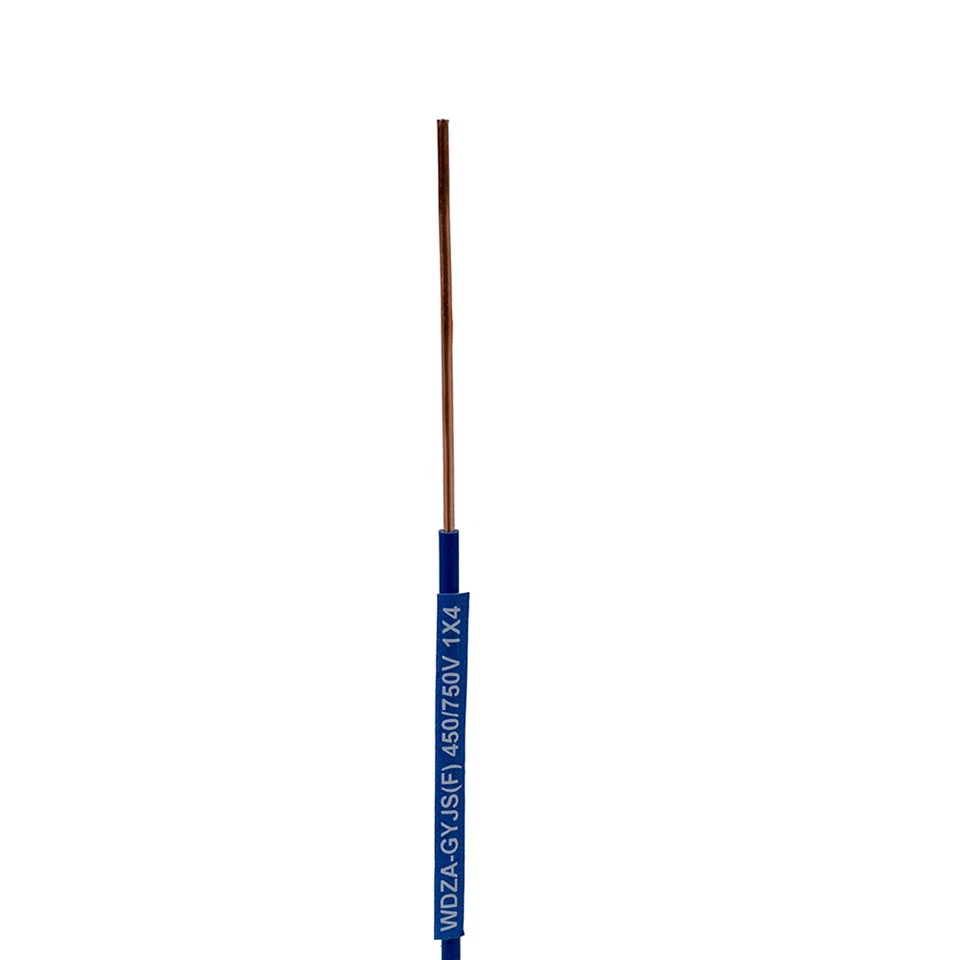
For instance, in a multi - motor control system, if the control signals to each motor have different propagation delays, the motors may not start or stop at the same time, resulting in uneven movement and potential mechanical damage. Our high - quality control wires are engineered to have consistent propagation delays, ensuring proper synchronization of the system components.
3. Safety
In safety - critical control systems, such as those used in nuclear power plants or aircraft, a long propagation delay can have serious consequences. In the event of an emergency, a delay in the transmission of safety signals can prevent timely activation of safety mechanisms, putting lives and property at risk.
Our Fire Resistant Control Wire is designed to provide reliable signal transmission even in hazardous environments, with minimal propagation delay. This ensures that safety signals can be transmitted quickly and accurately, enhancing the overall safety of the system.
How Our Control Wires Minimize Propagation Delay
As a control wire supplier, we take several measures to minimize the propagation delay in our products. Here are some of the key features and technologies used in our control wires:
1. High - Quality Materials
We use only the highest quality materials in the manufacturing of our control wires. These materials are carefully selected for their low dielectric constant and high conductivity, which allows the signals to travel faster through the wire.
For example, in our Control Panel Wire, we use premium copper conductors and high - performance insulation materials to ensure optimal signal transmission and minimal delay.
2. Advanced Manufacturing Processes
Our state - of - the - art manufacturing processes allow us to produce control wires with consistent quality and performance. We use precision extrusion and stranding techniques to ensure that the wire has uniform electrical properties along its entire length.
This uniformity helps to minimize signal distortion and attenuation, reducing the propagation delay. Our manufacturing facilities are also equipped with advanced testing equipment to ensure that each wire meets the strict quality standards before it leaves the factory.
3. Custom Design
We understand that different applications have different requirements for propagation delay. That's why we offer custom - designed control wires to meet the specific needs of our clients.
Our engineering team can work with you to design a control wire that optimizes the signal transmission for your particular application. Whether you need a wire with a very low propagation delay for a high - speed control system or a wire that can withstand harsh environmental conditions, we can provide a solution that meets your requirements.
Contact Us for Your Control Wire Needs
If you're looking for high - quality control wires with minimal propagation delay, look no further. Our range of products, including Control Panel Wire, 4 Core Cy Cable, and Fire Resistant Control Wire, is designed to provide reliable and efficient signal transmission for a wide range of control applications.
We are committed to providing our clients with the best products and technical support. If you have any questions about propagation delay or need assistance in selecting the right control wire for your application, please don't hesitate to contact us. We'll be happy to discuss your requirements and offer personalized solutions.
References
- "Electrical Engineering: Principles and Applications" by Allan R. Hambley
- "Control Systems Engineering" by Norman S. Nise