Yo, what's up everyone! I'm a supplier of Cy Screened Cable, and today I wanna chat about whether Cy Screened Cable can be used in high - altitude areas.
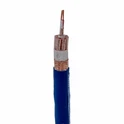
First off, let's understand what Cy Screened Cable is. Cy Screened Cable is designed to protect against electromagnetic interference (EMI). It's got a shielding layer that wraps around the conductors, which helps to reduce the impact of external electromagnetic fields on the signal transmission inside the cable. This type of cable is commonly used in various industries where reliable signal transmission is crucial, like automation, telecommunications, and power distribution.

Now, let's talk about high - altitude areas. High - altitude areas come with a set of unique environmental conditions. The air pressure is lower, the temperature can vary wildly, and there's more exposure to UV radiation compared to low - altitude regions. These factors can have a significant impact on the performance and lifespan of electrical cables.
Impact of Low Air Pressure
One of the main concerns in high - altitude areas is the low air pressure. At high altitudes, the air is thinner, which affects the dielectric strength of the cable insulation. Dielectric strength is the ability of an insulating material to withstand voltage without breaking down. With lower air pressure, the risk of corona discharge increases. Corona discharge is a phenomenon where the air around the cable ionizes and conducts electricity, which can cause damage to the cable insulation over time.

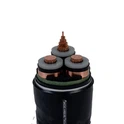
However, Cy Screened Cable is typically designed with high - quality insulation materials that have good dielectric properties. These materials are selected to maintain their performance even under challenging conditions. For example, some Cy Screened Cables use cross - linked polyethylene (XLPE) insulation, which has excellent dielectric strength and is resistant to corona discharge. So, in terms of low air pressure, a well - designed Cy Screened Cable should be able to handle it without too many issues.
Temperature Variations
Temperature variations in high - altitude areas can be extreme. During the day, the sun can heat up the cables, while at night, the temperature can drop significantly. These rapid temperature changes can cause the cable materials to expand and contract, which may lead to mechanical stress on the cable.

The shielding layer in Cy Screened Cable plays an important role here. It provides some protection to the inner conductors from the external environment. Additionally, the insulation materials used in Cy Screened Cable are often chosen for their thermal stability. They can withstand a wide range of temperatures without losing their mechanical and electrical properties. For instance, polyvinyl chloride (PVC) is a common insulation material that has good thermal resistance and can tolerate temperature variations to a certain extent.
UV Radiation
High - altitude areas are exposed to more UV radiation due to the thinner atmosphere. UV radiation can cause the outer jacket of the cable to degrade over time. The outer jacket protects the inner components of the cable from physical damage and environmental factors.
To combat this, Cy Screened Cable suppliers often use UV - resistant materials for the outer jacket. For example, some cables are coated with a special layer that can absorb or reflect UV rays, preventing them from reaching the inner parts of the cable. This helps to extend the lifespan of the cable in high - altitude areas.
Advantages of Using Cy Screened Cable in High - Altitude Areas
Despite the challenges, there are several advantages to using Cy Screened Cable in high - altitude areas.

Firstly, the shielding property of Cy Screened Cable is very useful in high - altitude areas where there may be more electromagnetic interference from natural sources like lightning. The shielding layer can prevent this interference from affecting the signal transmission, ensuring reliable operation of the electrical systems.
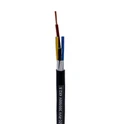
Secondly, Cy Screened Cable is available in different configurations to meet various application requirements. For example, you can choose from 4 Core Screened Control Cable, Multi - core Shielded Control Cable, and 10*2 Control Cable. These different types of cables can be used in different high - altitude applications, such as power transmission in mountainous areas or communication systems in high - altitude research stations.
Conclusion
So, can Cy Screened Cable be used in high - altitude areas? The answer is yes! With the right design and material selection, Cy Screened Cable can withstand the unique environmental conditions of high - altitude areas. The low air pressure, temperature variations, and UV radiation are challenges, but the high - quality insulation, shielding, and UV - resistant outer jacket of Cy Screened Cable can help it perform well.
If you're looking for a reliable cable solution for your high - altitude projects, I'd highly recommend considering Cy Screened Cable. Whether you need a 4 Core Screened Control Cable, Multi - core Shielded Control Cable, or 10*2 Control Cable, we've got you covered. If you're interested in learning more or want to discuss your specific requirements, feel free to reach out and start a procurement discussion.
References
- "Electrical Insulation Materials and Their Applications" by John W. McBane
- "Cable Engineering Handbook" by William B. Johnson