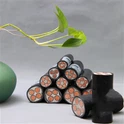
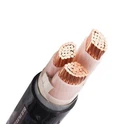
Do control wires require grounding? This is a question that often arises in the electrical and control systems industry. As a control wire supplier, I've encountered this query numerous times from clients, engineers, and contractors. In this blog post, I'll delve into the technical aspects, benefits, and considerations regarding the grounding of control wires.
Understanding Control Wires
Control wires are an integral part of various electrical and electronic systems. They are used to transmit signals that control the operation of equipment, machinery, and devices. These wires are designed to carry low - voltage signals, which are crucial for the proper functioning of automation systems, lighting controls, and industrial processes. For instance, Lighting Control Cable 2.5 Sy Cable is specifically designed for lighting control applications, allowing for precise adjustment of lighting levels. Another example is the PVC Insulated Control Cable, which offers insulation properties suitable for a wide range of control systems. And the 4 Core Cy Cable can be used in more complex control setups where multiple signals need to be transmitted.
The Concept of Grounding
Grounding, in electrical terms, refers to the connection of an electrical circuit or equipment to the earth. This is typically achieved by using a conductor, such as a copper wire, that is connected to a grounding electrode, which is buried in the ground. The main purpose of grounding is to provide a safe path for electrical current in the event of a fault, such as a short - circuit or a surge.
Why Control Wires May Require Grounding
1. Safety
One of the primary reasons for grounding control wires is safety. In the event of a fault, such as a short - circuit between the control wire and a high - voltage source, grounding provides a low - resistance path for the electrical current to flow into the earth. This helps to prevent electrical shock to personnel who may come into contact with the equipment or the control wires. For example, in an industrial setting where large machinery is controlled by control wires, a fault could potentially expose workers to dangerous electrical currents. Grounding the control wires can significantly reduce this risk.
2. Noise Reduction
Control wires are often sensitive to electromagnetic interference (EMI) and radio - frequency interference (RFI). These interferences can cause errors in the signals transmitted through the control wires, leading to malfunction of the controlled equipment. Grounding the control wires can act as a shield against EMI and RFI. The ground conductor provides a path for the unwanted electrical noise to flow to the earth, thereby reducing the interference in the control signals. For instance, in a building with a lot of electrical equipment, such as servers, motors, and lighting systems, the control wires used for automation can be subject to high levels of EMI. Grounding these wires can help to ensure the reliable operation of the control systems.
3. Signal Integrity
Maintaining the integrity of the control signals is crucial for the proper functioning of the control systems. Grounding can help to stabilize the electrical potential of the control wires. When the control wires are grounded, the reference voltage for the signals is established more accurately. This helps to prevent signal distortion and ensures that the signals are transmitted and received correctly. In a complex control system, such as a process control system in a chemical plant, accurate signal transmission is essential for the safe and efficient operation of the plant.
Situations Where Grounding May Not Be Necessary
However, there are situations where grounding control wires may not be necessary or may even cause problems.
1. Low - Voltage and Isolated Systems
In some low - voltage control systems that are isolated from the main electrical supply, such as battery - powered control systems, grounding may not be required. These systems are designed to operate independently, and the risk of electrical shock or interference from external sources is minimal. For example, a small, portable control unit that is powered by a battery and used for controlling a simple device, such as a small fan or a light switch, may not need grounding.


2. Specialized Control Systems
Some specialized control systems, such as those used in certain medical equipment or aerospace applications, may have specific design requirements that do not allow for grounding. These systems are often designed to operate in a very clean electrical environment, and grounding could introduce unwanted electrical noise or interfere with the sensitive components of the system.
Considerations for Grounding Control Wires
1. Grounding Method
There are different methods of grounding control wires, such as single - point grounding and multi - point grounding. Single - point grounding involves connecting all the control wires to a single grounding point. This method is often used in systems where the control wires are close together and the risk of ground - loop currents is low. Multi - point grounding, on the other hand, involves connecting the control wires to multiple grounding points. This method is more suitable for larger systems where the control wires are spread over a large area.
2. Grounding Conductor Size
The size of the grounding conductor is an important consideration. The conductor should be large enough to carry the fault current safely to the earth. The size of the conductor depends on factors such as the length of the wire, the expected fault current, and the type of grounding system used.
3. Grounding Resistance
The resistance of the grounding system is also crucial. A low - resistance grounding system is required to ensure that the fault current can flow easily to the earth. The grounding resistance should be regularly tested to ensure that it remains within the acceptable limits.
Conclusion
In conclusion, whether control wires require grounding depends on various factors, including the type of control system, the environment in which the system operates, and the safety requirements. While grounding offers significant benefits in terms of safety, noise reduction, and signal integrity, there are situations where it may not be necessary or may even cause problems. As a control wire supplier, I recommend that customers carefully evaluate their specific needs and consult with a qualified electrical engineer before deciding whether to ground their control wires.
If you are interested in purchasing high - quality control wires for your projects, we are here to assist you. Our team of experts can provide you with detailed information about the different types of control wires available, including Lighting Control Cable 2.5 Sy Cable, PVC Insulated Control Cable, and 4 Core Cy Cable. We can also offer guidance on grounding and other installation requirements. Contact us today to start a discussion about your control wire needs and how we can meet them.
References
- Electrical Installation Handbook, Schneider Electric
- National Electrical Code (NEC)
- IEEE Standards for Electrical Safety in the Workplace