


As a supplier of 4 Core Control Cables, I've witnessed firsthand how crucial it is to understand the impact of temperature on cable performance. Temperature can significantly influence the functionality, durability, and safety of these cables, which are widely used in various industries for transmitting control signals. In this blog, I'll delve into the science behind how temperature affects the performance of 4 Core Control Cables and why it matters for your applications.
1. Electrical Conductivity
One of the most fundamental aspects of a control cable is its ability to conduct electricity efficiently. Temperature has a direct impact on the electrical conductivity of the cable's conductors, typically made of copper or aluminum. According to the principles of physics, the electrical resistance of a conductor increases with temperature. This is described by the temperature coefficient of resistance (TCR), which indicates how much the resistance changes per degree Celsius.
For copper conductors, the TCR is approximately 0.00393 per °C at 20°C. This means that as the temperature rises, the resistance of the copper conductor in a 4 Core Control Cable also increases. An increase in resistance leads to higher power losses in the form of heat, which can further raise the temperature of the cable. These power losses are proportional to the square of the current flowing through the cable, as described by Joule's law (P = I²R).
In practical terms, higher resistance can result in voltage drops along the cable length. Voltage drops can cause issues such as reduced signal strength, inaccurate control signals, and in extreme cases, malfunction of the connected equipment. For example, in an industrial automation system, a 4 Core Control Cable with excessive voltage drop due to high temperature may cause a motor to run at a lower speed than intended or a sensor to provide inaccurate readings.
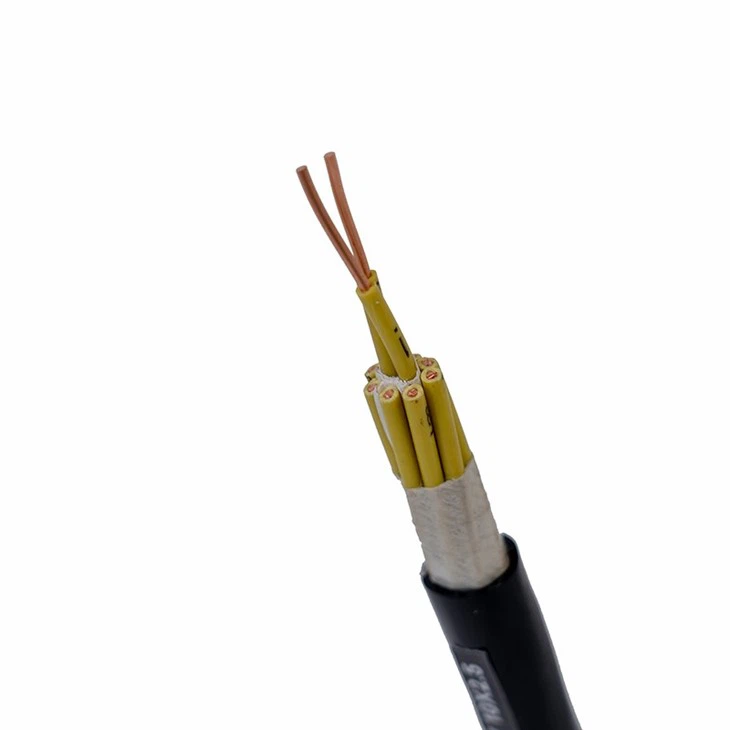

2. Insulation Properties
The insulation material of a 4 Core Control Cable plays a vital role in preventing electrical leakage and short circuits. Temperature can have a profound effect on the insulation properties of the cable. Most insulation materials used in control cables, such as PVC (Polyvinyl Chloride), XLPE (Cross-linked Polyethylene), and rubber, have specific temperature ratings.
PVC is a commonly used insulation material in PVC Lighting Control Cable. At normal operating temperatures, PVC provides good insulation properties. However, as the temperature increases, PVC can become more flexible and lose some of its mechanical strength. High temperatures can also cause PVC to undergo thermal degradation, leading to the release of harmful gases and a reduction in its insulation resistance.
On the other hand, XLPE is known for its excellent thermal stability and high temperature resistance. It can withstand higher temperatures compared to PVC without significant degradation of its insulation properties. Rubber insulation, such as EPDM (Ethylene Propylene Diene Monomer), also offers good flexibility and temperature resistance, making it suitable for applications where the cable may be exposed to varying temperatures.
Exposure to low temperatures can also affect the insulation material. PVC can become brittle at low temperatures, which may lead to cracking and loss of insulation integrity. This can increase the risk of electrical leakage and short circuits, especially in applications where the cable is subject to mechanical stress.
3. Cable Jacket
The cable jacket provides an additional layer of protection for the cable, shielding it from environmental factors such as moisture, chemicals, and mechanical damage. Temperature can affect the physical properties of the cable jacket. For example, a PVC jacket may become softer and more prone to abrasion at high temperatures, while it can become stiff and brittle at low temperatures.
In applications where the cable is exposed to harsh environmental conditions, such as outdoor installations or industrial environments with chemical exposure, the choice of cable jacket material is crucial. Fire Resistant Control Wire often has a special jacket material that can withstand high temperatures and prevent the spread of fire. These jackets are designed to maintain their integrity and provide protection for the cable conductors and insulation during a fire event.
4. Mechanical Properties
Temperature can also affect the mechanical properties of a 4 Core Control Cable. High temperatures can cause the cable to expand, while low temperatures can cause it to contract. These thermal expansions and contractions can put stress on the cable components, including the conductors, insulation, and jacket.
If the cable is installed in a confined space or is not properly supported, thermal expansion can lead to mechanical stress on the cable, which may cause damage over time. For example, the conductors may become loose or the insulation may be damaged, increasing the risk of electrical faults. In addition, repeated thermal cycling (heating and cooling) can cause fatigue in the cable components, leading to premature failure.
5. Fire Resistance
In some applications, fire resistance is a critical requirement for 4 Core Control Cables. Fire Resistant Control Wire is designed to maintain its functionality for a certain period of time during a fire event. Temperature is a key factor in determining the fire resistance of a cable.
During a fire, the temperature can reach extremely high levels. Fire-resistant cables are typically made with special insulation and jacket materials that can withstand these high temperatures without melting or catching fire. These materials are designed to form a protective char layer when exposed to heat, which helps to prevent the spread of fire and maintain the integrity of the cable conductors.
However, prolonged exposure to high temperatures can eventually degrade the fire-resistant properties of the cable. The char layer may break down, and the insulation and jacket materials may lose their ability to prevent the spread of fire. Therefore, it's important to choose fire-resistant cables with appropriate temperature ratings and to ensure proper installation and maintenance to maximize their fire resistance.
6. Impact on Different Applications
The impact of temperature on 4 Core Control Cable performance can vary depending on the application. In indoor applications with stable temperature conditions, the effects of temperature may be less significant compared to outdoor or industrial applications.
In outdoor applications, such as in a lighting system using Lighting Control Cable 2.5 Sy Cable, the cable may be exposed to a wide range of temperatures, from extreme cold in winter to high heat in summer. These temperature variations can cause thermal stress on the cable and affect its performance over time.
In industrial applications, such as in a power plant or a manufacturing facility, the cable may be exposed to high temperatures due to proximity to heat sources or high ambient temperatures. In these environments, it's essential to choose cables with appropriate temperature ratings and to implement proper cable management practices, such as providing adequate ventilation and avoiding cable bundling that can trap heat.
Conclusion
Temperature has a significant impact on the performance of 4 Core Control Cables. It affects the electrical conductivity, insulation properties, cable jacket, mechanical properties, and fire resistance of the cable. Understanding these effects is crucial for selecting the right cable for your application and ensuring its reliable operation.
As a 4 Core Control Cable supplier, I recommend carefully considering the temperature conditions of your application when choosing a cable. Select cables with appropriate temperature ratings and insulation materials to ensure optimal performance and longevity. If you have any questions or need assistance in selecting the right cable for your project, please feel free to contact us. We are here to help you make the best choice for your specific requirements.
References
- Grover, P. K. (2007). Electrical Power Systems. Pearson Education India.
- Neher, J. H., & McGrath, M. H. (1957). The calculation of the temperature rise and load capability of cable systems. AIEE Transactions, 76(3), 752-772.
- International Electrotechnical Commission (IEC). (2018). IEC 60227-1:2018 - Polyvinyl chloride insulated cables of rated voltages up to and including 450/750 V - Part 1: General requirements.






