


Hey there! As a supplier of Electrical Control Cables, I've seen firsthand how electromagnetic interference (EMI) can mess things up in electrical systems. EMI can cause all sorts of problems, from signal distortion to equipment malfunctions. That's why I'm here to share some tips on how to reduce the EMI of electrical control cables.
Understanding EMI in Electrical Control Cables
First off, let's talk about what EMI is. EMI is basically the disturbance that affects an electrical circuit due to either electromagnetic induction or electromagnetic radiation emitted from an external source. In the context of electrical control cables, EMI can come from a variety of sources, such as power lines, motors, and other electronic devices.
When EMI interferes with control cables, it can disrupt the signals being transmitted, leading to inaccurate readings or even complete system failures. This is especially problematic in industries where precision and reliability are crucial, like manufacturing, automation, and telecommunications.
Shielding: The First Line of Defense
One of the most effective ways to reduce EMI in electrical control cables is through shielding. Shielding involves wrapping the cable conductors with a conductive material, such as aluminum foil or braided copper. This conductive shield acts as a barrier, blocking out external electromagnetic fields and preventing them from interfering with the signals inside the cable.
There are different types of shielding available, each with its own advantages and disadvantages. For example, foil shielding is relatively inexpensive and provides good coverage, but it may not be as durable as braided shielding. Braided shielding, on the other hand, is more flexible and durable, but it can be more expensive.
As a supplier, I offer a range of shielded cables, including PVC Insulated Control Cable and 4 Core Cy Cable, which are designed to provide excellent EMI protection. These cables are suitable for a wide range of applications, from industrial control systems to building automation.
Twisting the Conductors
Another effective technique for reducing EMI is to twist the conductors inside the cable. When the conductors are twisted together, the magnetic fields generated by the current flowing through them tend to cancel each other out, reducing the overall electromagnetic radiation emitted by the cable.
The amount of twist, or pitch, can vary depending on the application. In general, a higher twist rate (i.e., more twists per unit length) provides better EMI reduction. However, a higher twist rate can also make the cable more difficult to manufacture and install.
Twisted pair cables are commonly used in data communication and control systems, where EMI can be a significant problem. For example, Ethernet cables typically use twisted pairs to reduce crosstalk and EMI. In the context of electrical control cables, twisted conductors can help to improve the signal integrity and reliability of the system.
Proper Grounding
Grounding is an essential part of any electrical system, and it plays a crucial role in reducing EMI. A proper grounding system provides a low-impedance path for the electromagnetic interference to flow to the ground, preventing it from building up and causing problems in the control cables.

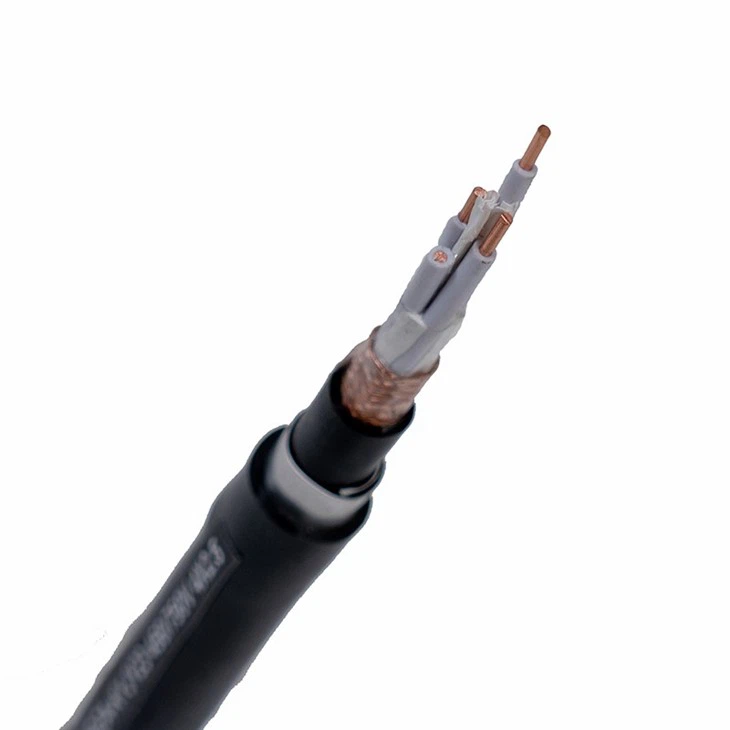
When installing electrical control cables, it's important to ensure that the cable shields are properly grounded at both ends. This helps to maintain a consistent electrical potential across the shield, which is necessary for effective EMI protection. Additionally, the grounding system should be designed to handle the expected levels of electrical current and interference.
As a supplier, I can provide guidance on proper grounding techniques and offer grounding accessories, such as grounding clamps and connectors, to help ensure that your electrical control cables are installed correctly.
Cable Routing and Separation
The way you route and separate your electrical control cables can also have a significant impact on EMI reduction. For example, it's important to keep control cables away from power cables, as power cables can generate strong electromagnetic fields that can interfere with the signals in the control cables.
In addition, you should avoid running control cables parallel to other sources of EMI, such as motors, transformers, and fluorescent lighting. If possible, use separate cable trays or conduits for control cables and power cables to minimize the potential for interference.
Another important consideration is the length of the cables. Longer cables are more susceptible to EMI, as they have a larger surface area for electromagnetic fields to interact with. Therefore, it's a good idea to keep the cable lengths as short as possible, especially in high-EMI environments.
Using Filtering Devices
In some cases, additional filtering devices may be required to further reduce EMI in electrical control cables. Filtering devices, such as ferrite beads and EMI filters, can be used to suppress high-frequency electromagnetic interference.
Ferrite beads are small, magnetic components that are placed around the cable. They act as a low-pass filter, allowing low-frequency signals to pass through while attenuating high-frequency interference. EMI filters, on the other hand, are more complex devices that can be used to filter out specific frequencies of electromagnetic interference.
Filtering devices can be particularly useful in applications where the EMI levels are high or where the control cables are located in close proximity to sources of interference. As a supplier, I can offer a range of filtering devices to help you meet your specific EMI reduction requirements.
Choosing the Right Cable for the Application
Finally, choosing the right cable for the application is crucial for reducing EMI. Different types of cables have different levels of EMI resistance, depending on their construction, shielding, and insulation materials.
For example, PVC Lighting Control Cable is designed specifically for lighting control applications and may have different EMI characteristics compared to a general-purpose control cable. When selecting a cable, it's important to consider the specific requirements of the application, such as the operating environment, the type of signals being transmitted, and the level of EMI protection needed.
As a supplier, I have a team of experts who can help you choose the right cable for your application. We can provide technical support and advice to ensure that you get the best performance and reliability from your electrical control cables.
Conclusion
Reducing the EMI of electrical control cables is essential for ensuring the proper operation and reliability of electrical systems. By using shielding, twisting the conductors, proper grounding, cable routing and separation, filtering devices, and choosing the right cable for the application, you can significantly reduce the impact of EMI on your control cables.
As a supplier of Electrical Control Cables, I'm committed to providing high-quality products and solutions that meet the needs of my customers. If you have any questions or need help with reducing the EMI of your electrical control cables, please don't hesitate to contact me. I'd be happy to discuss your requirements and provide you with the best possible solutions. Let's work together to ensure that your electrical systems are running smoothly and efficiently.
References
- "Electromagnetic Compatibility Engineering" by Henry W. Ott
- "Cable Design and Installation Manual" by various industry experts






