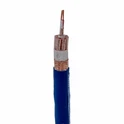
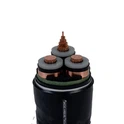
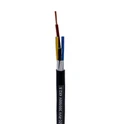
As a supplier of 4 Core Control Cables, I understand the importance of adhering to strict quality standards. These cables are crucial in various industries, including automation, machinery, and electrical systems, where they are used to transmit control signals. In this blog, I will discuss the key quality standards for a 4 Core Control Cable.
1. Conductivity
The first and perhaps most fundamental quality standard for a 4 Core Control Cable is its conductivity. Conductivity refers to the ability of the cable to carry an electric current with minimal resistance. High - quality cables are made from materials with excellent conductivity, such as copper.
Copper is the preferred choice for 4 Core Control Cables because of its high electrical conductivity, ductility, and corrosion resistance. The purity of the copper used in the cable is also an important factor. For example, electrolytic - grade copper, which has a purity of 99.9% or higher, is commonly used in high - quality cables. This high - purity copper ensures low electrical resistance, which in turn reduces power loss and heat generation during signal transmission.
The cross - sectional area of the conductors in the 4 Core Control Cable also affects conductivity. A larger cross - sectional area generally means lower resistance. The cable should be designed with an appropriate conductor size based on the expected current load and the distance of signal transmission. For instance, in applications where high - current control signals are required, cables with larger conductor sizes will be necessary to maintain good conductivity.

2. Insulation
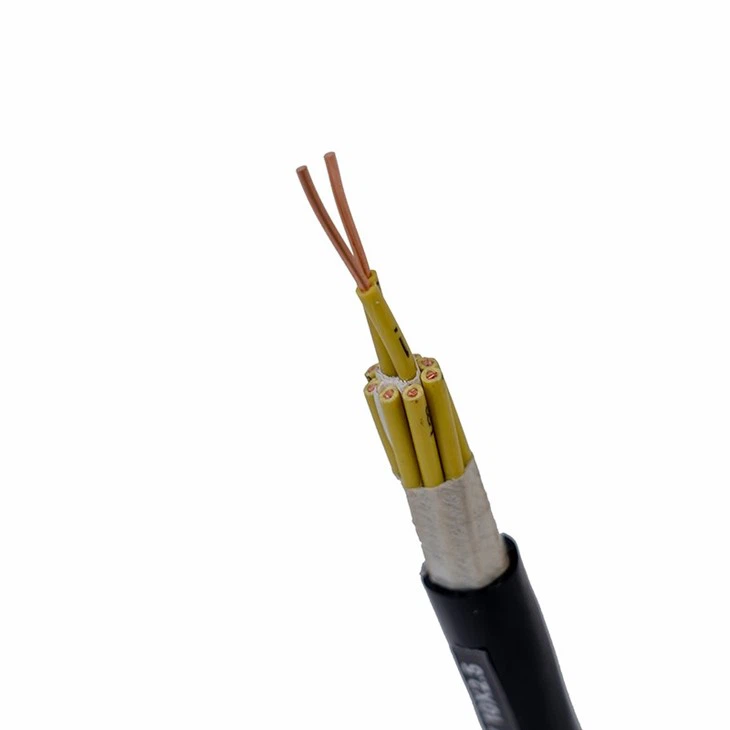
Insulation is another critical quality standard for 4 Core Control Cables. The insulation material serves to prevent electrical leakage and short - circuits between the conductors. It also provides mechanical protection to the conductors and helps to maintain the integrity of the cable in different environmental conditions.
There are several types of insulation materials used in 4 Core Control Cables, such as Polyvinyl Chloride (PVC), Polyethylene (PE), and Cross - Linked Polyethylene (XLPE). PVC is a popular choice due to its good flexibility, flame retardancy, and cost - effectiveness. It is suitable for a wide range of indoor and outdoor applications. PVC Lighting Control Cable often uses PVC insulation.
PE has excellent electrical properties, including low dielectric constant and loss tangent, which makes it suitable for high - frequency signal transmission. XLPE, on the other hand, offers better thermal and mechanical properties compared to PE and PVC. It can withstand higher temperatures and has better resistance to environmental stress cracking.
The thickness of the insulation is also an important factor. It should be sufficient to provide adequate electrical isolation between the conductors and protection against external factors such as moisture, chemicals, and mechanical damage. The insulation should be applied uniformly around the conductors to ensure consistent performance.
3. Shielding
In many applications, 4 Core Control Cables need to be shielded to protect the control signals from electromagnetic interference (EMI) and radio - frequency interference (RFI). Shielding can significantly improve the signal quality and reliability of the cable.
There are two main types of shielding used in 4 Core Control Cables: foil shielding and braided shielding. Foil shielding consists of a thin layer of metal foil, usually aluminum or copper, wrapped around the conductors. It provides good high - frequency shielding and is relatively lightweight. Braided shielding, on the other hand, is made of a woven mesh of metal wires, typically copper. It offers better low - frequency shielding and mechanical protection.
The effectiveness of the shielding is measured by the shielding effectiveness (SE), which is expressed in decibels (dB). A higher SE value indicates better shielding performance. The shielding should be continuous along the length of the cable and properly grounded to ensure maximum effectiveness.
4. Mechanical Properties
The mechanical properties of a 4 Core Control Cable are essential for its durability and performance in different installation and operating conditions. These properties include flexibility, tensile strength, and abrasion resistance.
Flexibility is important, especially in applications where the cable needs to be bent or routed around obstacles. A flexible cable is easier to install and can withstand repeated bending without damage. The design of the cable, including the choice of insulation and conductor materials, affects its flexibility. For example, cables with stranded conductors are generally more flexible than those with solid conductors.
Tensile strength refers to the maximum amount of tensile force that the cable can withstand without breaking. In applications where the cable may be subject to pulling or stretching, such as in overhead installations or during cable pulling operations, high tensile strength is required. The cable should be designed with appropriate reinforcement materials, such as steel wires or aramid fibers, to enhance its tensile strength.
Abrasion resistance is crucial in environments where the cable may rub against other objects. The outer sheath of the cable should be made of a material with good abrasion resistance, such as PVC or polyurethane. This helps to prevent damage to the cable and extends its service life.
5. Temperature and Environmental Resistance
4 Core Control Cables are often exposed to different temperature and environmental conditions. Therefore, they need to have good temperature and environmental resistance.
The cable should be able to operate within a specified temperature range. For example, in high - temperature environments, such as industrial furnaces or engine compartments, the cable should be made of materials that can withstand high temperatures without degrading. Similarly, in low - temperature environments, such as cold storage facilities or outdoor applications in cold climates, the cable should remain flexible and functional.
Environmental resistance includes resistance to moisture, chemicals, and UV radiation. Moisture can cause corrosion of the conductors and degradation of the insulation. Therefore, the cable should have a waterproof design, such as a sealed outer sheath or moisture - resistant insulation materials. Chemical resistance is important in applications where the cable may come into contact with chemicals, such as acids, alkalis, or solvents. UV resistance is necessary for outdoor applications to prevent the cable from being damaged by sunlight.
6. Compliance with Standards
A high - quality 4 Core Control Cable should comply with relevant national and international standards. These standards ensure that the cable meets certain safety and performance requirements. For example, in Europe, the cable may need to comply with the CE marking requirements, which indicate that the product conforms to European health, safety, and environmental protection standards.
In the United States, cables may need to meet the standards set by the National Electrical Code (NEC) or other industry - specific standards. Compliance with these standards provides assurance to customers that the cable is safe and reliable for use in their applications.
Contact for Purchase and Negotiation
If you are in the market for high - quality 4 Core Control Cables that meet all the above - mentioned quality standards, we are here to assist you. We have a wide range of products, including Control Panel Wire and Lighting Control Cable 2.5 Sy Cable, which are designed to meet the diverse needs of our customers. Whether you need cables for industrial automation, lighting control, or other applications, we can provide you with the right solutions. Please feel free to contact us to discuss your requirements and start the procurement negotiation process.
References
- "Electrical Wiring Handbook" by Terrell Croft and Wilford Summers
- "Cable Engineering and Installation Manual" by various industry experts