YJV cables are widely used in electrical power systems, but their application as signal cables is also a topic of interest. As a YJV cable supplier, I'd like to delve into the signal - transmission characteristics of YJV cables when they are used for signal cables.
1. Structure and Material Basics of YJV Cables
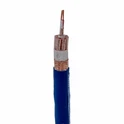
YJV cables typically consist of a copper conductor, a cross - linked polyethylene (XLPE) insulation layer, and a polyvinyl chloride (PVC) outer sheath. The copper conductor provides a low - resistance path for the flow of electrical signals. Copper is an excellent conductor with high electrical conductivity, which is crucial for minimizing signal attenuation.
The XLPE insulation layer is a key component. It has high dielectric strength, which means it can withstand high voltages without breaking down. This property is important in preventing electrical interference between different conductors within the cable and also protects the signal from external electrical noise. The PVC outer sheath provides mechanical protection to the cable, shielding it from physical damage, moisture, and chemicals.
2. Signal Attenuation
Signal attenuation is one of the most important characteristics when considering a cable for signal transmission. In YJV cables, attenuation is mainly affected by the resistance of the conductor and the dielectric losses in the insulation.
The resistance of the copper conductor causes a loss of signal strength as the signal travels along the cable. According to the formula (P = I^{2}R), where (P) is the power loss, (I) is the current, and (R) is the resistance. As the signal frequency increases, the skin effect becomes more pronounced. The skin effect causes the current to flow mainly near the surface of the conductor, effectively increasing the resistance and thus increasing the signal attenuation.
The dielectric losses in the XLPE insulation also contribute to signal attenuation. At high frequencies, the alternating electric field in the insulation causes the molecules in the dielectric material to vibrate, which dissipates energy in the form of heat. This energy loss results in a reduction of the signal strength.
However, compared to some other types of cables, YJV cables have relatively low attenuation. The high - quality copper conductors and the excellent dielectric properties of XLPE help to keep the attenuation within acceptable limits for many signal - transmission applications. For example, in low - frequency signal applications such as some control systems, the attenuation of YJV cables is often negligible.
3. Signal Distortion
Signal distortion refers to the change in the shape of the original signal as it travels through the cable. In YJV cables, signal distortion can be caused by several factors.
One of the main factors is the frequency - dependent characteristics of the cable. Different frequencies in a composite signal may experience different amounts of attenuation and phase shift. For example, high - frequency components may be attenuated more than low - frequency components, which can distort the shape of the signal.
Another factor is the impedance mismatch. If the impedance of the cable does not match the impedance of the source or the load, part of the signal will be reflected back, causing interference with the forward - traveling signal. This can lead to standing waves and distortion of the signal. YJV cables are designed to have a relatively stable characteristic impedance, which helps to reduce signal distortion. But proper installation and matching with the source and load are still necessary to minimize this problem.
4. Crosstalk
Crosstalk is the unwanted coupling of signals between different conductors within a cable. In YJV cables, crosstalk can occur due to the electromagnetic coupling between adjacent conductors.
The electromagnetic fields generated by the current in one conductor can induce a voltage in an adjacent conductor. The degree of crosstalk depends on several factors, including the distance between the conductors, the shielding effectiveness, and the frequency of the signals.
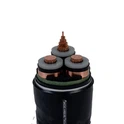
YJV cables can be designed with shielding to reduce crosstalk. For example, some 4 C Xlpe Swa Pvc Cu Cable are equipped with a steel wire armor (SWA) which can act as a shield to block the electromagnetic fields and reduce crosstalk. Additionally, proper cable layout and separation of different signal - carrying conductors can also help to minimize crosstalk.
5. Noise Immunity
Noise immunity is the ability of a cable to resist the influence of external electrical noise. YJV cables have good noise - immunity characteristics due to their insulation and shielding properties.
The XLPE insulation layer provides a good electrical barrier against external noise sources. It can prevent the external electric fields from inducing unwanted currents in the conductors. In addition, if the cable is equipped with shielding, such as a metallic shield, it can further enhance the noise immunity. The shield can capture the external electromagnetic noise and divert it to the ground, protecting the signal - carrying conductors.


For example, in industrial environments where there are many sources of electrical noise, such as motors and power supplies, YJV cables can provide reliable signal transmission due to their noise - immunity features.
6. Bandwidth
Bandwidth is the range of frequencies over which a cable can transmit signals effectively. YJV cables can support a relatively wide bandwidth, especially for modern cables with high - quality materials and manufacturing processes.
The bandwidth of a YJV cable is limited by factors such as signal attenuation and distortion. As the frequency increases, the attenuation and distortion become more significant, which can limit the upper - frequency limit of the cable's bandwidth. However, for many common signal - transmission applications, such as Ethernet networks and some audio - video systems, YJV cables can provide sufficient bandwidth.
For instance, Copper Conductor YJV Cable can support data - transmission rates that meet the requirements of many local - area networks, thanks to their relatively wide bandwidth.
7. Applications of YJV Cables as Signal Cables
YJV cables can be used in a variety of signal - transmission applications.
In industrial control systems, YJV cables are often used to transmit control signals between different components. Their low attenuation, good noise immunity, and mechanical durability make them suitable for this type of application. For example, they can be used to connect sensors, actuators, and controllers in a manufacturing plant.
In building automation systems, YJV cables can be used for transmitting signals related to lighting control, HVAC control, and security systems. The ability to withstand environmental factors and the relatively low cost make them a popular choice in building - related applications.
In some low - frequency audio and video systems, YJV cables can also be used for signal transmission. For example, in a small - scale home theater system, YJV cables can be used to connect the audio and video sources to the amplifiers and speakers.
8. Conclusion and Call to Action
In conclusion, YJV cables have several favorable signal - transmission characteristics, including relatively low attenuation, good noise immunity, and a wide bandwidth for many applications. Their structure and material properties make them suitable for a variety of signal - transmission scenarios, from industrial control to building automation and low - frequency audio - video systems.
If you are looking for high - quality YJV cables for your signal - transmission needs, we are here to help. Our company offers a wide range of YJV cables, including 0.6 - 1kv YJV Cable, 4 C Xlpe Swa Pvc Cu Cable, and Copper Conductor YJV Cable. We can provide you with detailed product information and technical support. Please feel free to contact us to discuss your requirements and start a procurement negotiation.
References
- Grover, F. W. (1946). Inductance Calculations: Working Formulas and Tables. Dover Publications.
- Neher, J. H., & McGrath, M. H. (1957). Calculation of Temperature Rise and Load Capability of Cable Systems. AIEE Transactions, 76(3), 752 - 772.
- Terman, F. E. (1947). Radio Engineers' Handbook. McGraw - Hill.