


Soil resistivity is a critical factor that significantly influences the performance and longevity of underground Copper Conductor YJV Cables. As a supplier of these cables, I have witnessed firsthand the impact of soil resistivity on our products in various installation scenarios. In this blog, I will delve into the effects of soil resistivity on underground Copper Conductor YJV Cables, exploring both the technical aspects and practical implications.
Understanding Soil Resistivity
Soil resistivity refers to the inherent resistance of soil to the flow of electric current. It is measured in ohm - meters (Ω·m) and can vary widely depending on several factors, including soil type, moisture content, temperature, and the presence of dissolved salts. Different soil types, such as clay, sand, and loam, have distinct resistivity values. For instance, clay soils generally have lower resistivity due to their high moisture - holding capacity and the presence of conductive minerals, while sandy soils tend to have higher resistivity because of their low moisture content and poor conductivity.
Moisture content plays a crucial role in determining soil resistivity. As the moisture content increases, the resistivity of the soil decreases because water acts as a conductor, facilitating the flow of electric current. Temperature also affects soil resistivity; generally, resistivity decreases with increasing temperature as the mobility of ions in the soil increases.
Impact on Cable Performance
Corrosion
One of the most significant impacts of soil resistivity on underground Copper Conductor YJV Cables is corrosion. In soils with low resistivity, there is a higher likelihood of electrochemical corrosion occurring on the copper conductors. The low - resistivity soil provides a better conductive path for the flow of electric current, which can lead to the formation of galvanic cells between different metals in the cable or between the cable and other buried metallic structures.
When a galvanic cell is formed, the more active metal (in this case, copper) acts as the anode and undergoes oxidation, resulting in the loss of metal and the degradation of the cable conductor. This corrosion can weaken the conductor, reduce its cross - sectional area, and ultimately lead to an increase in resistance and a decrease in the cable's current - carrying capacity.
Insulation Integrity
Soil resistivity can also affect the insulation integrity of the YJV cable. In high - resistivity soils, the electrical stress distribution around the cable may be uneven. The high resistivity of the soil can cause a greater voltage gradient across the cable insulation, which may lead to partial discharges within the insulation. Over time, these partial discharges can damage the insulation material, reducing its dielectric strength and increasing the risk of insulation breakdown.
On the other hand, in low - resistivity soils, the presence of moisture and conductive substances can penetrate the cable insulation. This can lead to the degradation of the insulation material, such as the swelling or softening of the PVC or XLPE insulation used in YJV cables. The ingress of moisture can also cause the formation of conductive paths within the insulation, increasing the leakage current and reducing the overall insulation resistance of the cable.
Heat Dissipation
The ability of the cable to dissipate heat is another aspect affected by soil resistivity. In high - resistivity soils, the heat transfer from the cable to the surrounding soil is less efficient because the high resistivity soil acts as a thermal insulator. As a result, the cable temperature may rise during operation, which can accelerate the aging of the cable insulation and conductor.
Higher cable temperatures can cause the insulation material to deteriorate more rapidly, reducing its mechanical and electrical properties. Additionally, elevated temperatures can increase the resistance of the copper conductor, leading to further power losses and a decrease in the cable's efficiency.
Practical Considerations for Cable Installation
Cable Selection
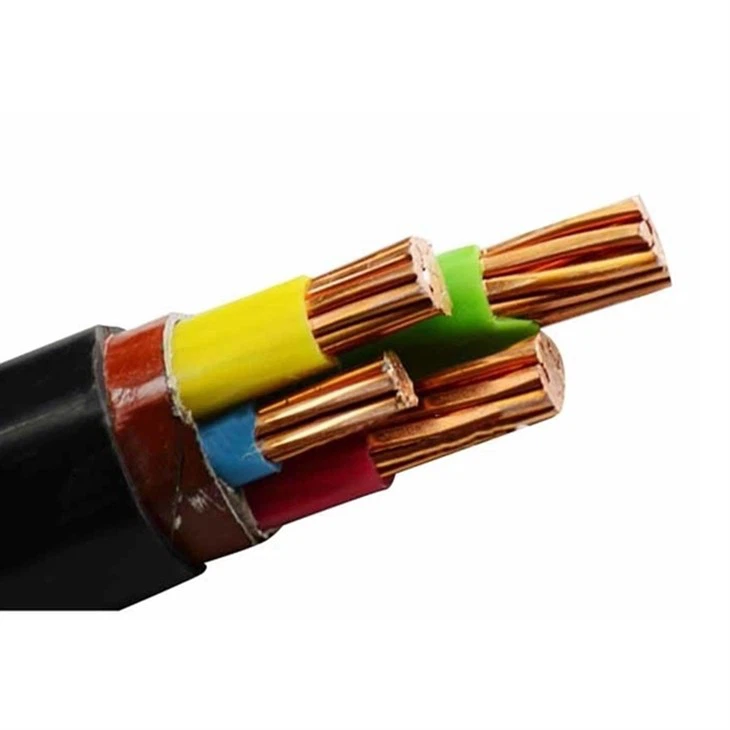
When installing underground Copper Conductor YJV Cables, it is essential to consider the soil resistivity of the installation site. For areas with high - resistivity soils, cables with enhanced insulation properties may be required to withstand the higher electrical stress. 4 C 75sqmm Cu AWG Cable is a good option as it is designed to provide reliable performance in various soil conditions.
In low - resistivity soils, corrosion - resistant cables should be selected. Cables with additional protective layers, such as a metallic shield or a corrosion - resistant coating, can help prevent the corrosion of the copper conductor. The 4 C Xlpe Swa Pvc Cu Cable offers excellent protection against corrosion and environmental factors, making it suitable for installation in low - resistivity soils.
Grounding
Proper grounding is crucial in mitigating the effects of soil resistivity on underground cables. A well - designed grounding system can help equalize the electrical potential between the cable and the surrounding soil, reducing the risk of corrosion and electrical interference. In soils with low resistivity, a more extensive grounding system may be required to ensure effective grounding.
Soil Treatment
In some cases, soil treatment can be used to modify the soil resistivity and reduce its impact on the cable. For example, adding conductive materials such as graphite or salt to high - resistivity soils can lower their resistivity and improve the heat dissipation and electrical performance of the cable. However, soil treatment should be carefully considered, as it may have environmental implications and may require regular maintenance.
Case Studies
Let's consider two different installation sites. Site A has a high - resistivity sandy soil, while Site B has a low - resistivity clay soil. At Site A, a standard YJV cable was installed without proper consideration of the soil resistivity. Over time, the cable experienced uneven electrical stress, leading to partial discharges in the insulation. This eventually resulted in insulation breakdown and a cable failure.

At Site B, a corrosion - resistant YJV cable was installed, and a comprehensive grounding system was implemented. Despite the low - resistivity soil, the cable has been operating reliably for several years with no signs of significant corrosion or insulation degradation.
Conclusion
Soil resistivity has a profound impact on the performance and longevity of underground Copper Conductor YJV Cables. As a supplier, we understand the importance of considering soil resistivity during the cable selection and installation process. By choosing the right cable, implementing proper grounding, and, if necessary, treating the soil, the negative effects of soil resistivity can be minimized.
We offer a wide range of 0.6 - 1kv YJV Cable products that are designed to withstand various soil conditions. If you are planning an underground cable installation project, we encourage you to contact us for professional advice and high - quality cable solutions. Our team of experts can help you select the most suitable cable based on your specific soil conditions and application requirements.
References
- IEEE Std 80 - 2013, IEEE Guide for Safety in AC Substation Grounding.
- NACE International, Corrosion Basics: An Introduction to Corrosion.
- CIGRE Technical Brochure 646, Underground Cables - Impact of Environmental Conditions on Design and Performance.






