


Yo, what's up everyone! I'm a supplier of YJV cables, and today I wanna talk about something super important in the electrical world - the impedance of YJV cables. You might be wondering, "What on earth is impedance?" Well, stick around, and I'll break it down for you.

First things first, let's get a basic understanding of what impedance is. In simple terms, impedance is like the resistance that an electrical circuit or component puts up against the flow of alternating current (AC). It's not just about the regular resistance we usually think of in a DC circuit. Impedance takes into account both resistance and reactance. Reactance is caused by the capacitance and inductance in the circuit.
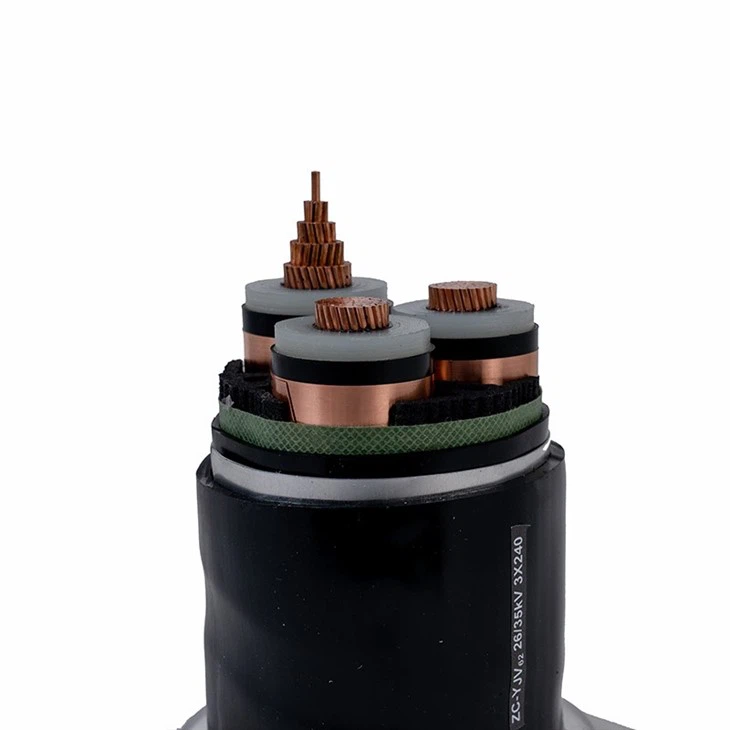
Now, when it comes to YJV cables, impedance plays a crucial role. YJV cables are widely used in various electrical systems, from power distribution to building wiring. And the impedance of these cables can have a big impact on how well the electrical system works.
Let's start with the factors that affect the impedance of YJV cables. One of the main factors is the cross - sectional area of the cable. Generally speaking, a larger cross - sectional area means lower impedance. This is because a thicker cable allows for easier flow of current. For example, a 1x150 Xlpe Yjv Cable will have a different impedance compared to a cable with a smaller cross - section. The 1x150 cable has more space for electrons to move through, so the opposition to the current flow is reduced.
The length of the cable also matters a great deal. As the length of the YJV cable increases, the impedance goes up. It's like trying to push water through a long pipe. The longer the pipe, the more resistance there is to the flow of water. In the same way, a longer YJV cable will make it harder for the electrical current to flow smoothly, resulting in higher impedance.
Another factor is the frequency of the alternating current. YJV cables are designed to work with different frequencies, and the impedance can vary depending on the frequency. At higher frequencies, the reactance part of the impedance becomes more significant. This is because the capacitance and inductance in the cable start to have a greater effect on the current flow.
Now, let's talk about the types of YJV cables and their typical impedance values. There are different voltage levels for YJV cables, such as the 0.6 - 1kv YJV Cable. These cables are commonly used in low - voltage electrical systems. The impedance of a 0.6 - 1kv YJV cable can vary depending on its cross - sectional area and length, but generally, it's designed to have a relatively low impedance to ensure efficient power transmission.
Then there's the Armoured YJV Cable. The armour on these cables provides extra protection, but it can also have an impact on the impedance. The metal armour can introduce some additional inductance, which might increase the impedance slightly. However, manufacturers take this into account during the design process to make sure the overall performance of the cable is still good.
So, why is it important to know the impedance of YJV cables? Well, for one thing, it helps in proper system design. When engineers are planning an electrical system, they need to consider the impedance of the cables to ensure that the power is distributed evenly and efficiently. If the impedance is too high, there could be significant power losses in the form of heat. This not only wastes energy but can also lead to overheating of the cables, which is a safety hazard.
Moreover, knowing the impedance is crucial for fault detection. In an electrical system, if there's a sudden change in the impedance of a YJV cable, it could indicate a problem, such as a short - circuit or a damaged section of the cable. By monitoring the impedance, technicians can quickly identify and fix these issues before they cause more serious damage.
As a YJV cable supplier, I understand the importance of providing accurate information about the impedance of our cables. We conduct thorough testing on all our products to determine their impedance values under different conditions. This way, our customers can make informed decisions when choosing the right cables for their projects.
If you're in the market for YJV cables, whether it's a 1x150 Xlpe Yjv Cable, a 0.6 - 1kv YJV Cable, or an Armoured YJV Cable, we've got you covered. Our cables are of high quality, and we can provide you with all the technical details, including impedance values, to help you make the best choice for your electrical system.
If you have any questions about the impedance of YJV cables or want to discuss your cable requirements, don't hesitate to reach out. We're always here to help you find the perfect solution for your project. Whether you're working on a small building wiring job or a large - scale power distribution system, we can offer the right YJV cables at competitive prices.
In conclusion, the impedance of YJV cables is a complex but important aspect of electrical engineering. It's influenced by factors like cross - sectional area, length, and frequency, and it has a significant impact on the performance and safety of electrical systems. As a reliable YJV cable supplier, we're committed to providing high - quality products and accurate information to our customers. So, if you're looking for YJV cables, give us a shout, and let's start the conversation about your next project.
References:
- Electrical Engineering Handbook, various editions
- Standards and guidelines related to YJV cable manufacturing and performance.






