Hey there! As a supplier of Screened Control Cables, I often get asked about the radiation resistance of these cables. So, I thought I'd write a blog post to explain what it is and why it matters.


First off, let's talk about what radiation resistance means in the context of screened control cables. Radiation resistance refers to a cable's ability to withstand the effects of electromagnetic radiation without significant degradation in performance. In simple terms, it's how well the cable can keep doing its job even when it's exposed to all sorts of electromagnetic interference (EMI) and radio - frequency interference (RFI).
Now, why is radiation resistance so important? Well, in many industrial and commercial settings, there are a lot of electronic devices and equipment that generate electromagnetic fields. These fields can interfere with the signals carried by control cables. If a cable doesn't have good radiation resistance, the signals can get distorted, leading to errors in the operation of the equipment that the cable is connected to. For example, in a manufacturing plant, a control cable with poor radiation resistance might cause a machine to malfunction, leading to production delays and potentially costly repairs.
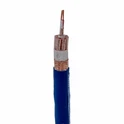
So, how do we make screened control cables radiation - resistant? One of the key features of a screened control cable is its shielding. The shield acts as a barrier that blocks out external electromagnetic radiation. There are different types of shielding materials used in these cables. One common type is aluminum shielding. An Aluminum Shielded Control Cable is quite effective at reducing EMI and RFI. The aluminum shield reflects and absorbs the electromagnetic waves, preventing them from reaching the inner conductors of the cable where the signals are carried.
Another factor that affects radiation resistance is the construction of the cable. A well - constructed cable with proper insulation and tight - fitting conductors is less likely to be affected by radiation. The insulation helps to keep the electrical signals within the conductors and also provides an additional layer of protection against external interference.
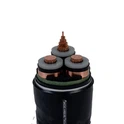
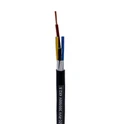
Let's take a look at some of the different types of screened control cables we offer and how their radiation resistance varies. For instance, our 4 Core Screened Control Cable is designed for applications where multiple signals need to be transmitted. The four cores are individually insulated and then surrounded by a shield. This design not only allows for efficient signal transmission but also provides good radiation resistance. The shield around the cores helps to protect each individual signal from external interference, ensuring that the data being transmitted remains accurate.
Our 10*2 Control Cable is another popular option. This cable has ten pairs of conductors, which means it can handle a large amount of data. The shielding in this cable is carefully engineered to provide maximum protection against radiation. The multiple pairs are arranged in a way that minimizes crosstalk between the signals, and the shield further enhances the cable's ability to resist external electromagnetic fields.
When it comes to testing the radiation resistance of our cables, we use a variety of methods. One common test is the radiated electromagnetic field test. In this test, the cable is exposed to a controlled electromagnetic field, and we measure the amount of interference that reaches the inner conductors. We also test the cable's performance under different frequencies and field strengths to ensure that it can handle a wide range of real - world conditions.
In addition to the shielding and construction, the quality of the materials used in the cable also plays a crucial role in its radiation resistance. We only use high - quality conductors, insulation materials, and shielding materials in our cables. This ensures that the cables not only have good radiation resistance but also have a long service life.
Now, if you're in the market for screened control cables with excellent radiation resistance, you've come to the right place. Whether you need a cable for a small - scale project or a large industrial application, we've got you covered. Our team of experts can help you choose the right cable for your specific needs. We understand that every application is unique, and we're committed to providing you with the best possible solution.
If you're interested in learning more about our screened control cables or have any questions about radiation resistance, don't hesitate to reach out. We're always happy to have a chat and discuss how our cables can meet your requirements. Whether it's a simple inquiry or you're ready to start a procurement process, we're here to assist you.
In conclusion, radiation resistance is a vital characteristic of screened control cables. It ensures that the cables can operate effectively in environments with high levels of electromagnetic interference. By using high - quality materials, proper shielding, and careful construction, we're able to offer cables that provide excellent radiation resistance. So, if you're looking for reliable screened control cables, give us a shout, and let's start the conversation about how we can work together.
References
- "Electromagnetic Compatibility Engineering" by Henry W. Ott
- "Cable Design and Installation Handbook" by various industry experts