


Outdoor Electrical Cable
Shenyang Pengcheng Haoyu Technology Co., Ltd
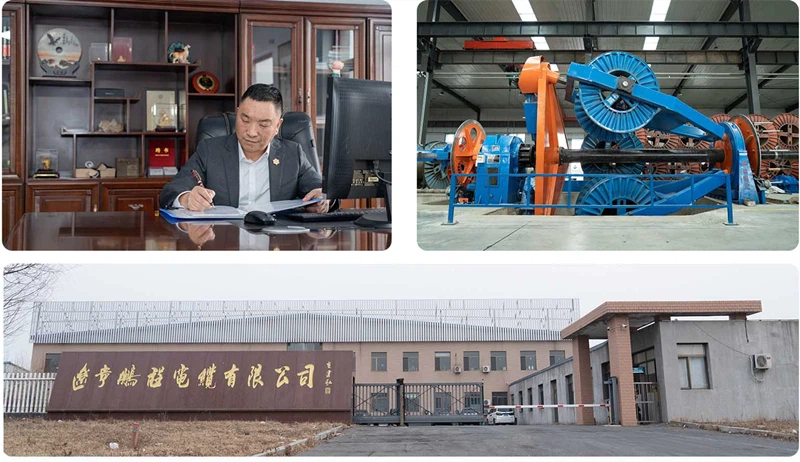
Liaoning Pengcheng Cable Co., Ltd. was founded in 1990, located in the northeast center of Shenyang & Tieling business district, is the comprehensive strength of the forefront of wire and cable manufacturing enterprises.
Why Choose Us
Quality assurance
We have 100% quality guarantee to customers. We will be responsible for any quality problem.
Good service
High-quality after-sales service, tracking usage, and positive feedback. Rapid response within 24 hours.
Fast delivery
We have full stock, and can deliver within short time. Many styles for your choices.
Reasonable price
Good Quality + Factory Price + Quick Response + Reliable Service, is what we are trying best to offer you.
Oem/odm
When you put forward your needs, our engineers will provide you with faster and more perfect customized solutions.
Efficient and convenient
The company has established marketing networks around the world to provide high-quality services to customers in an efficient and convenient manner.


Weather Resistance
Outdoor Electrical Cable is engineered to withstand the harsh outdoor environment, including exposure to sunlight, rain, snow, and temperature variations. This weather-resistant design ensures that the wire remains durable and reliable, even in extreme weather conditions. It helps to prevent moisture from seeping into the wire, reducing the risk of short circuits and electrical failures.
UV Protection
Outdoor Electrical Cable typically features UV-resistant insulation, which protects against damage caused by prolonged exposure to sunlight. The UV resistance helps maintain the integrity of the wire's insulation, preventing it from cracking, drying out, or becoming brittle over time. This protection prolongs the lifespan of the wire, ensuring consistent performance and minimizing the need for maintenance or replacement.
Durable Construction
Outdoor Electrical Cable is constructed with durable materials, such as high-quality PVC or polyethylene insulation, and copper or aluminum conductors. These materials provide excellent resistance against environmental factors and mechanical stress. The wire's robust construction allows it to handle the rigors of burying, direct burial installations, and being safely hidden beneath landscaping elements.
Enhanced Safety
The safety of your outdoor lighting system is of utmost importance. Outdoor Electrical Cable from designed and manufactured in compliance with stringent safety standards. It ensures that your landscape lighting installation meets all necessary electrical codes and regulations. The proper selection of Outdoor Electrical Cable reduces the risk of electrical hazards, such as shocks, short circuits, or damage to the wire due to exposure to water or moisture.
Easy Installation
With its flexible design, Outdoor Electrical Cable is easy to install in various outdoor settings. The flexibility of the wire makes it easier to run through conduit, bury underground, or hide beneath foliage or hardscape elements. The wire's flexibility also minimizes the risk of kinks or damage during installation, simplifying the overall process and saving time.
When it comes to installing cables outside or underground for ensuring that there is continued performance, there are a few different types of outdoor cabling products to consider:
Outdoor Cable
Underground Burial Cable
Direct Burial Cable
However, not every cable that is technically outdoor-rate can be directly buried underground. So, let's take a closer look at these cables and the differences between them and how to use them in outdoor applications.
Outdoor Cable
Outdoor cables feature an outdoor rating and can maintain performance despite harsh elements and conditions. For example, moisture, high/low temperatures, and tearing affecting signal integrity. But this cable is not designed to be buried underground.


Underground Burial Cable
Underground cables can be installed - when it sits inside a conduit. This added protection allows the cable to sit underground and withstand exposure to the elements. These cables have water blocking fillers or polymer gel that stop water infiltration to underground burial cables. But, the cable jackets might be able to withstand water resistance for a long period. Water can eventually migrate into the core of the cable if the exposure to water lasts long enough. When looking at cables it is also important to know that PE cable jackets have better water resistance than PVC jackets. When data cables get wet, they will have higher attenuation which could impact the cable's performance over time. Also, a copper data cable that gets wet will not work.
Direct Burial
Direct Burial cables have a UL rating once they pass a water absorption and crush-resistance test. To be classified as a "direct burial cable", testing and ratings are completed to verify the cables have the capacity to withstand the outside elements if it is being used outdoors or placed underground. These cables usually feature a rugged jacket that can survive pressures and can have long-term contact with moisture. In outdoor elements, it can maintain the performance and signal integrity of the cable.
What Separates Indoor and Outdoor Wires?
A few factors differentiate indoor and outdoor wires, but the primary goal with outdoor wires is to provide better protection from the elements. Indoor wires don't get exposed to the same level of risk and require less rugged builds. They're often more affordable than outdoor wires, but won't stand up to the same threats that outdoor wires face. That means you can generally use outdoor wires inside, but not vice versa. This rule applies whether you're using conduit or direct-burial installations.
Some of the characteristics that differ between indoor and outdoor wires include the following.
Insulation: Outdoor wires must stand up to moisture, humidity and unregulated temperatures. In many climates, these temperatures can be extreme, and outdoor cables protect the inner wires with robust insulation. They're often thicker because of this, but the added protection is essential for keeping the inner wires safe from the elements.
Plug style: Indoor plugs might be two- or three-pronged, depending on the item. More powerful devices tend to use three-pronged plugs because of the added safety of the ground, but many indoor devices, like lamps and chargers, use two-pronged plugs. They're a bit easier to work with, but don't provide a ground check. On the other hand, outdoor cables will almost always have a ground prong.
Gauge: Indoor wires are often shorter and, since they won't be pulling as much power, don't need to be quite as large as outdoor wires. They can have smaller diameters because there's less current running through them and fewer protective layers are necessary.
Power use: Devices can vary widely in their power consumption, with indoor wires often accompanying low-amperage devices. For instance, your average household lamp or television might use about 0.5 amps, while a hairdryer or washing machine pulls about 10 amps. Meanwhile, outdoor items like power tools and large lighting fixtures can require a lot more juice. According to WOOD Magazine, power tools like routers and air compressors can use as much as 18 amps, so you'd need an outdoor outlet and wire that can handle that current.
Electric code requirements: Different locations have various requirements, according to the National Electric Code. The NEC specifies appropriate applications and installation practices, and you must use the right kind of cable according to these requirements to ensure compliance and safety. Indoor and outdoor cables include various ratings for protective characteristics, which must match the application.
What Type of Wire Should You Use Outdoors?
So, you want to run electricity to an outdoor space. What kind of wire do you use? For starters, you'll need one that can withstand a wide range of threats, which may vary depending on the application and the environment. Also, you're likely going to be looking at a cable, not a wire. Cables feature multiple conductors, and sometimes a ground wire, encased in a protective sheathing.
You'll need to protect most installations from extreme temperatures. Depending on the climate, this may be more or less of a concern. For instance, if you're placing a wire in a northern outdoor environment, you could frequently deal with sub-zero temperatures. Alternatively, southern placements can bring toasty temperatures your way, and the Midwest can have both. You need to ensure that the outdoor cable you're using can fit the climate's demands.
Other risks that face just about any outdoor cable include condensation, humidity, moisture and ultraviolet rays. Moisture can quickly incapacitate a cable, degrading its performance and ruining the signal. On the other hand, UV light breaks down a cable's outer layers in the presence of sunlight. When this happens, it significantly diminishes the cable's lifespan and can lead to cracks in the sheath, exposing the wire to other materials like water.
Note that even UV-protected cables may fade in color, but this is just a cosmetic change. Still, it can cause difficulty for cable identification in the future, so long-lasting color on a wire's jacket is a definitive plus.
In some locations, such as industrial environments, you'll also need to consider the presence of substances like chemicals, oil, solvents and fuels. They can eat away at a cable's sheathing and corrode it down to the wire, so appropriate protective layers are necessary.
Some popular outdoor cables include the following.
Type UF-B: Underground feeder cable, is often appropriate for direct burial applications without the need for conduit. The "B" in the name refers to its use as a branch circuit cable. It can also be applicable in indoor environments if moisture or corrosion are concerns. This kind of cable has a PVC jacket and color-coded PVC-and-nylon insulation. Conductors can be stranded or annealed soft bare copper wire, with an added bare copper ground. They come in American wire gauge sizes 6 to 14 and support 600 volts and temperatures up to 90 degrees Celsius, dry or wet.
Type MC: Another indoor or outdoor cable, Type MC cables use THHN — which stands for thermoplastic, high heat and nylon jacket — insulation or the water-resistant version, THWN-2. These insulations are essential for many outdoor applications, including wet and hot environments. The "MC" stands for metal-clad, representing the aluminum interlocked armor surrounding the THHN/THWN-2 wires that helps deliver solid performance in harsh environments. Type MC cables come in solid, stranded and bare copper varieties between AWG 14 and 2. They can be suitable for outdoor use above ground and underground with conduit.
SE-R: SE-R cables are service entry cables with a rounded shape. They also use THHN insulation but feature a PVC jacket and a ground wire. Typical applications include panel feeder and branch circuits, which benefit from SE-R's resistance to sunlight and water and flame retardance. While not appropriate for direct burial, SE-R can be applicable in conduit. It operates up to 90 degrees Celsius in wet and dry conditions and comes in AWG 6 to 4/0.
USE-2: If you're setting up an outdoor project involving solar power, USE-2 provides the necessary durability. They consist of copper or aluminum wire and flexible rubber insulation, providing protection from high heat, wet or damp environments, UV light, abrasion, pressure and chemicals. Temperature ratings can be as high as 90 degrees Celsius and support 600 volts.
Are Stranded or Solid Wire Better Power Cables?
A wire and cable type must be chosen based on initial and ongoing costs, indoor/outdoor and specialized applications, load kinds, motion, the appropriate ampacity, and other weather and environmental parameters, among other considerations. As a result, deciding between solid wire and stranded wire depends on a variety of criteria.
Simply put: Solid wire is the option for you if you desire longevity, simplicity, smoothness, and, most importantly, a cost-effective solution depending on your required applications.
Stranded wire is your best option if you need long-term flexibility and specific motion-based applications.
The line current in the conductors will be significant for transmission and distribution lines that need to have a high power capacity, which is why large diameters are required. The conductor's size will determine how much current flows through it.
The capacity of the line can be significantly increased by pushing the temperature up but, at that higher temperature, the conductors will sag much more. The maximum capacity of the line will be constrained by the sag of the conductors if the structures are not made to withstand larger sag, which is why various core types are employed. For example carbon fiber cores expand less than steel and are lighter, the sag caused by heating of the cables is reduced.
According to NEC code, a house's internal wiring must be secured to the frame of the building. Solid wire is typically utilized for the permanently placed wiring because it does not need to move and is less expensive. Stranded wire is used to make appliance wires that plug into walls so that they may lay flat and move freely.
Solid copper wire easily breaks, especially when it is slightly dinged. The majority of electrical connections require some wire bending and arrangement to fit in the final position, increasing the risk of a fracture. It can take hours to locate and fix the problem, and you are unaware of it during installation.
What Kind of Flexible Electrical Conduit is Used for Outside?
When it comes to installing electrical wiring in outdoor environments, it is crucial to use flexible electrical conduits that are specifically designed to withstand the challenges posed by outdoor conditions. Outdoor installations require conduits that can protect the electrical cables from moisture, UV radiation, extreme temperatures, and physical damage. Several types of flexible electrical conduits are suitable for outdoor use, each with its own advantages and specific applications.
PVC Conduit
PVC (Polyvinyl Chloride) conduit is one of the most common types of conduits used for outdoor installations. It is lightweight, cost-effective, and resistant to moisture, corrosion, and UV radiation. PVC conduits are available in different sizes and can be easily cut and assembled using PVC solvent cement. They provide excellent protection for electrical cables in outdoor environments, making them suitable for a wide range of applications, such as landscape lighting, sprinkler systems, and outdoor electrical outlets.
Rigid Metal Conduit (RMC)
Rigid Metal Conduit, also known as RMC or galvanized steel conduit, is a heavy-duty option for outdoor electrical installations. It is made of steel and coated with zinc to provide superior protection against corrosion. RMC is highly durable and can withstand physical impacts and extreme weather conditions. However, it is rigid and requires special tools and fittings for installation. RMC is commonly used in industrial settings, outdoor infrastructure projects, and areas where the conduit may be exposed to significant mechanical stress.
Intermediate Metal Conduit (IMC)
Intermediate Metal Conduit is another type of metal conduit suitable for outdoor use. It is lighter and more cost-effective than RMC while still providing good protection for electrical cables. IMC is made of galvanized steel and has a thinner wall compared to RMC, making it easier to work with and bend. It offers better resistance to corrosion than PVC conduits and is often used in commercial and industrial applications where durability and protection are essential.
Liquidtight Flexible Metal Conduit (LFMC)
LFMC, also known as "Sealtite," is a liquid tight flexible metal conduit that is designed to resist the penetration of moisture and liquids. It consists of a spiral-wound strip of metal with a plastic coating and a liquidtight outer jacket. LFMC is highly flexible and can be easily bent and routed around obstacles. It is suitable for outdoor installations where the conduit may be exposed to water or other liquids, such as underground wiring, outdoor lighting, and irrigation systems.
Flexible Metallic Conduit (FMC)
Flexible Metallic Conduit, commonly referred to as "Greenfield" or "Flex," is a flexible conduit made of interlocking metal strips. It provides good protection for electrical cables and allows for easy installation in outdoor environments. FMC is resistant to moisture, UV radiation, and physical damage. It is commonly used for outdoor applications like outdoor lighting, air conditioning units, and underground wiring where flexibility is required.
Non-Metallic Liquidtight Conduit (LFNC)
LFNC, also known as "Carflex" or "Sealtite," is a flexible non-metallic conduit designed for outdoor use. It is made of PVC or thermoplastic materials and is coated with a liquidtight outer jacket. LFNC is lightweight, corrosion-resistant, and provides excellent protection against moisture and UV radiation. It is commonly used in outdoor applications where flexibility and liquid resistance are required, such as outdoor signage, landscape lighting, and communication systems.
Our Factory
The company is now located in Xintaizi Industrial Park, Liaoning Province, covering an area of nearly 150 acres, the factory area more than 50 acres. The company is mainly committed to research & development and production of flexible mineral insulated fireproof cables, mica belt mineral insulated corrugated copper sheathed cables, and new high conductivity 8000 series of anti-pressure and creep-resistant aluminum alloy core interlocking armored power cables, as well as halogen-free low-smoke flame retardant cables and ordinary wire and cable and other full range of full-specification high-quality cable products system research and development, design, manufacturing, marketing and service. Pengcheng products are widely used in smart grid, energy power, green building, smart factory and hospital and other fields. Currently has a number of valid patents.

FAQ
We're professional outdoor electrical cable manufacturers and suppliers in China, specialized in providing high quality customized service. We warmly welcome you to buy cheap outdoor electrical cable for sale here and get pricelist from our factory. For price consultation, contact us.
Outdoor Electrical Cable