


Underground Electrical Wire
Shenyang Pengcheng Haoyu Technology Co., Ltd
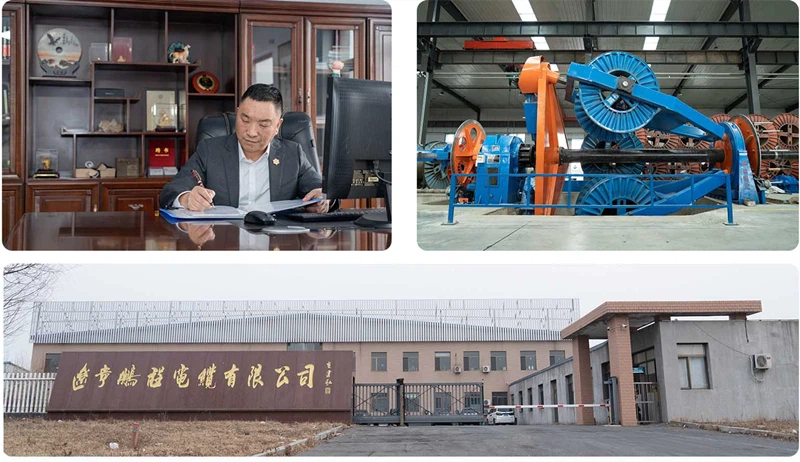
Liaoning Pengcheng Cable Co., Ltd. was founded in 1990, located in the northeast center of Shenyang & Tieling business district, is the comprehensive strength of the forefront of wire and cable manufacturing enterprises.
Why Choose Us
Quality assurance
We have 100% quality guarantee to customers. We will be responsible for any quality problem.
Good service
High-quality after-sales service, tracking usage, and positive feedback. Rapid response within 24 hours.
Fast delivery
We have full stock, and can deliver within short time. Many styles for your choices.
Reasonable price
Good Quality + Factory Price + Quick Response + Reliable Service, is what we are trying best to offer you.
Oem/odm
When you put forward your needs, our engineers will provide you with faster and more perfect customized solutions.
Efficient and convenient
The company has established marketing networks around the world to provide high-quality services to customers in an efficient and convenient manner.


What Are Direct-Burial Underground Electrical Wire?
Direct-burial Underground Electrical Wire is a type of electrical wiring that is specifically engineered to withstand the harsh conditions of being buried underground. To provide added protection, the cable is encased in thermoplastic, which creates a moisture-proof barrier between the wiring and the surrounding underground environment.
In some cases, direct-burial wires may not require a conduit, but if one is necessary, the cable can be laid inside for extra protection of the electrical system. Once installed, the direct-burial cable is run through trenches and then buried for maximum safety and effectiveness.
Advantages of Underground Cable and Wiring
Many homeowners are opting to have their cable and wiring system installed underground. This is an investment that is more costly to have installed because of the labor that it entails. Many homeowners wonder if having their cable and wiring underground is worth the time and money invested.
The good news is that the slight cost increase of underground wire installation is the only disadvantage to this system. Underground installation provides homeowners with countless benefits that make this a worthy investment that will be well appreciated.
Outages
Underground wires and cables mean that you will not have to worry about power outages due to weather storms.
Eliminates Tampering
Another major benefit of these connections being underneath the ground is that they are safe from human/animal tampering. This includes protection from intentional and accidental damages. This also makes it impossible for neighbors to make illegal connections to steal your data and/or use your services.
Urban Areas
It can be difficult and nearly impossible to install overhead wires in urban neighborhoods. Many serviceman spend hours of labor trying to do, racking up an expensive installation bill. Underground wires and cables are the only practical choice for urban neighborhoods.
Longer Life Expectancy
Cables and wires that are installed below the ground are expected to have much longer life expectancies than their above-ground counterparts. This is because of the absence of weather and human related risks.
This system will also save money because of the significantly fewer repairs that will be required over the years, opposed to an overhead system.
Safe Alternative to Overhead Wires
Electrical wires and cables are dangerous for homeowners, the public, and animals. The high-voltage power is hazardous when live wires fall and can cause death to those who come into contact with them. Having these wires underneath the ground eliminates this hazardous risk.
This is also significantly safer in the event of fires. Firefighters are in danger when performing their jobs because of the risk of poles and overhead wires.
Wildlife is also protected when overhead wires are not present. Birds, squirrels, and even domestic pets are in danger when they come into contact with power lines.
Different Categories of Underground Electrical Wire

There are different categories of direct-burial wire, but the most common are underground service entrance (USE) and undergrounder feeder (UF).
What Are Underground Service Entrance (USE) Cables Used For?
Underground service entrance (USE) cable is black and is usually used on residential projects where lines are buried to bring power from a transformer to homes. These underground wires are traditionally handled by utility professionals rather than being dealt with by the homeowner themselves.
What Are Undergrounder Feeder (UF) Cables Used For?
Undergrounder feeder (UF) cable is gray and is distributed in rolls that look similar to non-metallic (NM) sheathed cable. This type of cable may be used indoors or outdoors. For instance, if a homeowner wishes to send power to a garden shed or a lamppost on the property, they may use UF cable underground running from the house.
UF cable is similar to standard NM cable. One significant difference between the two cables is their construction. NM cable has wires wrapped with paper and a loose plastic sheath, while UF cable is entirely encased in plastic. This insulates each wire from the others and prevents moisture or other elements from affecting the wires. It is also sunlight-resistant for times when it is used above ground.
Four Burial Depth Options for Underground Electrical Wire
Decide how much digging you're prepared to do and how deep your trench will be. This helps determine the type of wiring and the method you'll use. Underground cable and wire can be installed at different depths, depending on the type of conduit, wire or cable.
Six inches
Install galvanized rigid metal electrical conduit with individual insulated wires six inches deep.
The wires are pulled through the conduit once the entire conduit run is complete, from end-to-end.
Wires must be rated for use in a wet location, such as Type THWN-2 (thermoplastic/wet location/nylon jacket).
Eighteen inches
Install PVC conduit with individual insulated wires 18 inches deep.
The wires are pulled through the conduit once the entire conduit run is complete, from end-to-end.
Wires must be rated for use in a wet location, such as Type THWN-2 (thermoplastic/wet location/nylon jacket).
Twelve inches
Install GFCI-protected direct-buried Type UF cable 12 inches deep.
The GFCI protection is a trade-off that provides enhanced electrical safety while reducing the need for a deeper trench.
Twenty-four inches
Install Type UF cable for the entire run 24 inches deep.
This is another trade-off between depth and physical protection.
Because the direct-buried cable is alone in the bottom of the trench without conduit or GFCI protection, it must be installed deeper in the ground.
Direct Burial Wire: Where and When to “USE” It
If you've ever installed utilities or run power underground, you likely know how important using the correct cable is.
Direct burial wire is no different. this wire type can be buried without conduit or metal cladding, and its rugged insulation and flexibility are perfect for underground cable applications.
No matter the type of underground work, a direct burial cable is generally required. But what counts as a direct burial wire, where do you use it, and can it be substituted for other wiring types?
What Makes a Wire Direct Burial Rated?
According to the National Electrical Code (NEC), for an electrical wire to be considered direct burial rated, it must be clearly labeled for direct burial use. Don't assume every thickly insulated wire is a direct burial cable.
Also, unlike outdoor and underground burial cables, direct burial wire has a specific UL rating noting that it has passed rigorous testing and can survive in harsh underground environments.
As a result, this wire type excels in underground utility applications. It's faster and more cost-effective to install than cables that need conduit or metal cladding and doesn't need any additional materials to support it.
How Deep Should I Bury This Stuff?
Depending on the type of direct burial wire and application, there are various rules to prevent accidents.
Underground Feeder (UF) cable must be buried at least 24 inches underground. Meanwhile, PVC conduit only has to be buried 12 inches underground. Metal conduits can be buried six inches underground - the same depth that low-voltage wiring (think pet fence wire) is buried at.
Also, if your direct burial wire terminates above ground, it must be shielded using a conduit before surfacing.
What Types of Wire Insulation are Used?
Direct burial wire is typically protected by one of several insulation materials:
XLPE - Called cross-linked polyethylene, XLPE is typically used for RHW/USE-2 (Underground Service Entrance) cable. This insulation provides excellent moisture and heat resistance, alongside abrasion and crush protection.
HMWPE - High-Molecular Weight Polyethylene is used as an insulation for Cathodic Protection Cable and tracer wire, offering protection from moisture, chemicals, and abrasion damage.
PVC - Polyvinyl Chloride jacketing is often used to protect vinyl nylon tray cable (VNTC) and UF cables from abrasion, crushing, and other environmental hazards.
Insulation thickness is also important. The cable needs enough insulation surrounding the conductors to withstand being dragged over rocks and through dirt during installation. To comply with UL ratings, direct burial cable is abrasion and crush resistant.
Once the wire or cable is installed, the insulation has to hold up across a wide temperature range, chemicals, moisture, gas, oil, and other dangers.
Where Is Direct Burial Wire Used?
Direct burial wires are used for many jobs, including:
Running electricity
Tracer wire installations for underground utilities
Pet Fencing
Phone and other telecommunication cables
Fiber Optics
Irrigation and golf courses
Cathodic Protection
Different types of cabling get buried at different depths based on the project. Smaller, low-voltage wires like pet fencing live only a few inches below the surface, but larger gauge cables like power lines and underground utilities must be buried deep enough to avoid accidental damage caused by digging.
Regardless, direct burial wire should be used in compliance with local municipality rules and guidelines to ensure safe installation.
Can you Substitute Other Wire Types for Direct Burial?
The short answer is no. The long answer is no, because the substituted wire may not be similarly rated.
There is no shortage of wire types on the market today, and they don't all do the same thing. Substitutions might seem like a great idea, especially if they save money on upfront installation costs. But if the wire isn't direct burial rated, it will quickly deteriorate and cause problems.
Suppose workers install new underground utilities using THHN instead of tracer wire. THHN may seem like a safe substitution, but it doesn't have a direct burial rating. Its nylon insulation won't provide good moisture protection.
As the years wear on, ground moisture begins breaking down the THHN insulation, cracking it, and exposing the copper conductor underneath to the elements. Eventually, the corrosion becomes too much for the conductor. After only a few years, the signal is lost, and the door has been opened for potential mishaps.
Part of working with underground wire and cable is understanding the nuances associated with external and underground usage. These projects often require unique formulations that account for the environment around them (for example, PVC insulation has both -20C and -55C variants), offer chemical resistance, and can survive in low and high temperatures.
Wire thickness will also come into play during the installation process. If the insulation is too thin, rocks, roots, and other hazards could cause abrasion damage during pulling. Thicker insulation that adheres to UL standards is needed.
Our Factory
The company is now located in Xintaizi Industrial Park, Liaoning Province, covering an area of nearly 150 acres, the factory area more than 50 acres. The company is mainly committed to research & development and production of flexible mineral insulated fireproof cables, mica belt mineral insulated corrugated copper sheathed cables, and new high conductivity 8000 series of anti-pressure and creep-resistant aluminum alloy core interlocking armored power cables, as well as halogen-free low-smoke flame retardant cables and ordinary wire and cable and other full range of full-specification high-quality cable products system research and development, design, manufacturing, marketing and service. Pengcheng products are widely used in smart grid, energy power, green building, smart factory and hospital and other fields. Currently has a number of valid patents.

FAQ
We're professional underground electrical wire manufacturers and suppliers in China, specialized in providing high quality customized service. We warmly welcome you to buy cheap underground electrical wire for sale here and get pricelist from our factory. For price consultation, contact us.
shielded underground electrical wire, direct burial 4 0 aluminum wire, Underground Electrical Wire for 100 Amp Service