


Black, white, green, red, blue, orange, brown and gray, the color of the insulating sheath on the outside of the wire often has its own referential meaning. So, when fiddling with a new light fixture, in addition to turning off the circuit breaker, determine what the meaning of each colored wire you're going to touch next is.
Residential electricity in the United States began without systematic color coding or even a set of standards for proper use. In 1879, shortly after Edison first introduced electric light, the insurance industry began to distribute safety guidelines. The first formal guidelines appeared in 1881 on addressing capacity, insulation, and installation. But there is no classification of wire colors.
In 1882, the National Board of Fire Insurers (NBFU) also adopted earlier safety regulations. In 1893, the National Insurance and Electricity Association began an attempt to unify the different state codes and codes for electrical installations, proposing a national coding standard for electric lights and electrical installations wiring buildings.
The first National Electrical Code (NEC) was proposed by the NBFU in 1897, which also ignored the standardization of wire color issues. Later, in 1928, the NEC was updated and revised, and one of the requirements was to establish a specification for the color of the grounding wire, which later became white or natural gray, and also prohibited the application of these colors to live wires and neutral wires.
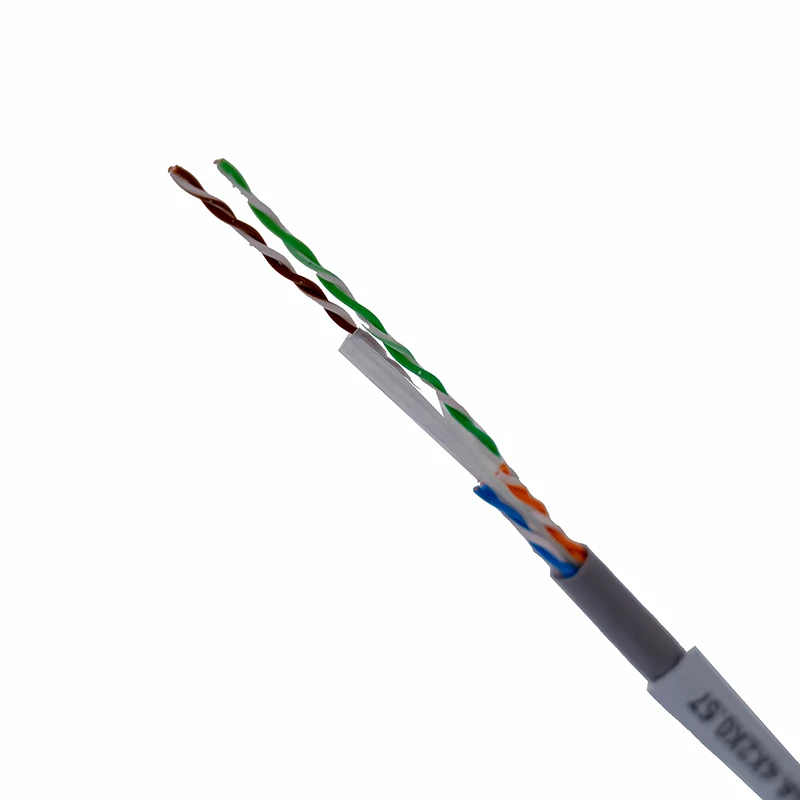
A further color-coding was a new version introduced by NEC in 1937, which used color-coded wires to "multi-branch circuits" and stipulated that the wires of the three-branch circuits should be black, red, and white. More branches can be added with other colors, such as yellow and blue.
In 1953, the NEC changed the color of the ground wire to green or bare wire. Green is also forbidden to be used in electrical lines (e.g. live wires and neutral wires).
The 1971 version of the NEC introduced colored multi-branch codes, although white, natural gray, green, and yellow-green stripes were still retained, and these colors were also banned from being used for grounding wires. This time, the specification discarded the rigid color-coding requirements for the path wires, because there were not enough colors to distinguish the system, voltage, and circuit.
In the United States, the ground wire is green, yellow-green striped or bare, the neutral wire should be white or gray, and the electrical wire may be black, red, blue, yellow, orange or yellow, depending on the voltage.
These color standards are for the United States, and other country codes are not the same (Canada's is very similar to the United States). For example, Australia and New Zealand have the same color of ground wires as the United States, and their neutral wires are blue or black. Also, live wires can be used in any color except ground and neutral wires. Red and brown are the recommended colors for single-phase wires, and red, white, and blue are recommended colors for multiphase flow charged wires.
The UK recently (2004) changed the system of compliance with the International Electrotechnical Commission (EC). Their ground wire color (yellow-green stripes) remained the same, and the neutral wire color changed from black to blue. Similarly, single-phase wires that used to be red have turned brown. In addition to this, the marking and coloring of multiphase lines in the UK has also changed: L1 from red to brown, L2 from yellow to black, and L3 from blue to gray.


