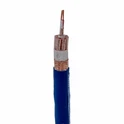
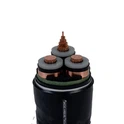
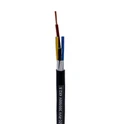
Hey there! As a supplier of Screened Control Cables, I'm super stoked to spill the beans on how these nifty cables work. You know, in today's tech - savvy world, these cables play a crucial role in all sorts of electrical and electronic systems. So, let's dig in!
First off, what exactly is a Screened Control Cable? Well, it's a type of cable that's designed to carry control signals in various applications. The "screened" part is the key here. This cable has an extra layer, called a shield or screen, which wraps around the inner conductors.
Now, let's talk about the inner conductors. These are the heart of the cable. They're made of conductive materials, usually copper, because copper is an excellent conductor of electricity. The number of conductors can vary depending on the specific needs of the application. For example, we have the 10*2 Control Cable, which has a specific configuration of conductors that's suitable for certain control systems.
The main job of these conductors is to carry electrical signals. When you have a control system, say in an industrial setting, different components need to communicate with each other. These conductors act as the highways for those electrical signals. For instance, if you have a machine that needs to start and stop based on certain conditions, the control signals are sent through these conductors to make that happen.
But here's the deal. In a real - world environment, there are all sorts of electrical noises and interference. This can come from things like nearby power lines, motors, or other electronic devices. And if this interference gets into the control signals, it can mess up the whole system. That's where the screen comes in.
The screen is typically made of a conductive material like copper, which is why we have the Copper Screened Control Cable. This screen acts like a protective shield. It surrounds the inner conductors and acts as a barrier against external electromagnetic interference (EMI) and radio - frequency interference (RFI).
How does it work? Well, the screen is grounded. That means it's connected to the ground potential. When an external electromagnetic field tries to penetrate the cable, the screen absorbs the interference and redirects it to the ground. So, instead of the interference getting into the conductors and messing up the control signals, it's safely sent away.
Let's take a closer look at how the screen is constructed. There are different types of screening methods. One common method is the braided screen. In a braided screen, thin copper wires are woven together to form a mesh around the conductors. This braided structure provides good flexibility, which is important because cables often need to be bent and routed in different directions.
Another type is the foil screen. A thin layer of copper foil is wrapped around the conductors. Foil screens offer good coverage and are often used in applications where space is limited or where a more uniform shielding effect is required. Sometimes, you'll even find cables that use a combination of both braided and foil screens for enhanced protection.
Now, let's talk about the insulation. The conductors are covered with an insulating material. This insulation is crucial because it prevents the conductors from coming into contact with each other and causing a short - circuit. It also protects the conductors from environmental factors like moisture, heat, and chemicals.
The type of insulation used depends on the application. For example, in high - temperature environments, you might use a heat - resistant insulation material. In wet or corrosive environments, a moisture - resistant and chemically - resistant insulation is needed.
Let's also touch on the outer sheath. The outer sheath is the outermost layer of the cable. It provides an extra layer of protection for the entire cable. It protects the cable from physical damage, like abrasion, cuts, and impacts. It also offers some protection against environmental factors like sunlight, water, and chemicals.
Different applications require different types of outer sheaths. For example, in an outdoor application, you'll need a UV - resistant outer sheath to protect the cable from the sun's rays. In an industrial environment where there might be exposure to oil or chemicals, a chemically - resistant outer sheath is necessary.
In a multi - core cable like the 4 Core Screened Control Cable, each core has its own insulation, and all the cores are then grouped together and protected by the screen and the outer sheath. This allows multiple control signals to be transmitted through a single cable, which is very convenient in many applications.
So, to sum it up, a Screened Control Cable works by using its conductors to carry control signals, an insulating material to keep the conductors separate and protected, a screen to shield against external interference, and an outer sheath to protect the whole cable from physical and environmental damage.
Whether you're working on an industrial automation project, a building management system, or a telecommunications network, having a reliable Screened Control Cable is essential. And that's where we come in as a supplier. We offer a wide range of high - quality Screened Control Cables that are designed to meet the diverse needs of our customers.
If you're in the market for Screened Control Cables, we'd love to have a chat with you. Whether you need help choosing the right cable for your specific application or you have questions about our products, don't hesitate to reach out. We're here to make sure you get the best cable solution for your project.


References:
- Electrical Engineering Textbooks on Cable Technology
- Industry Standards and Guidelines for Control Cables