As a supplier of armoured cables, understanding how to measure the thickness of the armour in armoured cables is crucial. Armoured cables are widely used in various electrical applications due to their enhanced protection against mechanical damage, rodents, and environmental factors. The thickness of the armour plays a significant role in determining the cable's durability and performance. In this blog, I will discuss different methods to measure the armour thickness of armoured cables.
Why Measuring Armour Thickness is Important
Before delving into the measurement methods, it's essential to understand why measuring the armour thickness is so important. The armour in an armoured cable acts as a protective layer. A proper - thickness armour can effectively withstand external impacts, prevent the cable core from being damaged, and ensure the long - term stable operation of the cable. If the armour is too thin, it may not provide sufficient protection, leading to potential cable failures and safety hazards. On the other hand, an overly thick armour can increase the cable's weight and cost without providing a proportionate increase in performance.
Types of Armoured Cables
There are various types of armoured cables in the market, such as Yjv22 Power 16mm*5 Armoured Cable, 600 1000v Armoured Cable, and Mains Armoured Cable. Each type may have different requirements for armour thickness based on its application and design. For example, cables used in industrial environments with high mechanical stress may require a thicker armour compared to those used in residential settings.
Methods of Measuring Armour Thickness
1. Direct Measurement with a Vernier Caliper
One of the simplest and most common methods to measure the armour thickness is by using a vernier caliper. This method is suitable for cables where the armour is accessible for direct measurement.
- Procedure:
- First, cut a small section of the armoured cable. Make sure to cut the cable carefully to avoid deforming the armour.
- Clean the cut section to remove any dirt or debris on the surface of the armour.
- Open the jaws of the vernier caliper and place them on the outer and inner surfaces of the armour at a right - angle to the armour layer. Gently close the jaws until they touch the surfaces firmly but without applying excessive pressure that could distort the armour.
- Read the measurement value on the vernier scale. Take multiple measurements at different points around the circumference of the cable to account for any potential thickness variations.
- Advantages:
- It is a relatively inexpensive method as vernier calipers are widely available and affordable.
- The measurement is straightforward and can be done quickly on - site.
- Disadvantages:
- This method may not be suitable for cables with complex armour structures or when the armour is covered with additional layers.
- There is a risk of measurement errors if the caliper is not placed correctly or if the armour is deformed during the cutting process.
2. Ultrasonic Thickness Gauge
An ultrasonic thickness gauge is a more advanced tool for measuring the armour thickness, especially for cables where direct access to the inner and outer surfaces of the armour is difficult.
- Procedure:
- Apply a small amount of coupling agent (such as a gel) on the surface of the armour where the measurement will be taken. The coupling agent helps to transmit the ultrasonic waves between the gauge probe and the armour.
- Place the probe of the ultrasonic thickness gauge on the surface of the armour. The gauge emits ultrasonic waves that travel through the armour and reflect back from the inner surface.
- The gauge measures the time it takes for the waves to travel to the inner surface and back, and then calculates the thickness of the armour based on the known speed of sound in the armour material.
- Take multiple measurements at different locations on the cable to ensure accuracy.
- Advantages:
- It can measure the thickness of the armour without the need to cut the cable, which is non - destructive to the cable.
- It can be used for cables with complex geometries or those covered with other layers.
- Disadvantages:
- The cost of an ultrasonic thickness gauge is relatively high compared to a vernier caliper.
- The accuracy of the measurement can be affected by factors such as the quality of the coupling agent, the surface condition of the armour, and the presence of internal defects in the armour.
3. X - ray Fluorescence (XRF) and X - ray Diffraction (XRD)
These are more sophisticated techniques that can provide detailed information about the armour's composition and thickness.
- Procedure:
- For XRF, the cable is placed in the XRF analyzer. The analyzer emits X - rays that interact with the atoms in the armour material. The resulting fluorescent X - rays are detected, and the elemental composition of the armour can be determined. By knowing the density and composition of the armour material, the thickness can be estimated.
- XRD works by directing X - rays at the armour sample. The diffracted X - rays are analyzed to determine the crystal structure and composition of the armour. Similar to XRF, the thickness can be inferred based on the material properties.
- Advantages:
- These techniques can provide in - depth information about the armour material in addition to the thickness measurement.
- They can be used for very thin or complex armour structures.
- Disadvantages:
- The equipment for XRF and XRD is very expensive and requires specialized training to operate.
- These methods are usually carried out in a laboratory environment and are not suitable for on - site measurements.
Standards and Specifications for Armour Thickness
There are international and national standards that specify the minimum and maximum armour thickness for different types of armoured cables. For example, IEC (International Electrotechnical Commission) standards provide guidelines on the design and performance requirements of electrical cables, including the armour thickness. As a supplier, it is our responsibility to ensure that our products meet these standards. We conduct regular quality control checks using the measurement methods mentioned above to guarantee the compliance of our Yjv22 Power 16mm*5 Armoured Cable, 600 1000v Armoured Cable, and Mains Armoured Cable with the relevant standards.
Quality Control and Assurance
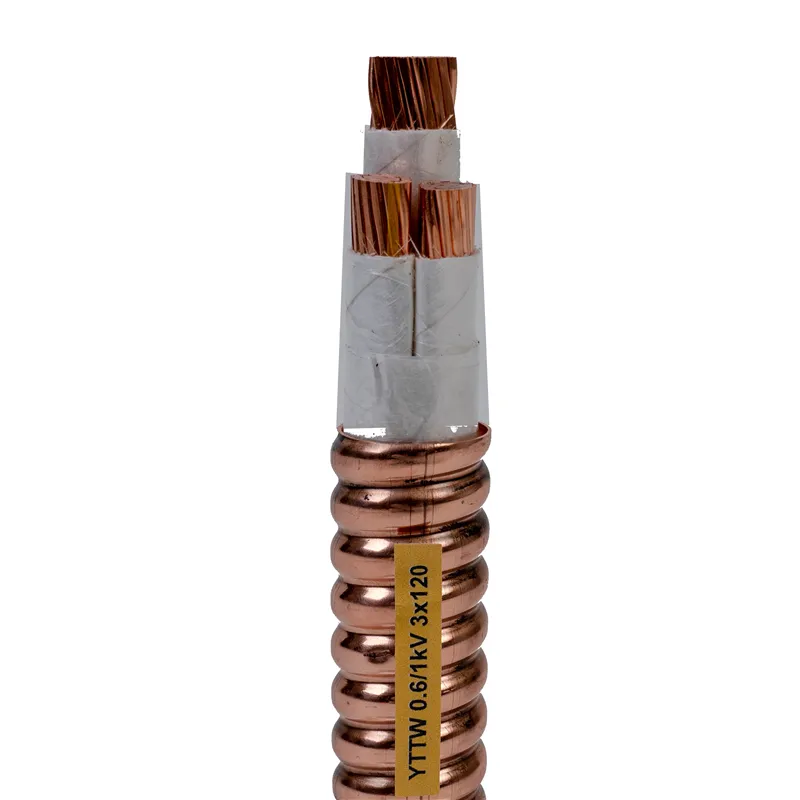
In our production process, we implement a strict quality control system to ensure the proper armour thickness of our armoured cables.

- In - process Inspection:
- During the manufacturing process, we take samples at regular intervals and measure the armour thickness using the appropriate methods. If any deviations from the specified thickness are detected, we adjust the production parameters immediately.
- Final Inspection:
- Before the cables are shipped to customers, we conduct a final inspection. We use a combination of measurement methods to ensure the accuracy and consistency of the armour thickness. Only cables that meet our quality standards are released for sale.
Conclusion
Measuring the thickness of the armour in armoured cables is an important aspect of ensuring the quality and performance of the cables. Different methods, such as using a vernier caliper, ultrasonic thickness gauge, or more advanced techniques like XRF and XRD, can be used depending on the specific requirements and conditions. As a reliable armoured cable supplier, we are committed to providing high - quality products that meet the industry standards. If you are interested in our armoured cables, including Yjv22 Power 16mm*5 Armoured Cable, 600 1000v Armoured Cable, and Mains Armoured Cable, please feel free to contact us for further information and to discuss your procurement needs.
References
- International Electrotechnical Commission (IEC) standards related to electrical cables.
- Manufacturer's manuals for vernier calipers, ultrasonic thickness gauges, XRF, and XRD analyzers.