


The elongation at break of a control wire is a crucial mechanical property that reflects its ability to withstand deformation before failure. As a dedicated control wire supplier, I understand the significance of this parameter in various applications. In this blog, I will delve into the concept of elongation at break, its importance in control wires, and how it impacts the performance of our products.
Understanding Elongation at Break
Elongation at break, also known as ultimate elongation, is defined as the percentage increase in the length of a material when it is pulled to the point of rupture under a tensile force. It is a measure of the ductility of a material, indicating how much it can stretch before breaking. For control wires, which are often subjected to bending, pulling, and other mechanical stresses during installation and use, a high elongation at break is desirable as it allows the wire to deform without breaking, ensuring its reliability and longevity.
The measurement of elongation at break is typically carried out using a tensile testing machine. A sample of the control wire is clamped at both ends and gradually pulled at a constant rate until it breaks. The initial length of the sample and the length at the point of rupture are measured, and the elongation at break is calculated using the following formula:
Elongation at break (%) = [(L - L₀) / L₀] × 100
where L₀ is the initial length of the sample and L is the length at the point of rupture.
Importance of Elongation at Break in Control Wires
In the context of control wires, the elongation at break plays a vital role in several aspects:
Installation
During the installation process, control wires may need to be bent, twisted, or pulled through conduits and cable trays. A wire with a high elongation at break can withstand these mechanical stresses without breaking, making it easier to install. This reduces the risk of wire damage during installation, which can lead to electrical failures and safety hazards.
Flexibility
Control wires are often used in applications where they need to be flexible, such as in robotic arms, moving machinery, and control panels. A high elongation at break allows the wire to bend and flex repeatedly without cracking or breaking, ensuring its long - term flexibility and performance.
Resistance to Mechanical Impact
In industrial environments, control wires may be exposed to mechanical impacts from moving equipment, tools, or other objects. A wire with a high elongation at break can absorb the energy of these impacts and deform without breaking, providing better protection against mechanical damage.
Thermal Expansion and Contraction
Temperature changes can cause control wires to expand and contract. A wire with a high elongation at break can accommodate these dimensional changes without breaking, preventing issues such as insulation cracking and electrical short - circuits.
Factors Affecting the Elongation at Break of Control Wires
Several factors can influence the elongation at break of control wires:
Material Composition
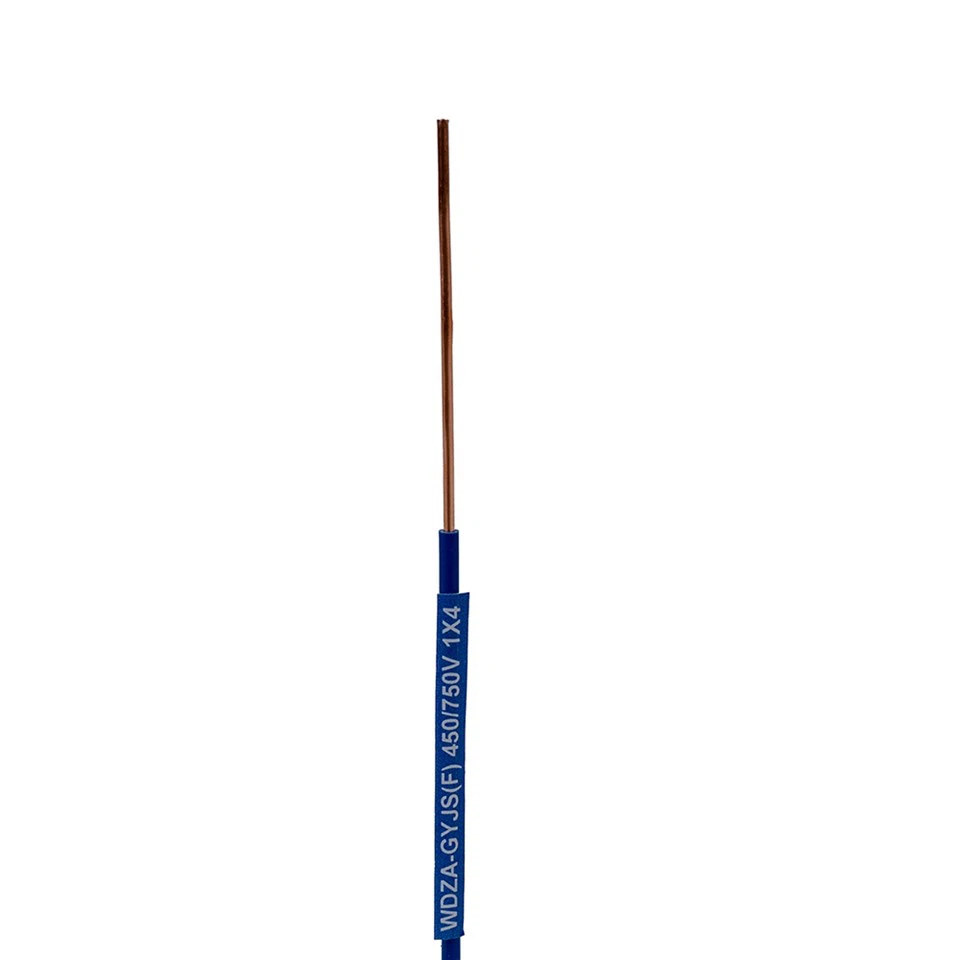
The type of material used for the conductor and insulation of the control wire has a significant impact on its elongation at break. For example, copper is a common conductor material known for its high ductility, which contributes to a relatively high elongation at break. Similarly, the choice of insulation material, such as PVC (Polyvinyl Chloride), can also affect the overall flexibility and elongation properties of the wire. PVC - insulated control cables, like the ones available at PVC Insulated Control Cable, are designed to provide a good balance of mechanical and electrical properties, including an appropriate elongation at break.
Manufacturing Process
The manufacturing process of the control wire can also affect its elongation at break. Proper annealing of the conductor can improve its ductility, while uniform extrusion of the insulation can ensure consistent mechanical properties along the length of the wire.
Temperature
Temperature has a significant effect on the mechanical properties of control wires. Generally, as the temperature increases, the elongation at break of the wire may increase, but its strength may decrease. Conversely, at low temperatures, the wire may become more brittle, reducing its elongation at break.
Elongation at Break in Different Types of Control Wires
Fire Resistant Control Wire
Fire resistant control wires are designed to maintain their electrical integrity during a fire. These wires often have special insulation materials that can withstand high temperatures. However, the addition of fire - resistant additives may affect the elongation at break. Manufacturers need to carefully balance the fire - resistance requirements with the mechanical properties of the wire. Our Fire Resistant Control Wire is engineered to provide both excellent fire resistance and sufficient elongation at break to meet the installation and operational requirements.
PVC Lighting Control Cable
PVC lighting control cables are widely used in lighting systems. PVC is a cost - effective and versatile insulation material that offers good flexibility and elongation at break. These cables are designed to be easily installed in lighting fixtures and control panels. Our PVC Lighting Control Cable provides reliable performance with an appropriate elongation at break for lighting applications.
Meeting Customer Requirements
As a control wire supplier, we understand that different customers have different requirements for the elongation at break of control wires. Some applications may require a wire with a very high elongation at break, while others may prioritize other properties such as fire resistance or electrical conductivity.
We work closely with our customers to understand their specific needs and provide them with the most suitable control wires. Our technical team can offer advice on the selection of the right wire based on the application requirements, including the expected mechanical stresses, temperature range, and environmental conditions.

Quality Assurance
To ensure that our control wires meet the required elongation at break standards, we have a comprehensive quality control system in place. Our manufacturing processes are carefully monitored, and all products undergo rigorous testing before they are shipped to customers. We use state - of - the - art testing equipment to measure the elongation at break and other mechanical properties of the wires, ensuring that they meet or exceed the industry standards.
Conclusion
The elongation at break of a control wire is a critical mechanical property that affects its installation, flexibility, resistance to mechanical impact, and performance in various environmental conditions. As a control wire supplier, we are committed to providing high - quality control wires with appropriate elongation at break values to meet the diverse needs of our customers. Whether you need Fire Resistant Control Wire, PVC Lighting Control Cable, or PVC Insulated Control Cable, we have the expertise and products to serve you.
If you are interested in learning more about our control wires or have specific requirements for your project, please feel free to contact us for a detailed discussion. Our team of experts is ready to assist you in selecting the right control wires for your application and ensuring a successful project outcome.
References
- ASTM D638 - Standard Test Method for Tensile Properties of Plastics.
- IEC 60227 - Polyvinyl chloride insulated cables of rated voltages up to and including 450/750 V.
- UL 1063 - Control Circuit and Power - Limited Fire Alarm Cables.






