Flexibility is a crucial characteristic when it comes to electrical cables, especially for 600 - 1000V armoured cables. As a supplier of 600 1000v Armoured Cable, I've witnessed firsthand the importance of understanding the flexibility of these cables in various applications. In this blog, we'll delve into what flexibility means for 600 - 1000V armoured cables, its influencing factors, and its significance in real - world scenarios.
Defining Flexibility in 600 - 1000V Armoured Cables
Flexibility refers to the ability of a cable to bend and conform to different shapes without suffering damage to its internal structure or compromising its electrical performance. For 600 - 1000V armoured cables, this is particularly important as they are often used in complex installations where routing around obstacles or through tight spaces is necessary.
The flexibility of these cables is not just about physical bending. It also encompasses the cable's ability to withstand repeated bending cycles over its service life. A flexible cable can be bent and re - bent multiple times without experiencing conductor breakage, insulation damage, or armour deformation. This is vital in dynamic applications such as in machinery where the cable may be subject to movement during operation.
Factors Influencing the Flexibility of 600 - 1000V Armoured Cables
Conductor Design
The type and configuration of the conductor play a significant role in cable flexibility. Stranded conductors are generally more flexible than solid conductors. In 600 - 1000V armoured cables, stranded conductors are commonly used. The smaller the individual strands within the conductor, the greater the flexibility. For example, a cable with a large number of fine strands can bend more easily around corners compared to one with fewer, thicker strands.

Insulation Material
The insulation material used in the cable also affects its flexibility. Soft and elastic insulation materials provide better flexibility. Polyvinyl chloride (PVC) and cross - linked polyethylene (XLPE) are two commonly used insulation materials in 600 - 1000V armoured cables. PVC is relatively flexible and cost - effective, while XLPE offers better electrical properties and can also provide good flexibility, especially when properly formulated.
Armour Type
The armour of the cable is designed to protect it from mechanical damage, but it can also impact flexibility. There are different types of armour used in 600 - 1000V cables, such as steel wire armour and steel tape armour. Steel wire armour generally provides better flexibility compared to steel tape armour. The wire armour allows for more movement and bending without excessive stiffness. For instance, Yjv32 3* 50mm Armoured Cable with its steel wire armour offers a good balance between protection and flexibility.
Cable Size
The overall size of the cable, including its diameter and cross - sectional area, affects flexibility. Smaller cables are generally more flexible than larger ones. As the cross - sectional area of the conductor increases, the cable becomes stiffer. This is because there is more material to bend, and the forces required to deform the cable are greater. However, modern cable manufacturing techniques have allowed for the production of relatively flexible larger - sized cables, but the general trend still holds.
Significance of Flexibility in Different Applications
Industrial Installations
In industrial settings, 600 - 1000V armoured cables are used to power heavy machinery, motors, and control systems. These cables often need to be routed through cable trays, conduits, and around equipment. A flexible cable can be easily installed in these complex environments, reducing installation time and labor costs. For example, in a manufacturing plant, where cables need to be connected to multiple machines in a limited space, a flexible cable can be bent and routed without the need for excessive straight - runs or additional fittings.
Building Wiring
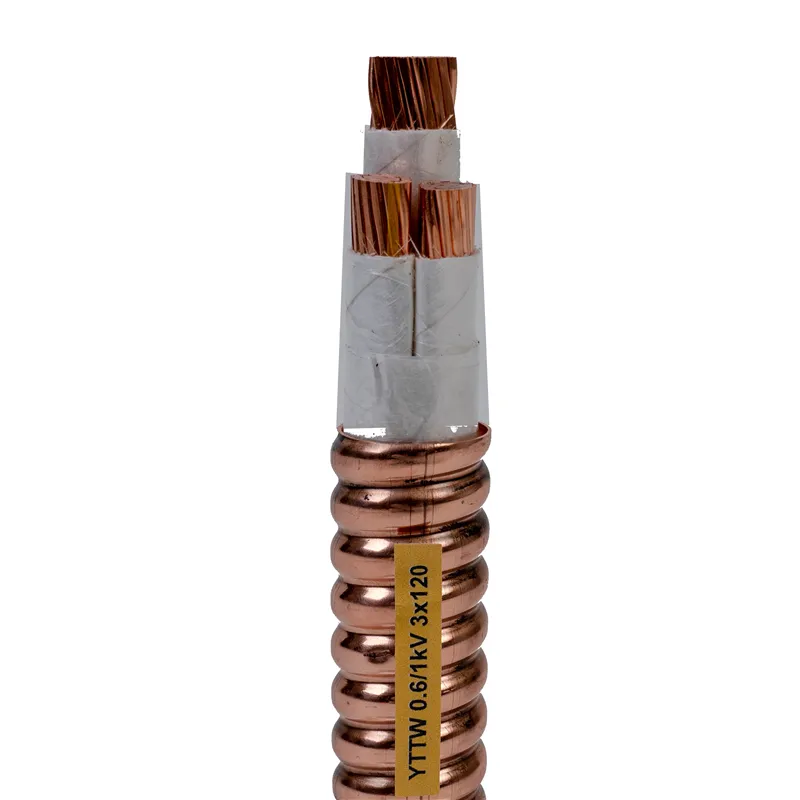
In commercial and residential buildings, Mains Armoured Cable is used for power distribution. The flexibility of these cables is essential for running them through walls, floors, and ceilings. It allows electricians to make tight bends around structural elements such as beams and columns. This not only simplifies the installation process but also ensures a more aesthetically pleasing and space - efficient wiring layout.
Renewable Energy Projects
In renewable energy projects such as wind farms and solar power plants, 600 - 1000V armoured cables are used to connect generators, inverters, and other equipment. These cables may need to be laid in various terrains and around equipment with irregular shapes. A flexible cable can adapt to the natural contours of the land and the layout of the equipment, making the installation more practical and efficient.
Measuring and Testing the Flexibility of 600 - 1000V Armoured Cables
To ensure that our 600 1000v Armoured Cable meets the required flexibility standards, we conduct a series of tests. One common test is the bending test, where the cable is bent around a mandrel of a specified diameter a certain number of times. After the bending cycles, the cable is inspected for any signs of damage, such as conductor breakage or insulation cracking.
Another test is the torsion test, which measures the cable's ability to withstand twisting forces. This is important in applications where the cable may be subject to rotational movement. By performing these tests, we can accurately assess the flexibility of our cables and guarantee their performance in real - world applications.
Challenges in Achieving Optimal Flexibility
While flexibility is highly desirable, there are challenges in achieving it without sacrificing other important cable properties. For example, increasing the flexibility of a cable may reduce its mechanical strength or its resistance to environmental factors. Finding the right balance between flexibility, strength, and environmental resistance is a key challenge in cable design and manufacturing.
In addition, the cost of producing highly flexible cables can be higher. Using more flexible conductor materials, insulation materials, and armour designs often requires more advanced manufacturing processes and higher - quality raw materials. This can result in a more expensive product, which may not be suitable for all applications.
Conclusion
The flexibility of 600 - 1000V armoured cables is a multifaceted characteristic that is influenced by conductor design, insulation material, armour type, and cable size. It is of great significance in various applications, including industrial installations, building wiring, and renewable energy projects. As a supplier of 600 1000v Armoured Cable, we understand the importance of providing cables with the right level of flexibility to meet our customers' needs.
If you are in the market for high - quality 600 - 1000V armoured cables with excellent flexibility, we invite you to get in touch with us for procurement and further discussions. Our team of experts is ready to assist you in finding the most suitable cable solutions for your specific requirements.
References
- Electrical Wiring Handbook, 18th Edition
- Cable Installation and Maintenance Guidelines by International Electrotechnical Commission (IEC)
- Industry reports on cable manufacturing and application trends.