Hey there! As a supplier of Copper Conductor YJV Cable, I've seen firsthand how short - circuit current can have a big impact on these cables. So, let's dive into what short - circuit current is and how it affects our Copper Conductor YJV Cables.
First off, what's short - circuit current? Well, a short - circuit happens when there's an abnormal connection between two points in an electrical circuit with very low impedance. This causes a huge amount of current to flow through the circuit, way more than the normal operating current. This excessive current is what we call short - circuit current.
Now, how does this short - circuit current mess with our Copper Conductor YJV Cables? One of the most immediate effects is overheating. Copper is a great conductor of electricity, but it has its limits. When a large short - circuit current flows through the copper conductor in a YJV cable, the power dissipated in the conductor, which is given by the formula (P = I^{2}R) (where (I) is the current and (R) is the resistance of the conductor), increases significantly. This extra power turns into heat, and if the heat isn't dissipated properly, the temperature of the cable can rise rapidly.
High temperatures can be really bad news for the cable. The insulation of the YJV cable, which is made of cross - linked polyethylene (XLPE), has a maximum operating temperature. If the temperature exceeds this limit due to short - circuit current, the insulation can start to degrade. This degradation can lead to a loss of its insulating properties, increasing the risk of electrical breakdown and short - circuits in the future. It might also cause the insulation to become brittle over time, making it more prone to mechanical damage.
Another impact of short - circuit current on Copper Conductor YJV Cables is mechanical stress. The large current flowing through the conductor creates a magnetic field around it. When there's a short - circuit, the sudden increase in current leads to a rapid change in the magnetic field. According to Ampere's law and the laws of electromagnetism, this changing magnetic field can generate mechanical forces on the conductor. These forces can cause the conductor to vibrate, bend, or even break if they're strong enough.
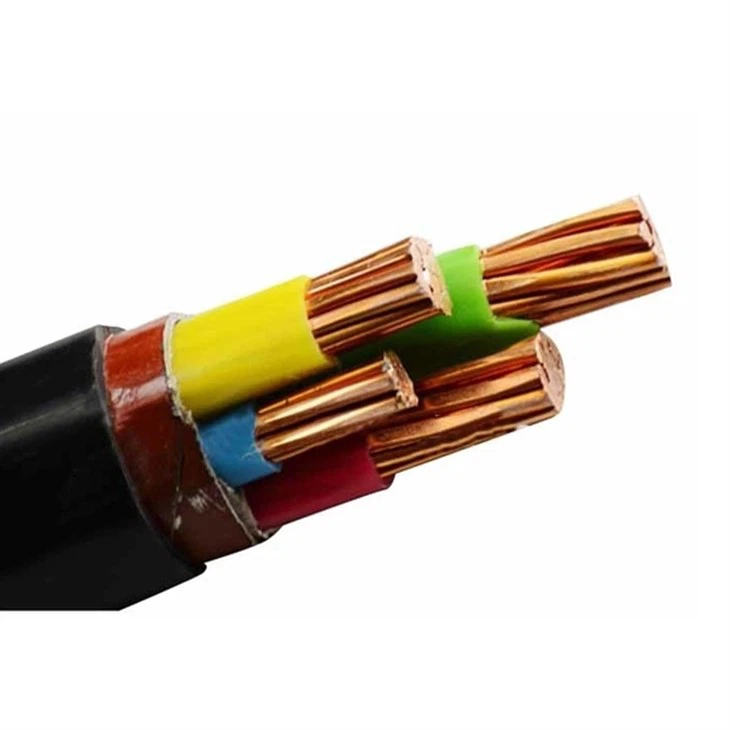

For example, in a multi - core YJV cable, the mechanical forces can cause the cores to move relative to each other. This movement can damage the insulation between the cores and also affect the overall structural integrity of the cable. In extreme cases, the conductor can be physically deformed, which can disrupt the electrical connection and lead to further problems in the electrical system.
Let's talk about the different types of Copper Conductor YJV Cables and how they handle short - circuit current. We have Low Voltage YJV Cable, which is commonly used in residential and small commercial applications. These cables are designed to handle relatively lower levels of current under normal operating conditions. When a short - circuit occurs, the short - circuit current in a low - voltage system might not be as high as in a high - voltage system, but it can still be significant enough to cause problems.
On the other hand, high - voltage YJV cables are used in larger power distribution networks. They are designed to handle much higher currents, both in normal operation and during short - circuits. These cables usually have thicker conductors and better insulation to withstand the higher electrical and thermal stresses associated with high - voltage systems. However, even high - voltage YJV cables have their limits when it comes to short - circuit current.
The duration of the short - circuit also plays a crucial role in how much damage it can cause to the cable. A very short - duration short - circuit, say a few milliseconds, might not cause too much damage as the cable doesn't have enough time to heat up significantly. But if the short - circuit lasts for a longer period, like a few seconds, the cable can experience severe overheating and mechanical stress.
To protect Copper Conductor YJV Cables from the harmful effects of short - circuit current, protective devices are used. Circuit breakers and fuses are commonly installed in electrical systems. A circuit breaker can detect the sudden increase in current during a short - circuit and quickly interrupt the circuit, cutting off the flow of current. Fuses work in a similar way, but they are a one - time use device. When the current exceeds a certain level, the fuse element melts, breaking the circuit.
As a supplier, we offer 4 C Xlpe Swa Pvc Cu Cable, which is a type of Copper Conductor YJV Cable. This cable is designed with four cores and has a steel wire armor (SWA) for additional mechanical protection. The XLPE insulation provides good electrical insulation properties, and the PVC outer sheath protects the cable from environmental factors. When it comes to short - circuit current, the SWA can help to some extent in handling the mechanical forces generated during a short - circuit.
If you're in the market for Copper Conductor YJV Cables, it's important to consider the short - circuit current requirements of your electrical system. Make sure to choose a cable with the right conductor size and insulation properties to handle the expected short - circuit currents. You also need to ensure that proper protective devices are installed to safeguard the cable and the entire electrical system.
We're here to help you make the right choice. Whether you're working on a small residential project or a large commercial installation, our team of experts can assist you in selecting the most suitable Copper Conductor YJV Cable for your needs. We understand the impact of short - circuit current on these cables and can provide you with the best solutions to ensure the safety and reliability of your electrical system.
If you're interested in learning more about our products or have any questions regarding short - circuit current and its impact on Copper Conductor YJV Cables, don't hesitate to get in touch. We're always ready to have a chat and discuss your specific requirements. Let's work together to make your electrical project a success!
References
- Electrical Wiring Handbook, various editions
- Standards related to electrical cables such as IEC 60502 for power cables