


As a supplier of 3 Core Household Wire, I often encounter questions from customers regarding the outer sheath material of this essential electrical product. The outer sheath of 3 Core Household Wire plays a crucial role in ensuring the safety, durability, and performance of the wire within a household electrical system. In this blog, I will delve into the various types of outer sheath materials commonly used in 3 Core Household Wire, their characteristics, and why they are selected for different applications.
PVC (Polyvinyl Chloride)
PVC is one of the most widely used outer sheath materials for 3 Core Household Wire. It offers a combination of excellent electrical insulation properties, mechanical strength, and chemical resistance. PVC sheaths are relatively easy to process, which makes them cost - effective for mass production.
One of the key advantages of PVC is its flexibility. This flexibility allows for easy installation, especially in tight spaces or when the wire needs to be bent around corners. PVC also has good flame - retardant properties. It can self - extinguish when the source of ignition is removed, which is a vital safety feature in household wiring.
The 300/500V PVC Insulated Cable is a prime example of a product that uses PVC as the outer sheath material. This type of cable is commonly used in general household electrical circuits, such as lighting and power outlets. The PVC sheath provides reliable insulation and protection against environmental factors, including moisture and abrasion.
However, PVC does have some limitations. At high temperatures, PVC can release toxic fumes, such as hydrogen chloride. In addition, over time, PVC may become brittle, especially in harsh environmental conditions. But with proper design and installation, these issues can be mitigated.
PE (Polyethylene)
Polyethylene is another popular outer sheath material for 3 Core Household Wire. PE is known for its high resistance to moisture, making it an ideal choice for applications where the wire may be exposed to damp or wet conditions. It also has excellent electrical insulation properties, similar to PVC.
One of the main advantages of PE is its low dielectric constant. This means that it has less energy loss when an electrical current is passing through the wire, which can result in more efficient electrical transmission. PE is also resistant to many chemicals, which helps to protect the wire from corrosion.
The flexibility of PE is also quite good, although it may be slightly less flexible than PVC in some cases. PE - sheathed 3 Core Household Wire is often used in outdoor applications or in areas where there is a risk of water exposure, such as basements or bathrooms.
Rubber
Rubber is a traditional outer sheath material that has been used in electrical wiring for a long time. Natural rubber and synthetic rubbers, such as neoprene and EPDM (Ethylene Propylene Diene Monomer), are commonly used.
Rubber offers excellent flexibility, even at low temperatures. This makes it suitable for applications where the wire needs to be highly flexible, such as in portable electrical appliances or in areas where the wire may be subject to frequent movement. Rubber also has good shock - absorbing properties, which can protect the inner conductors from damage.
In terms of electrical insulation, rubber provides a high level of protection. It can withstand high voltages and is resistant to electrical breakdown. Additionally, rubber has good resistance to ozone and weathering, which makes it suitable for outdoor use.
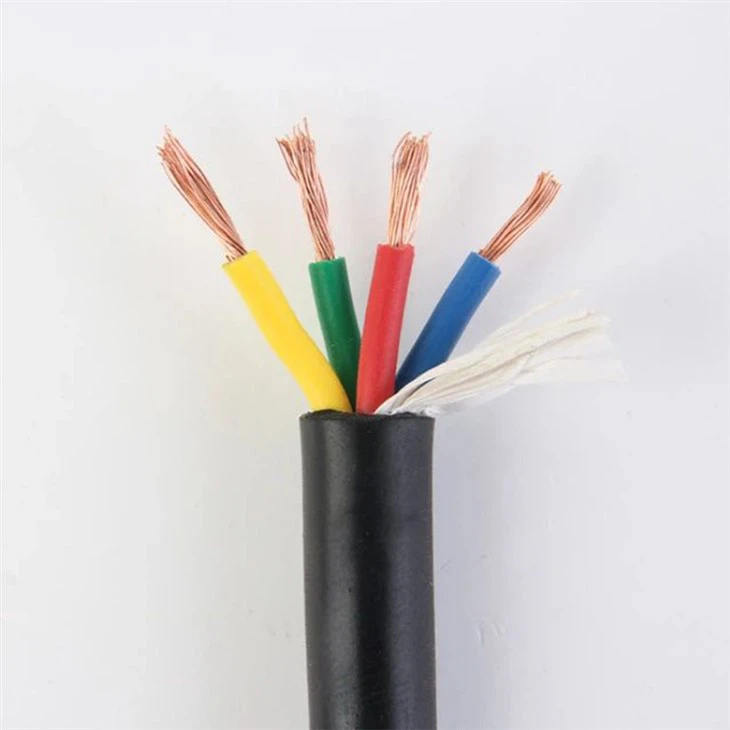

However, rubber is more expensive than PVC and PE, and it may require more maintenance over time. It can also be more difficult to process during manufacturing.
TPE (Thermoplastic Elastomer)
TPE is a relatively new outer sheath material that combines the properties of both thermoplastics and elastomers. TPE offers the flexibility of rubber with the ease of processing of thermoplastics.
TPE has excellent abrasion resistance, which makes it suitable for applications where the wire may be subject to rubbing or scraping. It also has good chemical resistance and can withstand a wide range of temperatures. TPE - sheathed 3 Core Household Wire is often used in industrial and commercial applications, as well as in some high - end household electrical systems.
Factors Influencing the Choice of Outer Sheath Material
When selecting the outer sheath material for 3 Core Household Wire, several factors need to be considered.
Electrical Requirements
The electrical properties of the outer sheath material, such as insulation resistance and dielectric constant, are crucial. For high - voltage applications, a material with excellent insulation properties, such as PVC or rubber, may be required. For applications where energy efficiency is a priority, a material with a low dielectric constant, like PE, may be more suitable.
Environmental Conditions
The environment in which the wire will be installed plays a significant role in the choice of outer sheath material. If the wire will be exposed to moisture, a moisture - resistant material like PE or rubber should be selected. In areas with high temperatures or extreme weather conditions, a material with good heat and weather resistance, such as TPE, may be necessary.
Mechanical Requirements
The mechanical properties of the outer sheath material, such as flexibility, strength, and abrasion resistance, are also important. For applications where the wire needs to be highly flexible, rubber or TPE may be the best choice. If the wire will be subject to mechanical stress or abrasion, a material with high strength and abrasion resistance, such as TPE or PVC, should be used.
Cost
Cost is always a consideration in any electrical installation project. PVC is generally the most cost - effective option, followed by PE. Rubber and TPE are more expensive but may be justified for applications where their unique properties are required.
Our 3 Core Household Wire Products
As a supplier of 3 Core Household Wire, we offer a wide range of products with different outer sheath materials to meet the diverse needs of our customers. Our Household Insulated Wire is manufactured using high - quality materials and advanced production processes to ensure the highest level of safety and performance.
We understand that every customer has unique requirements, and we are committed to providing customized solutions. Whether you need a wire with a specific outer sheath material, insulation thickness, or conductor size, we can work with you to develop the perfect product for your project.
Contact Us for Purchase and Negotiation
If you are in the market for 3 Core Household Wire or have any questions about our products, we encourage you to contact us. Our team of experts is ready to assist you in selecting the right outer sheath material and product for your needs. We can also provide you with detailed product information, specifications, and pricing.
By choosing our 3 Core Household Wire, you can be confident that you are getting a high - quality product that meets the highest industry standards. We look forward to working with you and helping you achieve a safe and efficient electrical installation in your home or project.
References
- Electrical Wiring Handbook, McGraw - Hill
- Handbook of Polymer Science and Technology, Marcel Dekker
- Standards for Electrical Wiring Materials, International Electrotechnical Commission (IEC)






