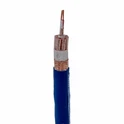
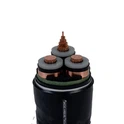
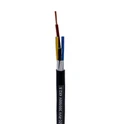
Hey there! As a supplier of Screened Control Cables, I often get asked about the torsional strength of these cables. So, I thought I'd take a moment to break it down for you.
First off, let's talk about what torsional strength actually means. Torsional strength refers to a cable's ability to withstand twisting forces without suffering damage. In the world of control cables, this is super important. You see, control cables are used in all sorts of applications, from industrial machinery to automation systems. And in many of these applications, the cables are likely to experience some degree of twisting.
Imagine a robotic arm in a manufacturing plant. As the arm moves and rotates, the control cables attached to it are going to twist along with it. If the cables don't have enough torsional strength, they could start to break down over time. This could lead to all sorts of problems, like signal interference, loss of control, and even complete system failure.


So, what factors affect the torsional strength of a Screened Control Cable? Well, there are a few key ones.
Cable Construction
The way a cable is constructed plays a huge role in its torsional strength. For example, the number and arrangement of conductors inside the cable matter. In a 4 Core Screened Control Cable, the four conductors need to be properly bundled and insulated to ensure they can handle twisting. If the conductors are too loosely packed, they might start to rub against each other when the cable twists, which can cause damage to the insulation and lead to short - circuits.
The type of insulation used also impacts torsional strength. High - quality insulation materials are more flexible and can better withstand the stresses of twisting. Some cables use special rubber or polymer insulations that are designed to be more resistant to mechanical stress, including torsion.
Shielding
Shielding is another important aspect. A Screened Control Cable typically has a shield around the conductors. This shield serves two main purposes: it protects the conductors from external electromagnetic interference, and it can also contribute to the cable's torsional strength.
In a Copper Shielded Control Cable, the copper shield provides a certain level of rigidity and support to the cable. When the cable twists, the shield helps to distribute the stress evenly across the cable, reducing the risk of damage to the conductors. However, the design of the shield matters. A well - designed shield should be flexible enough to bend and twist with the cable without cracking or breaking.
Outer Jacket
The outer jacket of the cable is like its armor. It protects the internal components from physical damage, moisture, and other environmental factors. A tough and flexible outer jacket can significantly improve the torsional strength of a cable.
For instance, in a 10*2 Control Cable, the outer jacket needs to be able to withstand the repeated twisting that the cable might experience in its application. Some outer jackets are made from materials like PVC or polyurethane, which are known for their durability and flexibility.
Testing the Torsional Strength
Manufacturers usually perform various tests to determine the torsional strength of their cables. One common test is the torsional test, where the cable is fixed at one end and twisted at the other end by a certain number of degrees. The cable is then inspected for any signs of damage, such as cracks in the insulation or breaks in the conductors.
Another test is the flexing test, which combines bending and twisting motions. This test simulates the real - world conditions that the cable might encounter in its application. By subjecting the cable to these tests, manufacturers can ensure that their cables meet the required standards for torsional strength.
Why Torsional Strength Matters in Different Applications
In industrial automation, where cables are often routed through moving parts, high torsional strength is crucial. For example, in conveyor systems, the control cables need to be able to twist as the conveyor belts move and turn. If the cables break due to lack of torsional strength, it can cause production delays and costly repairs.
In the automotive industry, control cables are used in various systems, such as power steering and engine control. These cables need to be able to withstand the vibrations and twisting forces that occur during vehicle operation. A cable failure in an automotive application can be extremely dangerous, so torsional strength is a top priority.
How We Ensure High Torsional Strength in Our Cables
As a supplier, we take several steps to ensure that our Screened Control Cables have high torsional strength. We use only the best - quality materials for cable construction. Our conductors are made from high - purity copper, which has excellent electrical conductivity and mechanical properties.
We also pay close attention to the manufacturing process. Our cables are manufactured using state - of - the - art equipment and strict quality control measures. Each cable goes through a series of tests before it leaves our factory to ensure that it meets our high standards for torsional strength and other performance parameters.
Conclusion
In conclusion, the torsional strength of a Screened Control Cable is a critical factor that can determine its performance and reliability in various applications. Whether you're using cables in an industrial setting or an automotive application, having cables with high torsional strength can save you a lot of headaches in the long run.
If you're in the market for Screened Control Cables and are concerned about torsional strength, we're here to help. We have a wide range of cables, including 4 Core Screened Control Cable, 10*2 Control Cable, and Copper Shielded Control Cable, that are designed to meet your specific needs. Contact us to start a procurement discussion and find the perfect cable solution for your project.
References
- Electrical Cable Handbook, Third Edition
- International Electrotechnical Commission (IEC) standards related to control cables
- Industry reports on cable performance and reliability