Can household insulated wire be used in a hair dryer? That's a question I've been asked quite a bit lately, especially since I'm a supplier of household insulated wire. So, I thought I'd take a deep dive into this topic and share my thoughts.
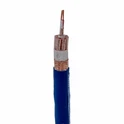
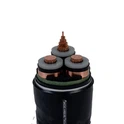
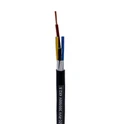
First off, let's talk about what household insulated wire is. It's basically wire that's designed for use in homes. It comes in different types, like the 3 Core Household Wire, which has three conductors. This type of wire is commonly used for things like wiring up lights, outlets, and other household electrical fixtures. Then there's the Copper Core Polyethylene Insulated Cable, which has a copper core and polyethylene insulation. Copper is a great conductor of electricity, and polyethylene provides good insulation. And we also have the 300/500V PVC Insulated Cable, which is insulated with PVC (polyvinyl chloride) and can handle voltages between 300 and 500 volts.
Now, let's look at hair dryers. Hair dryers are small, portable appliances that use electricity to generate heat and blow hot air. They typically have a heating element, a fan, and a control switch. The heating element is what gets hot and produces the warm air, and the fan blows that air out of the dryer.
So, can we use household insulated wire in a hair dryer? Well, it's not that simple. There are a few factors we need to consider.
One of the main things is the current-carrying capacity. Hair dryers can draw a relatively large amount of current, especially when they're on the high heat setting. Household insulated wire is designed for a certain range of currents, and if the current drawn by the hair dryer exceeds the capacity of the wire, it can overheat. Overheating can lead to a number of problems, like melting the insulation, which could expose the live wires and create a fire hazard.
Another factor is the size and flexibility. Hair dryers are small and need to be easy to move around. Household insulated wire is often designed for fixed installations in homes, and it might be too thick or stiff to be used effectively in a hair dryer. A hair dryer needs wire that can bend and flex without breaking or causing any damage to the internal components.
The insulation also plays a crucial role. In a hair dryer, the wire is exposed to heat from the heating element. Household insulated wire might not have insulation that can withstand the high temperatures inside a hair dryer. If the insulation breaks down due to the heat, it can again lead to short circuits and other safety issues.
Let's take a closer look at the types of wire we mentioned earlier. The 3 Core Household Wire is great for household wiring, but it's probably too big and bulky for a hair dryer. It's designed to be installed in walls and ceilings, not in a small, handheld appliance.
The Copper Core Polyethylene Insulated Cable has good conductivity, but the polyethylene insulation might not be able to handle the heat in a hair dryer. Polyethylene starts to soften at relatively low temperatures, and the heat from the hair dryer's heating element could cause the insulation to degrade.
The 300/500V PVC Insulated Cable is rated for a certain voltage range, but again, the PVC insulation might not be heat-resistant enough for a hair dryer. PVC can release toxic fumes when it gets too hot, which is definitely not something you want in a device that you're using near your head.


However, that doesn't mean that there's no possibility of using some form of household insulated wire in a hair dryer. Some manufacturers might be able to adapt the wire or use a modified version of it. For example, they could use a thinner gauge of wire with a special heat-resistant insulation. But this would require a lot of testing and engineering to make sure it's safe and reliable.
In general, hair dryers are usually made with wire that's specifically designed for small appliances. This wire is made to handle the high currents, heat, and flexibility requirements of a hair dryer. It's often more expensive than household insulated wire, but it's worth it for the safety and performance.
So, to sum it up, while it might seem like a good idea to use household insulated wire in a hair dryer, it's not a straightforward solution. There are many technical and safety considerations that need to be taken into account. Using the wrong type of wire can lead to serious safety hazards.
If you're in the business of making hair dryers or any other small appliances, and you're looking for the right type of wire, I'm here to help. I've been in the household insulated wire business for a long time, and I have a lot of knowledge about different types of wire and their applications. We can work together to find a solution that meets your specific needs. Whether you need a custom wire design or just some advice on the best type of wire for your product, feel free to reach out. Let's have a chat and see how we can make your product safer and more efficient.
References
- Electrical Engineering Handbook, various editions
- Appliance Design and Safety Standards publications