As a supplier of 3 Core Household Wire, I understand the importance of ensuring the quality of our products. High - quality 3 Core Household Wire is essential for the safety and proper functioning of electrical systems in homes. In this blog, I will share some key methods on how to test the quality of 3 Core Household Wire.
Visual Inspection
The first step in testing the quality of 3 Core Household Wire is a visual inspection. A well - made wire should have a smooth and uniform outer insulation. Check for any visible signs of damage such as cuts, nicks, or abrasions on the insulation. These defects can expose the inner conductors and pose a serious electrical hazard.


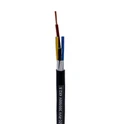
Also, examine the color coding of the wires. In a 3 Core Household Wire, the color coding is standardized to indicate different functions. Typically, one wire is for the live current, one for the neutral, and one for the ground. Incorrect color coding can lead to wiring mistakes during installation, which may cause short - circuits or electrical malfunctions.
Another aspect of visual inspection is to look at the overall construction of the wire. The conductors should be evenly spaced within the insulation, and there should be no signs of bulging or irregularities. You can refer to Common House Wire for more information on the general appearance and structure of household wires.
Insulation Resistance Test
Insulation resistance is a crucial parameter for 3 Core Household Wire. It measures the ability of the insulation material to prevent the flow of electric current through it. A low insulation resistance indicates that there may be a problem with the insulation, such as moisture ingress or damage.
To perform an insulation resistance test, you will need an insulation resistance tester, also known as a megger. First, make sure the power is disconnected from the wire. Then, connect the tester to the conductors of the wire. The tester will apply a high - voltage DC signal (usually 500V or 1000V) to the conductors and measure the resistance.
For a high - quality 3 Core Household Wire, the insulation resistance should be very high, typically in the range of several megohms. If the measured resistance is significantly lower than the expected value, it could mean that the insulation is compromised, and the wire may need to be replaced. You can find more details about testing insulation resistance on Copper Core Polyethylene Insulated Cable, which has similar testing requirements.
Conductor Resistance Test
The conductor resistance of a 3 Core Household Wire is another important factor. It affects the amount of power loss in the wire and can impact the efficiency of the electrical system. A wire with high conductor resistance will generate more heat, which can lead to energy waste and potentially cause a fire hazard.
To test the conductor resistance, you can use a digital multimeter. Set the multimeter to the resistance measurement mode and connect the probes to the two ends of each conductor in the 3 Core Household Wire. Measure the resistance of each conductor separately.
The conductor resistance should be within the specified range for the wire's gauge and material. Copper is a commonly used material for household wires due to its low resistance. If the measured resistance is higher than the expected value, it could indicate a problem with the conductor, such as a poor connection or a defect in the copper. For more information on the characteristics of household insulated wires, visit Household Insulated Wire.
Voltage Drop Test
Voltage drop occurs when there is a loss of voltage along the length of a wire due to its resistance. In a 3 Core Household Wire, excessive voltage drop can cause electrical devices to operate inefficiently or not work at all.
To conduct a voltage drop test, you need to have a load connected to the wire and measure the voltage at both the source end and the load end. First, measure the voltage at the source when the load is not connected. Then, connect the load and measure the voltage at the load end.
The difference between the source voltage and the load voltage is the voltage drop. According to electrical standards, the voltage drop in a household wiring system should be within a certain limit, usually less than 3% for branch circuits. If the voltage drop is too high, it may be necessary to increase the wire gauge or reduce the length of the wire.
Temperature Rise Test
When an electrical current flows through a wire, it generates heat due to the wire's resistance. A high - quality 3 Core Household Wire should be able to dissipate this heat effectively without overheating.
To perform a temperature rise test, you can use a thermal imaging camera or temperature sensors. First, apply a known current to the wire for a certain period of time, usually until the temperature stabilizes. Then, measure the temperature of the wire at different points.
The temperature rise should be within the specified limits for the wire's insulation material. If the temperature rise is too high, it could indicate that the wire is overloaded or that there is a problem with its heat - dissipation ability. This can lead to premature aging of the insulation and increase the risk of fire.
Flexibility and Bend Test
3 Core Household Wire often needs to be bent and routed during installation. Therefore, it should have good flexibility and be able to withstand repeated bending without damage.
To test the flexibility, you can try bending the wire by hand. A high - quality wire should bend smoothly without cracking or breaking the insulation. You can also perform a bend test by using a bending test machine. The machine will bend the wire back and forth a certain number of times at a specified radius.
After the bend test, check the wire for any signs of damage, such as cracks in the insulation or breaks in the conductors. If the wire fails the bend test, it may not be suitable for use in household wiring, as it could pose a safety risk during installation and long - term use.
Chemical and Environmental Resistance Test
3 Core Household Wire may be exposed to various chemicals and environmental conditions in a household setting. For example, it may come into contact with cleaning agents, moisture, or high - humidity environments.
To test the chemical resistance, you can expose samples of the wire to different chemicals for a certain period of time and then check for any changes in the insulation or conductors. For environmental resistance, you can subject the wire to different temperature and humidity conditions and monitor its performance.
A high - quality wire should be able to resist the effects of these chemicals and environmental factors without significant degradation. This ensures the long - term reliability and safety of the electrical system.
In conclusion, testing the quality of 3 Core Household Wire is a comprehensive process that involves multiple aspects. By conducting these tests, you can ensure that the wire meets the necessary safety and performance standards. As a reliable supplier of 3 Core Household Wire, we are committed to providing high - quality products that have passed all these rigorous tests. If you are interested in purchasing our 3 Core Household Wire or have any questions about our products, please feel free to contact us for further discussion and negotiation.
References
- Electrical Wiring Handbook, various editions
- National Electrical Code (NEC) standards