Hey there! As a supplier of armoured cables, I often get asked about the UV - resistance properties of these cables. So, I thought I'd take some time to break it down for you.
First off, let's understand what UV resistance means. Ultraviolet (UV) rays from the sun can be pretty harsh on materials. They can cause degradation, cracking, and a whole host of other problems over time. For armoured cables, which are often used in outdoor settings, having good UV - resistance is crucial.
How Armoured Cables Are Built to Resist UV
Armoured cables have a multi - layer structure, and each layer plays a role in protecting against UV. The outer sheath is the first line of defense. It's usually made from materials like polyethylene (PE) or polyvinyl chloride (PVC). These materials can be formulated to have UV - resistant additives.
PE is a popular choice for the outer sheath of armoured cables. It's tough, flexible, and can be easily modified to resist UV. Manufacturers add carbon black to PE sheaths. Carbon black acts as a UV absorber, preventing the harmful rays from penetrating deeper into the cable. When the UV rays hit the outer sheath, the carbon black particles absorb the energy and convert it into heat, which is then dissipated.
PVC is another option. It has good mechanical properties and can also be made UV - resistant. Special UV - stabilizers are added to PVC during the manufacturing process. These stabilizers work by preventing the chemical reactions that cause PVC to break down when exposed to UV.
The armour layer, which is usually made of steel wires or tapes, also provides some level of protection. While its primary function is to protect the cable from mechanical damage, it can also act as a shield against UV to some extent. The metal armour reflects and scatters the UV rays, reducing the amount that reaches the inner layers of the cable.
Real - World Performance
In real - world scenarios, the UV - resistance of armoured cables is put to the test. For example, in solar power plants, armoured cables are used to connect solar panels to the inverters. These cables are constantly exposed to direct sunlight, so they need to have excellent UV - resistance.
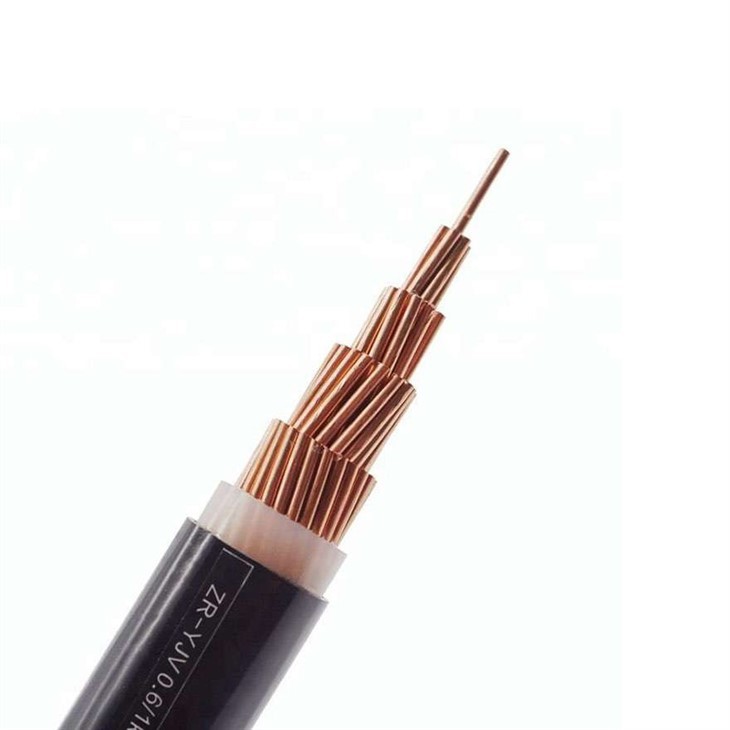

I've seen our Yjv32 3* 50mm Armoured Cable perform really well in such environments. The outer PE sheath with carbon black has held up over years of continuous UV exposure. There's been no sign of cracking or significant degradation, which means the cable can continue to function safely and efficiently.
Similarly, XLPE Insulated Underground Power Cable is often used in outdoor underground installations. Even though it's underground, it can still be exposed to UV if the soil cover is thin or if there's any damage to the top - layer of soil. The UV - resistant outer sheath ensures that the cable remains protected and reliable.
Factors Affecting UV Resistance
It's not just the materials that determine the UV - resistance of armoured cables. The thickness of the outer sheath also plays a role. A thicker sheath can provide more protection against UV. However, there's a balance to be struck, as a very thick sheath can make the cable less flexible and more difficult to install.
The quality of the UV - resistant additives is also crucial. Cheaper additives may not be as effective in the long run. That's why we at our company always use high - quality additives in our cables. We want to ensure that our customers get the best - performing cables that can withstand the test of time and harsh UV conditions.
The exposure conditions also matter. If a cable is exposed to high - intensity UV for long periods, it will face more stress than a cable that's only exposed intermittently. For example, cables in desert regions, where the sun is shining brightly for most of the day, will need to have a higher level of UV resistance compared to cables in more temperate climates.
Importance of UV Resistance in Different Applications
In the telecommunications industry, armoured cables are used to connect cell towers and other communication infrastructure. These cables are often installed outdoors, and any damage due to UV can lead to signal loss or even complete failure. Good UV - resistance ensures that the communication network remains stable and reliable.
In the oil and gas industry, armoured cables are used in offshore platforms and onshore refineries. The harsh marine environment, with its high levels of UV and saltwater, can be extremely damaging to cables. UV - resistant armoured cables are essential to prevent corrosion and ensure the safe and efficient operation of the facilities.
Our Product Range
We offer a wide range of armoured cables that are designed with excellent UV - resistance. Our Yjv32 3* 50mm Armoured Cable is a great choice for general - purpose power transmission in outdoor settings. It has a tough outer sheath with high - quality UV - resistant additives and a strong steel wire armour.
The XLPE Insulated Underground Power Cable is ideal for underground installations. The XLPE insulation provides excellent electrical properties, and the outer sheath is designed to resist UV and other environmental factors.
Our Mains Armoured Cable is suitable for connecting buildings to the main power grid. It's built to withstand the rigors of outdoor use, including UV exposure.
Conclusion
So, as you can see, the UV - resistance properties of armoured cables are really important. They ensure the longevity and reliability of the cables in outdoor applications. Whether it's in solar power plants, telecommunications networks, or oil and gas facilities, UV - resistant armoured cables are a must - have.
If you're in the market for high - quality armoured cables with excellent UV - resistance, we'd love to talk to you. Our team of experts can help you choose the right cable for your specific needs. Don't hesitate to reach out for a quote or to discuss your project requirements.
References
- "Handbook of Electrical and Electronic Insulating Materials"
- "Cable Engineering and Design for Power Systems"