As a supplier of Common House Wire, I've witnessed firsthand the importance of understanding how temperature impacts the resistance of these wires. In residential electrical systems, the performance of house wires is crucial for safety and efficiency, and temperature plays a significant role in this equation.
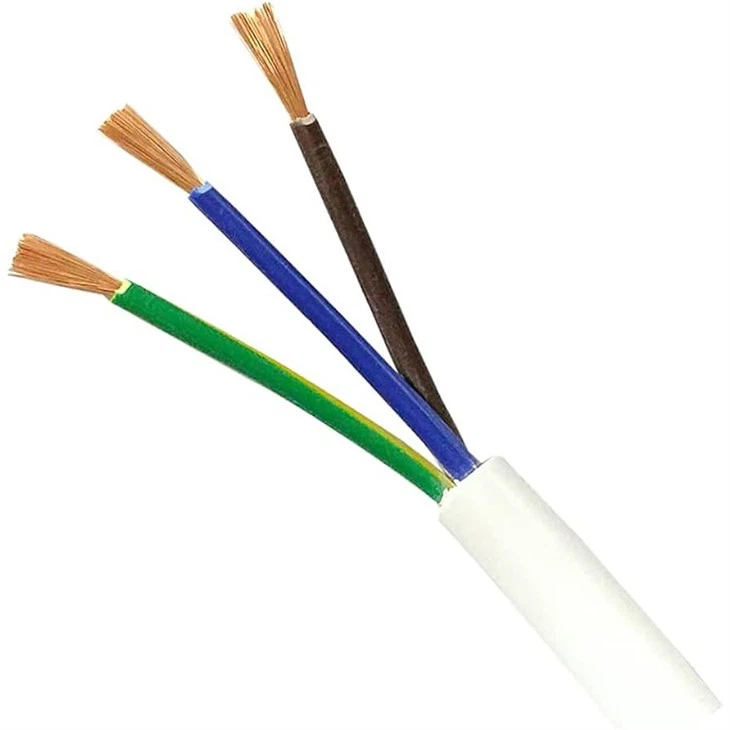

Understanding Resistance in Common House Wire
Before delving into the impact of temperature, it's essential to understand what resistance is in the context of electrical wires. Resistance is the property of a material that opposes the flow of electric current. In common house wires, which are typically made of copper or aluminum, resistance determines how much electrical energy is converted into heat as current passes through.
The resistance of a wire is influenced by several factors, including its length, cross - sectional area, and the material it's made of. According to Ohm's law, the relationship between voltage (V), current (I), and resistance (R) is given by V = IR. This means that for a given voltage, a higher resistance will result in a lower current flow.
Temperature and Resistance: The Fundamental Relationship
The relationship between temperature and resistance in common house wires is governed by the temperature coefficient of resistance. Most metals, such as copper and aluminum used in Household Insulated Wire, have a positive temperature coefficient of resistance. This means that as the temperature of the wire increases, its resistance also increases.
The formula for calculating the change in resistance with temperature is:
[R_T=R_0(1 + \alpha(T - T_0))]
where (R_T) is the resistance at temperature (T), (R_0) is the resistance at a reference temperature (T_0), and (\alpha) is the temperature coefficient of resistance. For copper, (\alpha) is approximately (0.00393/^{\circ}C) at (20^{\circ}C), and for aluminum, it is about (0.00403/^{\circ}C) at (20^{\circ}C).
Impact on Electrical Performance
Power Loss
As the resistance of a wire increases with temperature, so does the power loss in the form of heat. The power loss ((P)) in a wire can be calculated using the formula (P = I^{2}R). When the resistance (R) goes up due to higher temperatures, the power loss also increases. This not only wastes energy but can also lead to overheating of the wire.
In a residential setting, excessive power loss can result in higher electricity bills. For example, if a 300/500V PVC Insulated Cable is used to supply power to multiple appliances and its resistance increases due to high temperatures, more power is dissipated as heat instead of being used to run the appliances.
Voltage Drop
Another significant impact of increased resistance due to temperature is voltage drop. Voltage drop is the decrease in voltage along a wire when current is flowing through it. It can be calculated using the formula (V_{drop}=IR).
In a house wiring system, a large voltage drop can cause problems for electrical appliances. Appliances are designed to operate at a specific voltage, and if the voltage at the appliance is too low due to excessive voltage drop, the appliance may not function properly. For instance, a light bulb may appear dimmer than usual, or a motor - driven appliance may run slower or even fail to start.
Safety Concerns
Overheating and Fire Hazard
One of the most critical safety concerns associated with the increase in resistance due to temperature is overheating. When a wire overheats, the insulation around it can start to melt. In the case of 300/500V PVC Insulated Cable, PVC insulation has a limited temperature rating. If the wire temperature exceeds this rating, the insulation can break down, exposing the conductive wires.
This exposed wiring can lead to short circuits, which can cause electrical fires. Electrical fires are a significant risk in residential buildings, and overheating wires due to increased resistance are a common cause. Therefore, it's essential to ensure that house wires are properly sized and installed to minimize the impact of temperature on resistance.
Aging of Insulation
High temperatures can also accelerate the aging process of the wire insulation. As the insulation ages, it becomes more brittle and less effective at preventing electrical leakage. This can increase the risk of electrical shock to occupants of the house.
Practical Considerations for House Wiring
Wire Sizing
Proper wire sizing is crucial to minimize the impact of temperature on resistance. Thicker wires have lower resistance for a given length and material. When designing a house wiring system, it's important to select the appropriate wire size based on the expected current load and the ambient temperature.
For example, in areas with high ambient temperatures, larger - gauge wires may be required to ensure that the resistance remains within acceptable limits. This helps to reduce power loss, voltage drop, and the risk of overheating.
Installation Location
The location where the wires are installed also affects their temperature. Wires installed in areas with poor ventilation, such as attics or crawl spaces, are more likely to experience higher temperatures. In these cases, additional measures may be needed to ensure proper cooling, such as installing ventilation ducts or using heat - resistant insulation.
Monitoring and Maintenance
Regular monitoring and maintenance of the house wiring system can help detect any issues related to temperature - induced resistance changes. This can include checking for signs of overheating, such as discolored insulation or melted wires, and measuring the voltage drop across the wires.
Our Role as a Common House Wire Supplier
As a supplier of Common House Wire, we understand the importance of providing high - quality wires that can withstand the effects of temperature. Our wires are made from high - grade copper or aluminum, which have consistent temperature coefficients of resistance.
We also offer a range of Household Insulated Wire with different insulation materials and temperature ratings to suit various applications. For example, our 300/500V PVC Insulated Cable is designed to provide reliable insulation even at elevated temperatures.
Conclusion
In conclusion, temperature has a significant impact on the resistance of common house wires. The increase in resistance with temperature can lead to power loss, voltage drop, and safety concerns such as overheating and insulation aging. By understanding this relationship and taking appropriate measures in wire sizing, installation, and maintenance, we can ensure the safe and efficient operation of residential electrical systems.
If you're in the market for high - quality common house wires that can handle the challenges of temperature - induced resistance changes, we invite you to contact us for procurement and further discussions. We're committed to providing you with the best solutions for your electrical wiring needs.
References
- "Electrical Wiring Handbook", McGraw - Hill Professional
- "Fundamentals of Electric Circuits", Charles K. Alexander and Matthew N. O. Sadiku
- National Electrical Code (NEC) standards