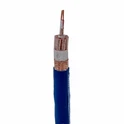
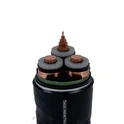
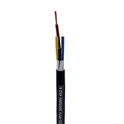
As a seasoned supplier of Fire Resistant Control Wire, I've witnessed firsthand the critical role these cables play in various industries. One of the key aspects that often comes under scrutiny is their chemical - resistance characteristics. In this blog, I'll delve into the chemical - resistance features of Fire Resistant Control Wire, highlighting its importance and how it stands up to different chemical environments.
Importance of Chemical Resistance in Fire Resistant Control Wire
Chemical resistance is a vital property for Fire Resistant Control Wire, especially in industrial settings. These wires are frequently exposed to a wide range of chemicals, including solvents, acids, alkalis, and oils. If the wire lacks adequate chemical resistance, it can lead to degradation of the insulation and sheathing materials. This degradation can compromise the electrical performance of the wire, increasing the risk of short - circuits, electrical failures, and even pose a fire hazard.
In addition, in industries such as chemical manufacturing, petrochemicals, and food processing, where the presence of chemicals is inevitable, using fire - resistant control wires with good chemical resistance ensures the long - term reliability and safety of the electrical systems.
Chemical Resistance Mechanisms
The chemical resistance of Fire Resistant Control Wire is primarily determined by the materials used in its insulation and sheathing.


Insulation Materials
Most Fire Resistant Control Wires use high - performance polymers for insulation. For example, cross - linked polyethylene (XLPE) is a popular choice. XLPE has excellent chemical resistance to a variety of non - polar solvents, such as hydrocarbons. Its cross - linked structure provides a strong barrier against chemical penetration. The cross - linking process enhances the molecular bonds in the polymer, making it more resistant to swelling and dissolution when in contact with chemicals.
Another commonly used insulation material is fluoropolymers, such as polytetrafluoroethylene (PTFE). PTFE is known for its outstanding chemical inertness. It can withstand exposure to a wide range of aggressive chemicals, including strong acids (such as sulfuric acid and hydrochloric acid) and strong alkalis (such as sodium hydroxide). The unique molecular structure of PTFE, with its carbon - fluorine bonds, makes it highly resistant to chemical attack.
Sheathing Materials
The sheathing of Fire Resistant Control Wire also plays a crucial role in chemical resistance. Polyvinyl chloride (PVC) is a widely used sheathing material. PVC has good resistance to many common chemicals, including water, oils, and some weak acids and alkalis. It provides a protective layer that shields the insulation from external chemical exposure.
However, for more demanding chemical environments, specialized sheathing materials are used. For instance, thermoplastic elastomers (TPE) with enhanced chemical resistance properties can be employed. TPEs can be formulated to resist a broader spectrum of chemicals, such as solvents and fuels. They offer a balance between flexibility and chemical resistance, making them suitable for applications where the wire may be subject to both chemical exposure and mechanical stress.
Testing and Certification
To ensure the chemical - resistance characteristics of Fire Resistant Control Wire, rigorous testing is carried out. These tests typically involve exposing the wire samples to specific chemicals for a defined period under controlled conditions. The samples are then evaluated for changes in physical properties, such as weight, dimension, and electrical performance.
There are also international standards and certifications related to chemical resistance for wires and cables. For example, the International Electrotechnical Commission (IEC) has standards that specify the requirements for chemical resistance testing. Compliance with these standards provides assurance to customers that the Fire Resistant Control Wire meets the necessary quality and safety levels in terms of chemical resistance.
Applications and Chemical Environments
Industrial Manufacturing
In industrial manufacturing plants, Fire Resistant Control Wire is exposed to a variety of chemicals. For example, in metalworking factories, the wires may come into contact with cutting fluids, which are often a mixture of oils, water, and additives. The chemical resistance of the wire ensures that it can withstand the continuous exposure to these fluids without degradation.
In the automotive industry, where paint - spraying and chemical - cleaning processes are common, the wires need to resist solvents used in these operations. Our Fire Resistant Control Wire, with its excellent chemical - resistance properties, is well - suited for such applications.
Chemical and Petrochemical Industries
In the chemical and petrochemical sectors, the environment is extremely harsh, with the presence of highly corrosive chemicals such as acids, alkalis, and hydrocarbons. Our Fire Resistant Control Wire, designed with high - performance insulation and sheathing materials, can endure these extreme conditions. It provides reliable electrical control in areas where the risk of chemical spills and leaks is high.
Food and Beverage Industry
In the food and beverage industry, the wires are exposed to cleaning agents and sanitizers. These chemicals are often formulated to be effective in killing bacteria and other microorganisms. Our Fire Resistant Control Wire can resist the action of these chemicals, ensuring the safety and hygiene of the electrical systems in food processing plants.
Comparison with Other Types of Control Wires
When compared to other types of control wires, such as PVC Lighting Control Cable and Control Panel Wire, Fire Resistant Control Wire offers a unique combination of fire resistance and chemical resistance.
PVC Lighting Control Cable, while suitable for lighting control applications, may not have the same level of chemical resistance as Fire Resistant Control Wire. It is more commonly used in relatively clean and less chemically - aggressive environments.
Control Panel Wire is designed mainly for use in control panels, and its chemical - resistance requirements may be different from those of Fire Resistant Control Wire. Fire Resistant Control Wire is engineered to meet the more stringent demands of industrial and high - risk environments where both fire safety and chemical resistance are crucial.
Conclusion
The chemical - resistance characteristics of Fire Resistant Control Wire are of utmost importance in ensuring the long - term performance and safety of electrical systems in various industries. The choice of insulation and sheathing materials, along with rigorous testing and compliance with standards, determines the wire's ability to withstand chemical exposure.
As a supplier of Fire Resistant Control Wire, I understand the diverse needs of our customers. Whether you are in the industrial manufacturing, chemical, or food and beverage industry, our Fire Resistant Control Wire offers the reliability and performance you need.
If you are interested in learning more about our Fire Resistant Control Wire or have specific requirements for your project, I encourage you to reach out to us for a detailed discussion. We are here to provide you with the best solutions and support for your electrical control needs.
References
- International Electrotechnical Commission (IEC) standards related to wire and cable testing.
- Technical literature on insulation and sheathing materials for electrical wires and cables.